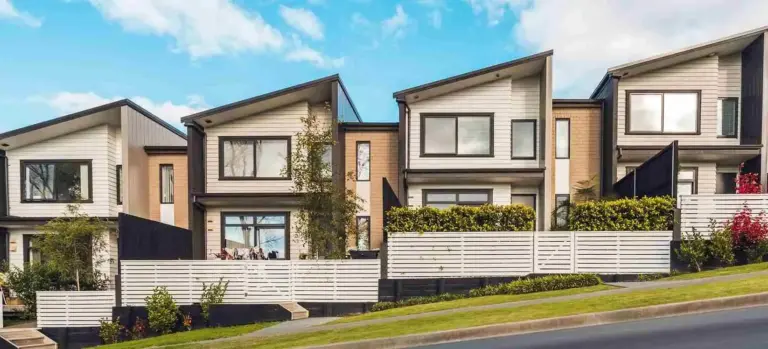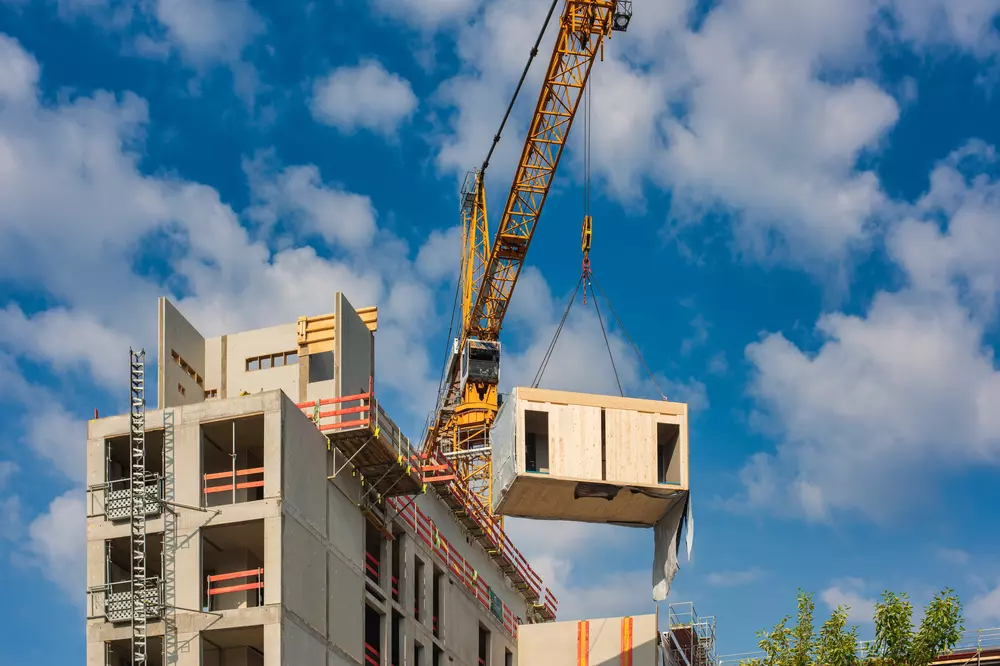
Serial construction is not just a key solution to solving many construction and supply chain challenges – it’s an opportunity for growing manufacturing capability as well.
Even before turbulence began to rock the global construction industry, observers knew that many governments would struggle to keep up with their housing demand. Red tape, a shortage of skilled workers, building education, construction efficiency, supply chain price gauging, and financing difficulties are just some of the reasons why. As the housing shortage worsens, and construction prices and rents rise, industry experts are shifting their focus to productivity-boosting solutions. One potential way to do so would be to use digital tools ranging from digital twins to artificial intelligence and robotics. But another more promising approach is also coming back into focus: serial and modular building practices that use industrially prefabricated components.
Most of today’s construction projects are custom made, structures that are designed for a specific site to meet specific user needs, are erected by using building practices that are adapted to the climate and region and are built by hand just as they were 100 years ago. This is like a relay race, passing the batten to the next runner when that part of the race is finished.
In contrast, serial construction happens in unison, allowing many tasks to run in parallel. It’s quicker, and more efficient – if employed well. Or as Thomas Kirmayr of the Fraunhofer Building Innovation Alliance in Germany puts it: “The construction sector has failed to make any consistent gains in productivity for too long due to the lack of pressure to act in recent decades. This is one reason for the massive market slump caused by excessively high mortgage costs. More prefabricated and system-based construction methods for new construction and renovation projects are urgently needed to create a future-oriented construction sector.”
Can serial construction building techniques save the construction industry?
Compared with traditional construction methods that consist of phases carried out in a linear way directly on site, modular and panelised construction offers a faster, more cost-effective solution. By standardising and optimizing processes, modular construction reduces the vulnerability of supply chains and minimizes many of the traditional risk factors on construction sites. Unlike in the 1970s, these building practices are now highly adaptable and can meet individual design requirements, even large-scale housing needs.
This is also demonstrated by 25 concepts selected from the Serial and Modular Construction 2.0 competition launched across Europe by the German Ministry of Construction, the umbrella organization of the housing industry GdW and the Federation of the German Construction Industry. Its goal is to exploit the advantages of modular and serial construction and quickly create affordable housing. Even though opinions on the issue still differ – as the position paper of the German Chamber of Architects shows – there is agreement that serial and modular construction is not an end in itself, but rather a way to boost productivity and solve many inefficiency issues.
Digital, integral planning tools such as Building Information Modelling (BIM) do not just simplify the optimisation of construction and the use of raw materials. Innovative technologies such as robotics and artificial intelligence (AI) also increase quality and safety on site.
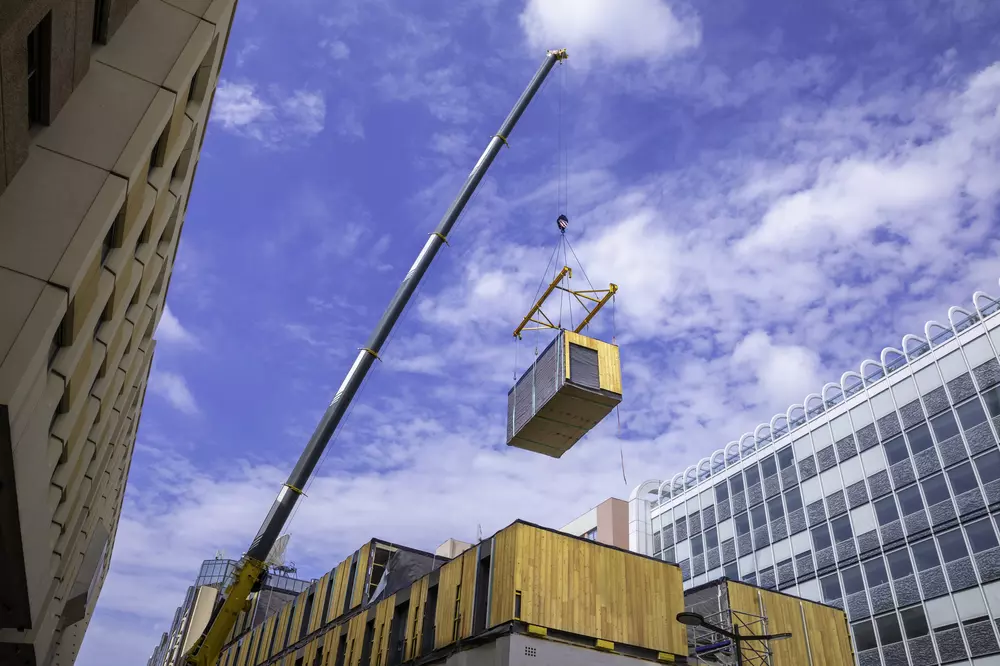
Are sustainability and modular building techniques a perfect match?
Panelised and modular construction creates a way to minimize the environmental impact of high resource consumption and CO2 emissions.
First, this practice applies separable construction principles that require conscious planning in order to facilitate the subsequent separation, dismantling and reuse of materials.
Second, it uses materials that can be easily separated or are not permanently bonded together. Achim Hannott of the National Association of German Prefabricated Construction Practices also sees the future viability of serial and modular construction as a way to pull off the balancing act of managing the housing shortage and hitting climate protection targets. “Practices that have proven themselves for decades in prefabricated wooden residential buildings are now also increasingly in demand for large residential and commercial buildings, for additions to existing buildings and for neighbourhood development,” Hannott says. “Serial and modular construction relies on economies of scale that make construction projects faster and more cost-effective thanks to repetitive processes and products.”
Denny Ohnesorge of the Federation of the German Wood and Plastics Processing Industry and Related Industries also believes that modular, prefabricated wood construction practices meet the criteria for productivity and quality and show great potential: “One in five homes in Germany is already built in series, over 80 percent of which are prefabricated wooden structures,” Ohnesorge says. “This share can continue to grow if political leaders take appropriate measures. The wood industry expects a return to a reliable subsidy policy for climate-friendly construction. In addition, administrative regulations should be adapted to the prefabricated construction method and updated. An important step was the amendment of the Model Timber Construction Directive. This change must now be swiftly incorporated into the building regulations of Germany’s states.”
Promoting and prodding – it is not only a question of an optimal subsidy policy, but also of the signals from the market to utilize the strengths of modular and serial construction and to quickly create affordable living space. The attractiveness of the overall urban, design, technical and environmental quality also lies in the openness of the choice of materials – from wood construction to reinforced concrete and hybrid construction methods.
Can productivity be increased only with digital tools?
Increasing productivity is often equated with technology and digital tools. Tools such as the digital twin make it possible to virtually model and manage buildings and infrastructures. In addition, the virtual image allows a holistic life cycle view of the utilisation phase through to possible dismantling.
The practical networking of digital applications, processes and data in the factory during prefabrication processes and on the construction site is also already common practice today.
But common sense is also needed as part of this change. For example, the Fraunhofer Building Innovation Alliance is dedicating one focus of its special show on construction innovation to productivity. This is because the productivity potential that can be quickly activated from existing realisation processes is often ignored. “Our ‘Save-1-Hour’ initiative is designed to motivate everyone involved in the construction process – from planners to tradespeople – to find out where they can save an hour,” Thomas Kirmayr says. “This is how we create the necessary mindset that can help us to quickly develop effective solutions to get a better grip on both costs and the shortage of skilled workers.”
Final Thoughts
For me, governments need to understand that adopting better building methods from countries leading the charge, like Germany, is an opportunity not to be missed.
It solves many inefficiency, weather, transport, disruption, waste, and resource issues. It is also an ideal opportunity for improving housing affordability and profit. It also gives countries an opportunity to increase their own manufacturing capability once they fully understand the merits of off-site manufacturing (OSM) and serial construction.
Visit BAU Munich 2025
If you’re anywhere near Munich this week, please consider visiting BAU 2025. There are many OSM exhibitors showcasing their products and serial construction technologies that are well worth a visit.
BAU, Munich is being held 13th to 17th January 2025.
Related
Modular building, serial, prefabricated building—the solution to the housing problem?
Modular Homes (and Panelized): The Answer To Affordability, Sustainability, and Energy-Efficiency