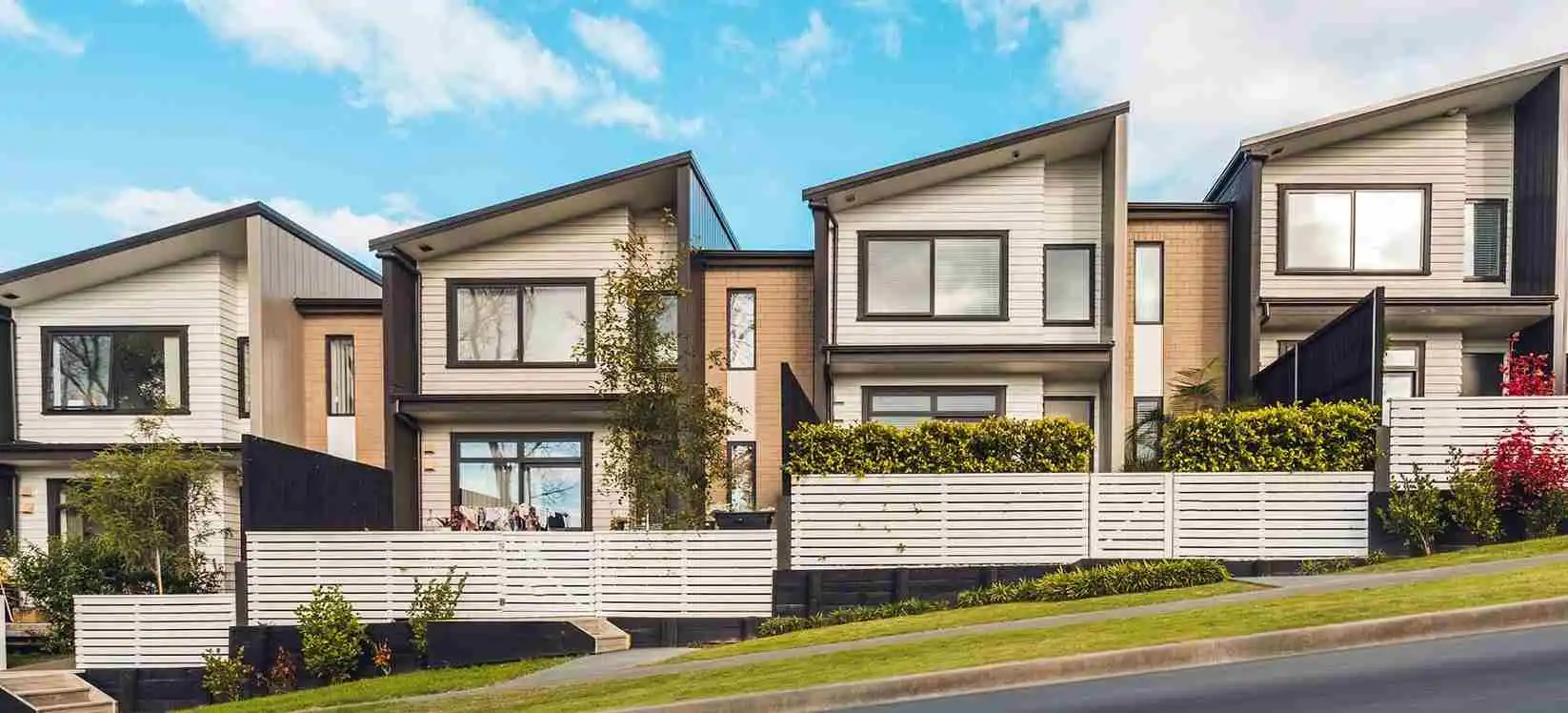
Picture two new houses on the same street: same size, same climate, built on similar plots. But inside those walls? Completely different. One might cost significantly more to build. One could be far healthier, more sustainable, better quality, and not necessarily the most expensive.
One uses light timber framing. The other? Maybe insulated concrete forms, light steel frame, or mass timber CLT.
So what’s going on? Is one approach objectively better, or is the build dictated simply by what the designer and builder know?
We Design and Build What We We’re Taught
From a designer or builder’s perspective, this makes perfect sense. We work with what we learned in training, what our suppliers stock, and what our trades can confidently deliver.
When I studied civil and structural engineering 30 years or so ago, the curriculum was almost entirely steel and reinforced concrete for commercial projects. Housing barely got a mention, probably because houses are structurally simple compared to commercial buildings with their complex loads and spans.
For many professionals, their default building system isn’t really chosen at all. It’s inherited through training, habit, and local supply chains.
Which raises an interesting question: how much of what we build is based on evidence versus simple inertia?
Two designers can receive identical briefs and produce completely different solutions at very different price points. Not because one is right and the other wrong, but because they’re working from different comfort zones.
What Buyers Actually Look For
Now flip to the buyer’s perspective.
Walk into any open home and listen to the questions. 99% of people aren’t asking about structural systems, airtightness, or indoor air quality. They’re focused on what they can see: location, layout, the kitchen, bathrooms, finishes, school, price.
What’s inside the walls? Almost invisible. Almost irrelevant to the sale.
And that’s where the system breaks down.
When buyers don’t understand performance, they don’t demand it. When they don’t demand it, builders don’t prioritize learning it. And so better and more affordable homes remain niche.
Even luxury homes often aren’t truly better homes. They’re just bigger, more expensive versions of traditional construction on larger blocks in nicer neighbourhoods. There’s no “Gucci of construction,” just different trades doing what they’ve always done. In my experience, the wealthier you are, the more you’ll likely pay for the same work.
This is the reality of our industry in many countries, can we do better? Do we actually want to?
Why Construction Moves So Slowly
Construction is often called the slowest industry to evolve, and that’s not by accident.
Designers, builders, and our councils stick with what they know. Supply chains dictate what’s readily available. New systems introduce risk, learning curves, and procurement headaches. Change needs to be both easy and obviously beneficial, and in construction, that’s rarely the case.
Think about it: we largely build the same way we did 100 or even 200 years ago.
When a designer selects a building system, it’s usually not because it’s optimal. It’s because it’s familiar, available, and low-risk.
Are we building homes for the future, or just rinsing and repeating and hoping our customers can afford it?
The Things Nobody Sells
Most buyers are focused on affordability, aesthetics, location, and layout. Agents reinforce this by selling visual appeal, size, and price – never known problems.
What they don’t sell: health, energy efficiency, indoor air quality, long-term maintenance costs, flood resilience, durability. Yet these invisible factors determine comfort, health, and running costs for decades.
Here’s an interesting fact: most people spend more time choosing and researching a car than a house, even though the house costs exponentially more. We accept this because we genuinely don’t know what we don’t know.
Why People Avoid Building New
On paper, building should be ideal: total control, better performance, a home designed around your life.
In reality, people avoid it because it’s daunting. The process typically takes 12 to 18 months, involves hundreds of decisions, carries the fear of budget blowouts, requires managing multiple trades, and leaves people worried the finished home won’t be worth what it cost. The media is full of horror stories, unethical tradespeople and property developers. Builders going bust leaving the owners high and dry. Banks pull the carpet from under your feet when markets change. It’s not a recipe for a happy build journey.
So instead, many people buy existing homes, even when they’re less efficient, less healthy, and more expensive to run.
I’ve always designed and built my own family homes. For me, it’s a life achievement putting a roof over my family’s heads. Yes, I made mistakes choosing some bad suppliers and products. But ultimately it was deeply rewarding, and I’ll keep building my own homes for as long as I can.
My biggest lesson that I can share is to run a tight ship, design for the build, and choose quick and efficient building systems that reduce on-site labour. I’m sorry to say that people are always the weak link.
The Missed Opportunity
Done properly, new high-performance homes can deliver real financial and lifestyle benefits.
Systems like ICF, SIPs, and mass timber offer better thermal performance, lower energy bills, greater durability, more comfortable living, and often more efficient, cost-effective construction.
Yet traditional builds with inefficient practices, fragmented trades, and slow, expensive approvals often erode that potential before the home is finished. These problems are entirely preventable. Councils could be trained and incentivized to support better building systems. Governments could do the same if they had the knowledge and right advisors.
Breaking the Cycle
Right now we’re stuck in a loop: buyers choose existing homes because they’re fast and familiar. Sales focus on appearance, not performance. Builders deliver what sells, not necessarily what’s best. High-performance homes remain the exception.
This isn’t a technical problem. It’s a market problem.
To break it, we need to make the invisible visible:
- Educate buyers, designers, and builders about better building systems
- Give buyers clear, simple information about performance, health, and running costs
- Make healthy, efficient, durable homes as desirable as granite countertops.
- Adopt better construction practices so better homes are faster and easier to build
Unfortunately too many homes are simply unhealthy, old and new! 56% of homes in New Zealand are classified as too unhealthy to live in, and that’s not just a problem in New Zealand, it’s all around the world. Yet our general public don’t know this or simply don’t want to hear it. Think of the cost implication on our health system of breathing difficulties like asthma.
Better information. Better incentives. Better outcomes.
Final Thoughts
If you’re buying, understand what you’re really getting, the way you would when buying a car. Try and educate yourself or get some professional help. This small cost might just save you making a big mistake.
If you’re building, remember the greatest gains happen at the design stage. Choose a designer who understands building efficiency, sustainability, health, and energy efficiency. They don’t need to be certified Passive House designers, just someone who approaches design and building the way Germans and Scandinavians do.
In my opinion, if you want the perfect affordable house, you really need to build it. Existing stock rarely achieves these performance levels affordably.
With the right team, you can solve every problem. And yes, it can be truly rewarding and affordable too.
Related
Is It Possible to Design and Build a Maintenance-Free House?
The Future of Architecture and Design from the Futurebuild Expo. London.
Future-Proofing Your Build – Good Pre-Drywall Strategies for Designers and Builders
Designing Affordable, Innovative, and Sustainable Homes using Prescriptive Building Codes