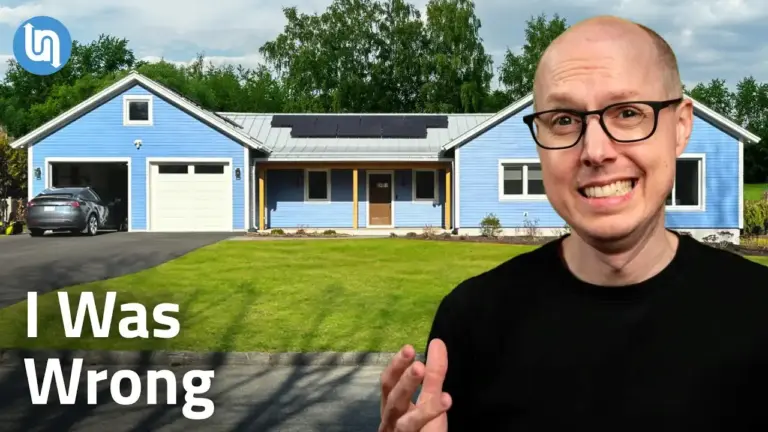
Today’s post challenges architects and designers to move beyond theoretical knowledge of panelised construction and actually implement it in their projects.
Drawing from Navigate Communities’ affordable housing initiative in Birmingham, Alabama, my post addresses the real barriers preventing adoption and reframes them as opportunities for those willing to break tradition.
Table of Contents
Why Panelised Construction is the KEY to Quality Affordable Housing
Most designers have researched panelised construction, perhaps even visited facilities or seen case studies. The technology is proven, the performance benefits are clear, and yet the majority of projects still default to traditional methods. What’s really holding the profession back from embracing what could transform how we deliver housing?
The First Project Reality Check
The biggest barrier isn’t technical – it’s bureaucratic. Getting panelised construction through planning can feel like educating the entire local authority from scratch. Building control officers often haven’t encountered these systems, structural calculations look unfamiliar, and the approval process stretches longer than anyone anticipated.
But here’s the paradox: this initial pain point becomes a competitive advantage. Once that first approval is secured, designers become the local expert. Navigate Communities in Birmingham found this exact pattern – their first project required extensive education of officials, but subsequent approvals became routine. The question is: are most designers willing to invest in that first difficult project to unlock easier ones later?
The Fee Structure Dilemma
For designers working on percentage-based fees, panelised systems present an uncomfortable truth. Navigate’s experience shows that whilst SIP components cost about 10% more than traditional framing, dramatically reduced labour and faster build times often mean lower overall construction costs – and therefore smaller fees.
Some architects have responded by shifting to fixed-fee arrangements for panelised projects, capturing efficiency gains rather than being penalised for specifying better building methods. Navigate’s houses reach drywall stage in just 14 days versus months for traditional construction. Are most practices brave enough to challenge their traditional fee structures to capture this efficiency?
Matt’s Panelised Factory Tour
Guest author Matt Risinger tours Extreme Panel’s facility and Navigate’s staging warehouse to see how affordable, high-performance housing comes together.
Performance vs. Promises
Traditional construction rarely delivers the thermal performance that’s modelled. Thermal bridging, air leakage, and installation variations mean energy calculations often bear little resemblance to actual bills. Yet designers continue specifying methods that consistently underperform.
Navigate’s panelised houses achieve 0.79 ACH50 consistently – near passive house levels. When families in their community were spending $400-500 monthly on energy bills with multiple window units, these new homes deliver predictable, affordable running costs year-round. When did the profession become comfortable with such a gap between design intent and built reality? And why do we continue accepting it?
The Standards Race
Building regulations are tightening rapidly. The Future Homes Standard looms, carbon accounting becomes mandatory, and client expectations around sustainability rise monthly. Traditional construction methods struggle to keep pace, requiring ever more complex details and site coordination to meet basic performance standards.
Navigate’s approach already exceeds tomorrow’s requirements today. Their warehouse-based pre-fabrication system delivers high-performance homes at $175-200k that outperform custom homes costing twice as much. Whilst others scramble to upgrade their approaches, early adopters are positioned ahead of regulatory changes. The question isn’t whether standards will tighten – it’s whether designers want to be leading or following when they do.
The Scalability Question
Navigate’s model addresses something luxury approaches cannot: replicability. Their warehouse staging system, standardised components, and streamlined processes can be replicated by municipalities and nonprofits nationwide. They’re actively sharing plans and specifications with other communities facing similar housing challenges.
This isn’t about building luxury homes for the few who can afford cutting-edge performance. It’s about making high-performance construction accessible to working families – the people who most need efficient homes because they can’t afford $500 monthly energy bills. How many designers are thinking about this scale of impact?
The Honest Trade-offs
Navigate’s panelised approach demands working within the constraints of 8x24ft panels, accepting standardised structural solutions, and designing around modular dimensions. These limitations forced better design decisions – when expensive changes become harder to make on-site, upfront planning improves dramatically.
Their interior walls frame in days rather than weeks because everything follows a 4ft module system. Waste drops dramatically because off-cuts become components for the next house. Yet many designers resist these constraints as limitations rather than embracing them as disciplines that produce better outcomes. How much of this resistance stems from genuine design concerns versus reluctance to change established working methods?
The Practice Transformation
Navigate’s builder reports the most satisfying work relationship in 34 years of construction. Predictable programmes, fewer site issues, and clients who see immediate benefits in their energy bills rather than just promises of future performance.
But Navigate’s CEO Lisa emphasises this isn’t just about individual projects – it’s about “fair and equal access to housing” and creating sustainable communities. If these benefits are real and measurable, and the model is replicable, why hasn’t adoption accelerated? What would need to change – in fee structures, client education, or professional culture – to tip the balance?
The technology works. Navigate proves high-performance construction can be affordable and scalable. The question facing the profession isn’t whether panelised construction is viable – it’s whether designers are ready to lead the shift toward buildings that deliver what they promise to the people who need them most, or whether they’ll continue defaulting to methods that consistently underperform whilst waiting for someone else to demonstrate what’s possible.
What’s stopping that next affordable housing project from being the one that breaks the pattern?
Related
When Panelised Construction Makes Perfect Sense for Your New Home
Showcasing a Panelised Mass Timber Student Dorm Build that Uses Robots
How Can Housing Departments and Developers Learn from Local Failures?