Why This Matters Now
The housing affordability crisis affects everyone in the building industry. Housing departments struggle to deliver social housing with tight public budgets, while private developers face the reality that if their housing costs too much, no one can afford to buy. Both need proven cost-effective building methods to succeed – they just serve different customers. Yet many remain hesitant about adopting innovative building systems and technologies due to past local manufacturing failures that may not truly reflect what these technologies can actually deliver.
With 35 years in the building industry as a designer, developer, and consultant working extensively with both private developers and housing authorities, I’ve observed a pattern worth discussing: while some housing organisations have successfully embraced innovations like panelised building systems and mass timber construction, others remain hesitant due to recent local manufacturing failures that may not truly reflect the broader industry landscape.
When these failures represent newer technologies, out come the ‘I told you so’ comments. But when traditional building product manufacturers fail? That’s just mismanagement. Double standards perhaps?
The Challenge: Local Failings vs. Global Trends
What I’m Seeing
Both housing departments and private developers face the same fundamental challenge: delivering affordable housing solutions. Housing departments must provide social housing with public funds under intense scrutiny, while developers need to build affordably or risk having nothing viable to sell in today’s market. Though they face different pressures – public accountability versus market viability – both need proven cost-effective building methods to succeed.
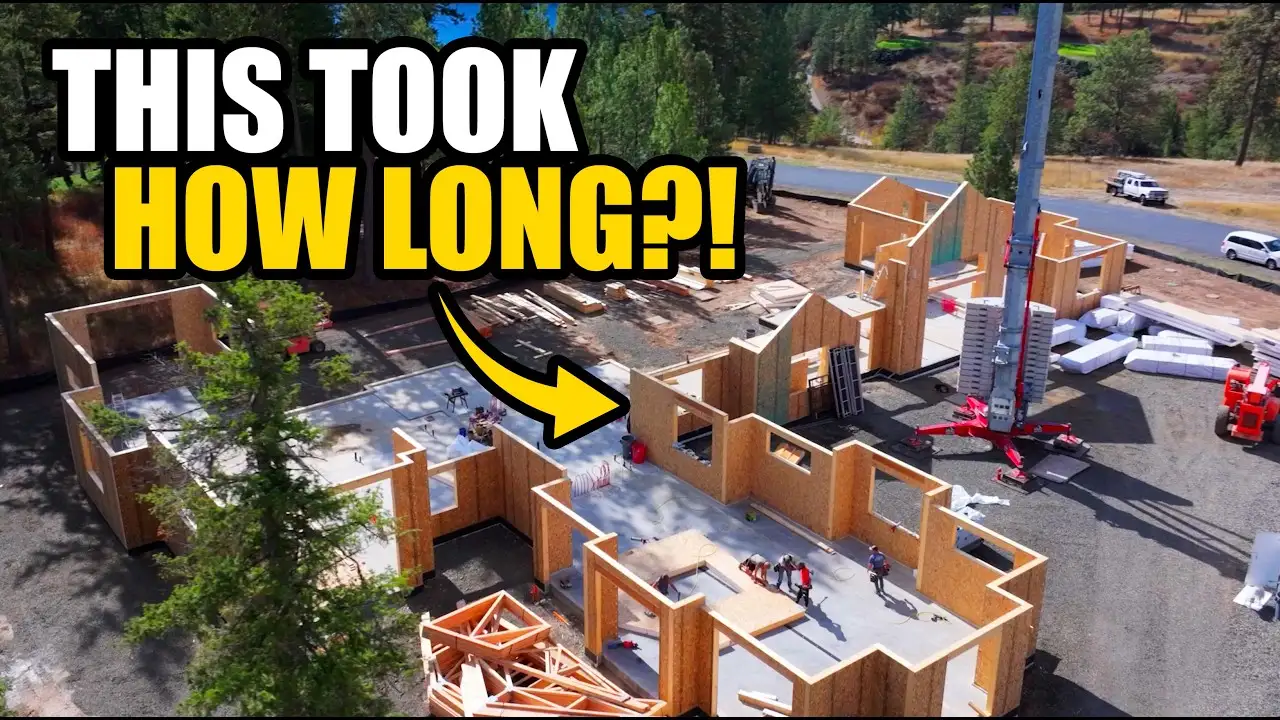
In my three and a half decades in the industry, I’ve worked with a housing authority exploring various advanced building systems widely available in other countries, including prefabricated construction. Their initial hesitation was completely understandable – they’d witnessed local prefab manufacturers struggle and close.
But here’s the critical lesson that was missed: The trouble is these manufacturers thought that if they built the manufacturing capability, customers would come. They didn’t. The core components were misunderstood: education and an unwillingness to change. The manufacturers failed not because prefab technology doesn’t work, but because they didn’t understand that successful implementation requires market education, relationship building, and helping customers overcome natural resistance to new approaches.
I understand their caution, but if others have made it work successfully around the world, then why can’t they? The answer lies in learning from what went wrong locally, not abandoning proven global technologies. I understand their caution, but when others have made it work successfully, there’s clearly a path forward.
This created an interesting disconnect. While they were evaluating prefab technology based on those local failures, I was drawing on decades of experience observing private developers across multiple regions successfully using these same methods to reduce both costs and construction timelines – because they understood the risk-reward equation.
What Local Failures Really Teach Us
The “Build It and They Will Come” Fallacy
The most common reason I’ve observed for local manufacturing failures isn’t technical – it’s strategic. Local companies often invest heavily in manufacturing capabilities without investing equally in market development. They assume that having a superior product or process will automatically generate demand.
This is particularly true in construction, where decision-makers are naturally risk-averse and comfortable with established methods. A new prefab manufacturer might produce excellent panels, but if they haven’t educated potential customers about the benefits, built relationships with key decision-makers, or addressed legitimate concerns about implementation, their superior technology becomes irrelevant.
The lesson? Local failures often reveal gaps in market development strategy, not flaws in the underlying construction technology or building systems.
Technology vs. Execution: A Critical Distinction
When housing departments and developers witness local failures, they’re often seeing execution problems masquerading as building technology assessment issues. The prefab company that went under might have had excellent technical capabilities but failed to build the relationships and education necessary for market acceptance.
Throughout my career spanning design, development, and consulting, I’ve seen this pattern repeatedly. Housing authorities often have limited opportunities to observe these technologies in action locally, making global success stories feel less immediately relevant to their specific context and constraints.
The result? Some of the organisations most needing cost efficiency were the most cautious about proven cost-saving innovations – not because they lacked vision, but because their risk assessment framework was necessarily conservative. And perhaps the government purse wasn’t ready to invest in anything beyond mainstream solutions.
Learning from Success Stories
What Progressive Departments Are Doing
The most successful housing authorities I’ve collaborated with over the past 35 years have developed educational approaches to evaluating innovation. They’ve learned to distinguish between local execution failures and global technology successes. They actively want to learn from countries that have succeeded in developing and implementing better building systems and construction technologies – systems that not only produce more affordable, sustainable, and higher-quality housing, but have also increased their own manufacturing base. This is something I advocate for daily.
For example, one forward-thinking housing authority started small with a 5-unit prefab pilot project. The success of that controlled test led to a several hundred-unit housing development using refined prefab methods. Their approach was methodical: partnership, testing, adoption, and importantly, understanding local supply chain limitations before scaling accordingly.
Global Examples Worth Studying
The international evidence for these technologies is compelling:
Vienna’s Social Housing Success: Municipal housing projects there regularly use prefab methods that have demonstrated 25% cost reductions compared to traditional construction, while maintaining higher quality standards.
Vancouver’s Mass Timber Achievements: The city’s mass timber buildings are consistently delivered faster and more cost-effectively than concrete equivalents, with proven performance in a challenging climate.
Japan’s Systematic Approach: Their prefab housing industry has evolved to deliver entire earthquake-resistant homes through factory manufacturing, achieving both cost efficiency and superior quality control.
These aren’t experimental projects – they represent decades of refined implementation with documented results.
A Framework for Smart Innovation Assessment
Expanding Information Sources
The most successful housing departments, designers, and developers I’ve worked with have adopted systematic approaches to construction technology evaluation and building systems assessment:
International Research: Rather than relying solely on local experience, they research successful implementations in similar climates and regulatory contexts. One department I advised discovered dozens of relevant international case studies within a week of structured research – and even found smaller local projects by private individuals working to change the narrative.
Direct Industry Engagement: They connect with established international suppliers and manufacturers to understand proven methodologies, rather than limiting themselves to local startup companies still developing their capabilities.
Academic Partnerships: Several progressive authorities partner with universities for objective technology assessments, providing third-party validation of both opportunities and risks. It may be theoretical, but it still has value.
Strategic Pilot Programs
Smart departments have learned to test innovations systematically:
Start Small: Use carefully designed pilot projects to understand local implementation challenges without major budget exposure.
Partner Strategically: Work with experienced manufacturers and developers that have proven track records in similar projects.
Measure Comprehensively: Evaluate success across multiple projects and metrics, not just single experiments.
Learning from Private Sector Innovation
Progressive housing authorities actively study how private developers successfully implement new technologies in their regions:
Case Study Analysis: They examine local private projects to understand what’s working and why.
Knowledge Partnerships: Some have developed formal relationships with developers to share insights and best practices.
Supply Chain Understanding: They map successful private sector supply chains to identify reliable implementation partners.
During my extensive experience as both designer and developer, I’ve seen firsthand that developers succeed and fail using the same building techniques. There are countless variables that make one project a success and another a failure. It’s why the broader building and construction industry can be such a challenge to navigate – there don’t seem to be universal rules that govern success, and it often feels unpredictable. But one thing is certain: standing still doesn’t deliver results.
Key Principles for Housing Departments
Distinguishing Risk Types
Construction Technology Risk vs. Execution Risk: Separate concerns about proven construction technologies and building systems from concerns about specific local suppliers or implementation approaches.
Local vs. Global Evidence: Weight international success stories appropriately when local data points are limited. Understand your local workforce’s ability to learn, adopt, and deliver.
Short-term vs. Long-term Costs: Factor in the opportunity cost of not adopting proven cost-saving innovations.
Building Implementation Capacity
Supplier Development: Work with experienced international companies to develop local implementation capacity.
Knowledge Building: Invest in staff education about global best practices in construction innovation and building systems design.
Partnership Strategies: Consider public-private partnerships that can share both risk and expertise.
Smart Hiring: Prioritize employing people who have actually designed and built projects with their own money. They understand real-world constraints and outcomes in ways that purely theoretical knowledge can’t match.
Systematic Evaluation
Evidence-Based Decisions: Base construction technology adoption decisions on comprehensive research rather than isolated local experiences.
Phased Implementation: Use pilot projects to validate approaches before large-scale deployment.
Continuous Learning: Treat each project as an opportunity to refine implementation approaches.
Moving Forward: Practical Next Steps
For housing departments considering construction innovation:
Research Phase: Conduct systematic research into international implementations of relevant technologies in similar contexts.
Pilot Strategy: Design small-scale tests that can provide meaningful data without significant budget risk.
Partnership Development: Identify and engage with experienced suppliers who have proven track records in similar applications.
Knowledge Building: Invest in understanding how successful departments and private developers have overcome similar implementation challenges.
The Opportunity
The housing affordability crisis creates an imperative for efficiency that makes proven construction innovations not just attractive, but necessary. The question isn’t whether technologies like prefab and mass timber can work – the global evidence demonstrates they can, and have done for over a century in some countries. That’s how far behind some countries are.
The real question is how quickly housing departments can evolve and develop frameworks to adopt better, more efficient building practices and systems.
The departments that master this balance – maintaining appropriate fiscal caution while systematically adopting proven innovations – will be the ones delivering more affordable housing units with the same or smaller budgets going forward.
There is always risk where there’s reward, but the path forward is simple and truly rewarding for all if you’re willing to embrace change.
Related
Building Systems 101 – Are you Making the Right Choice?
Housing Intensification – Friend or Foe?