Foreword by Ian Thompson, Editor
Matt and Jake are in Norway at a large student accommodation construction site. There are 100’s of units being built using panelised construction, augmented reality, and robot dogs, yes, robot dogs!
Not only is this site utilising panelised construction and mass timber, but they’re also building these student dorms in just 20 months from signing the contract to handing over the keys. I know single family house builds that take twice as long. See how these highly organized and efficient builders are achieving this extraordinary feat.
If this project doesn’t inspire you, my feeling is nothing will.
Revolutionizing Construction: From Panelised Builds to Robotic Innovations
Panelised Builds and Robots – Video Summary
Introduction:
This video showcases an innovative student housing project in Kristiansand, Norway, demonstrating advanced construction techniques and technologies. The project aims to build approximately 200 student housing units in just 20 months, from contract to key turnover. This summary will explore the key aspects of this efficient and forward-thinking construction process.
1. Panelisation Accelerates Construction Speed
One of the primary innovations in this project is the use of panelization, a method that significantly speeds up the construction process. Key points include:
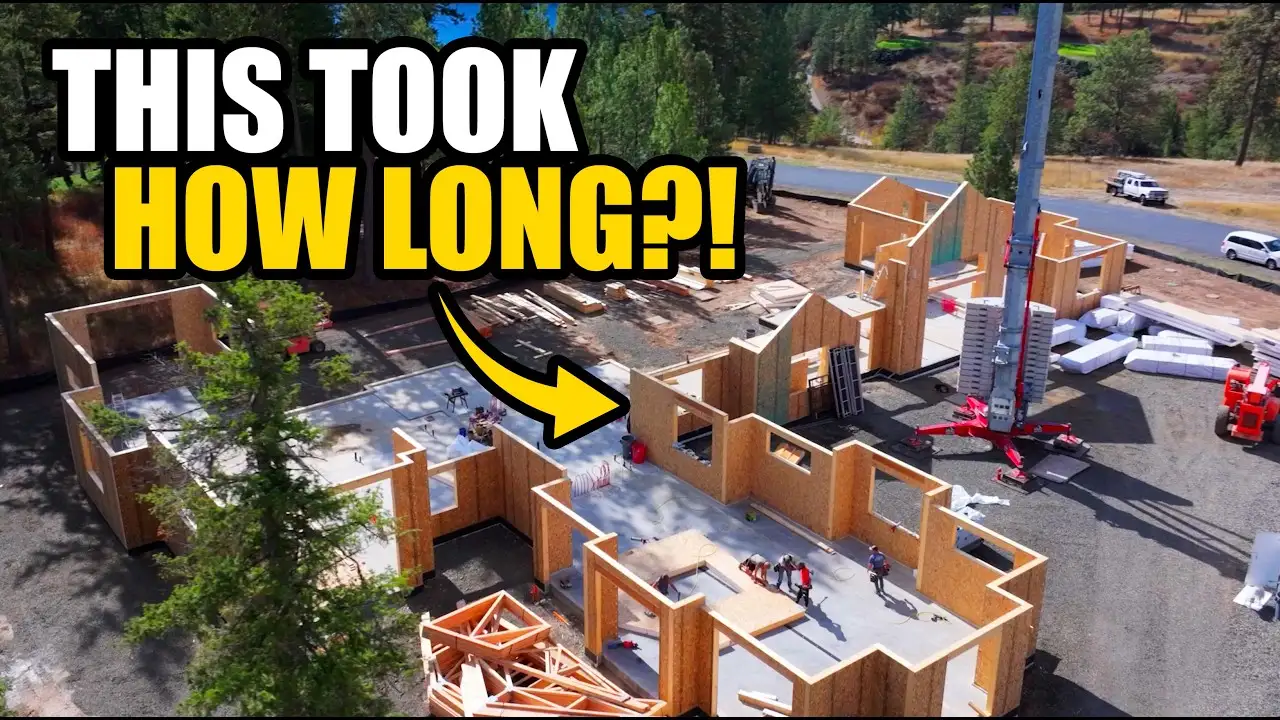
- Pre-fabricated wall panels: Entire wall sections, including insulation, vapor barriers, and even windows, are constructed off-site.
- Efficient transportation: Panels are transported horizontally on trucks to maximize space and comply with height restrictions.
- Innovative rotation system: A custom-built table system on-site allows for the safe rotation of panels from horizontal to vertical orientation.
- Composition of panels:
- 2×6 or 2×8 framing
- Pre-installed 6 mil polyethylene vapor barrier on the interior (warm side)
- Pre-installed insulation
- Pre-installed electrical conduits
- Exterior membrane (vapor-open material)
- Double ventilated rain screen
2. Assembly and Integration of Panels
The video highlights several clever solutions for assembling and integrating the prefabricated panels:
- Gap allowance: Small gaps are left between panels to allow workers to properly seal and integrate the four control layers (water, air, vapor, and thermal).
- Diagonal cladding pieces: Removable diagonal pieces of cladding facilitate easy taping and sealing of panel joints.
- Shiplap design: Allows for slight imperfections in panel alignment while maintaining a seamless appearance.
3. Cross Laminated Timber (CLT) Construction
The project extensively uses Cross Laminated Timber (CLT) for structural elements:
- Description: CLT is described as “the biggest plywood on Earth,” consisting of thick, structural wood panels.
- Applications: Used for floors, walls, and ceilings in the upper floors of the building.
- Benefits:
- Rapid construction
- Environmentally friendly (carbon-friendly alternative to concrete)
- Locally sourced in Norway, reducing transportation emissions
4. Prefabricated Bathroom Pods
Another time-saving innovation is the use of prefabricated bathroom units:
- Fully finished bathrooms: Complete with tiles, fixtures, and mirrors.
- Installation process: Craned into place before the next floor is added.
- Plug-and-play design: Easy connections for plumbing and electrical systems.
- Benefits: Saves time and ensures consistent quality across all units.
5. Innovative Mechanical and Electrical Solutions
The project incorporates several clever approaches to mechanical and electrical systems:
- Centralized utilities: Bathroom pods serve as hubs for water distribution to other parts of the unit.
- Electrical chases: Metal framing and routed channels in CLT panels provide pathways for electrical wiring.
- Suspended ceilings: Allow for easy installation and access to fire suppression systems and additional wiring.
- Acoustic Considerations
6. Several features address sound insulation between units:
- Mineral wool insulation: Applied between CLT floor panels.
- Gypsum overlay: A layer of lightweight gypsum (gypcrete) is added on top of the insulation.
- Total thickness: Approximately 4-5 inches of sound insulation material.
7. Structural Connections
The video briefly touches on the structural connections used in the project:
- Simpson fasteners: Used to secure wall panels to the CLT structure.
- Concrete platform: The lower retail floor uses a concrete structure, with CLT construction for the upper residential floors.
8. BIM Building Information Modeling and Project Management
A significant portion of the video focuses on the advanced digital tools used to manage the project:
- Comprehensive BIM model: Contains over 250,000 data points, detailing every aspect of the building.
- Paperless job site: All plans and information are accessible via mobile devices.
- Weekly 360-degree documentation: Helmet-mounted cameras capture the entire site every Monday.
- Boston Dynamics Spot robot: Used for automated site inspections and documentation.
- Augmented reality: Allows on-site workers to visualize plans and compare them to actual progress.
- Real-time information access: Enables quick problem-solving and reduces delays.
9. Environmental Considerations
The project demonstrates a commitment to sustainable construction:
- Use of wood: CLT construction significantly reduces the carbon footprint compared to traditional concrete structures.
- Local sourcing: Timber is sourced locally in Norway, minimizing transportation emissions.
- Efficient construction: Rapid build time and prefabrication reduce on-site waste and energy consumption.
10. Project Timeline and Scale
- Duration: 20 months from groundbreaking to occupancy
- Scale: Approximately 137 units
- Mixed-use design: Retail space on the ground floor with student housing above
Related Links
3D Printed Houses Entering Mass Production – 2023 USA Update
27 Ft-tall 3D-printed Structure Built by New Robot | ICON’s Multi-Story Robotic Construction System
Showcasing a Panelised Mass Timber Student Dorm Build that Uses Robotics
Foundation Design for Mass Timber Buildings: Can They be Smaller?