Foreword by Ian Thompson, Editor
It’s a chilly winter here in the Southern Hemisphere. Mother Nature is putting our architectural marvels to the test with a barrage of rain. Just yesterday, we recorded over 50mm of rainfall. An excellent real-world test for the efficacy of our groundworks. The unwelcome downpours provided us with a chance to examine the accumulation of water and the efficiency of our drainage systems around our sites.
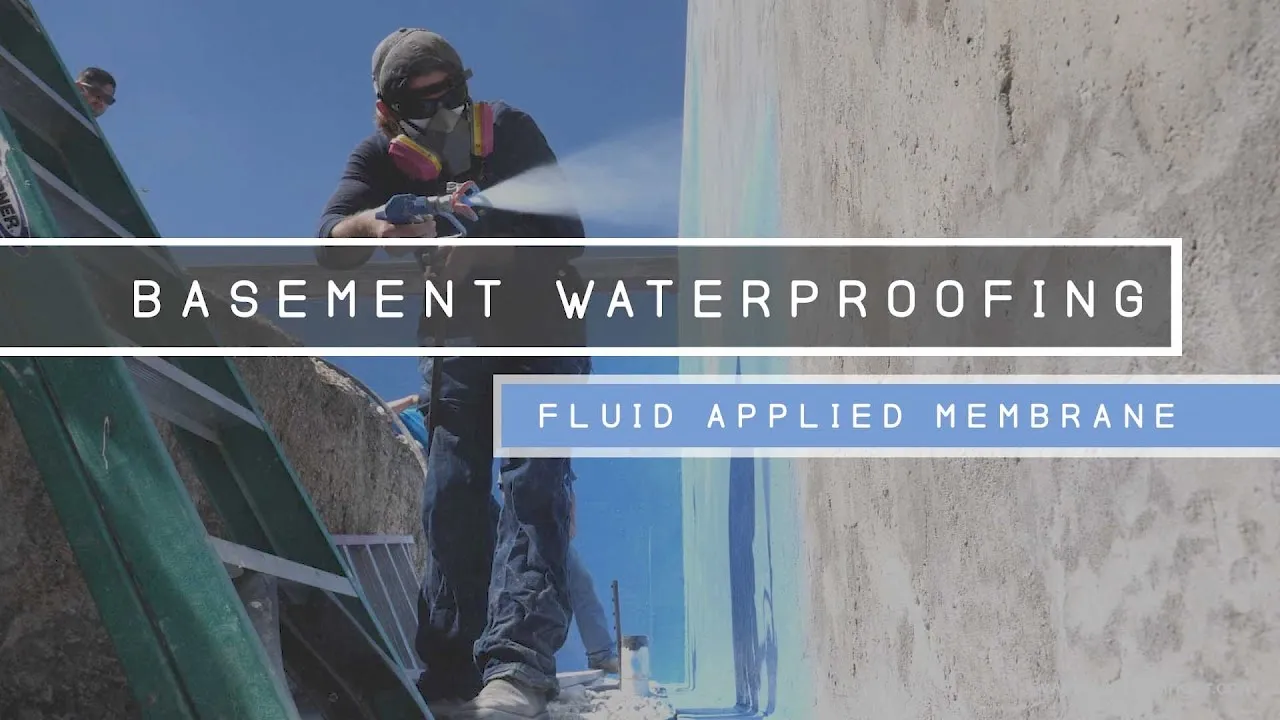
A few weeks ago, I came across a site that left me somewhat unimpressed with its waterproofing measures. The tapes and membranes were literally peeling off the walls, so this prompted me to revisit one of Matt’s older site visits on basement waterproofing strategies. His spray-on liquid membrane approach is one that I find particularly effective for any part of your structure residing below ground level, the substructure.
Now, I’m not here to endorse this basement waterproofing product showcased in Matt’s video, but I must admit, the spray application method does stand out. It has this unique capability to reach those hidden nooks and crannies that brush-on products or plastic membranes often fail to penetrate. Those membranes can also tear, usually at the most inconvenient spots.
So, here’s a piece of advice: never underestimate the importance of comprehensive waterproofing. Go beyond the minimum code requirements. Remember, water is the number one nemesis of our built environment, so if you are undertaking basement waterproofing then invest wisely during the build and hope you don’t have to repair it later – because it is likely to be an expensive fix.
Basement Waterproofing – Fluid Applied Membrane
Video Transcript:
On today’s episode, we’re talking about a fluid-applied basement waterproofing system.
On the Build Show today, we’re talking about basement waterproofing. I’m coming to you from a builder friend’s job site here in the gorgeous Hill Country of Texas. My builder friend is using a really interesting system from our friends at Poly Wall, and I’ve got Poly Wall’s tech director, Dave Leslie, with me. Dave, what is this blue stuff we’re looking at here?
“Well, what we’re looking at is the Homestretch liquid. It’s a synthetic rubber that we use for basement waterproofing.”
“And Dave, is this a new product to the marketplace?”
“Actually, no. It’s new to the residential market, but in the commercial market, we’ve had it for over two decades.”
“Okay, so new to us but actually been around a long time. You know when I was in the East Coast building full in-ground foundations 20 plus years ago, our go-to at that time was tar, you know, the black nasty stuff we put on for waterproofing. How is this blue stuff different from that?”
“It’s funny because I come from the same thing. I actually come from the restoration side. And when we think about the tars and the different things, it’s actually asphalt. And what that asphalt is, is when we take crude oil and refine it down and get gasoline and all the different things out of it, the crud at the bottom is the asphalt. So what we do is we take that asphalt, mix it into water and some other things, and make it an emulsion. This, on the other hand, is an SBR, which is a styrene butadiene rubber specifically designed for waterproofing.”
“Would it be fair to say this is kind of like a rubber coating on your bed liner for your truck?”
“That’s an excellent example. By being fluid-applied, it’s continuous and monolithic. So, some of the areas like we see at the footer in the transition or when we look over at the different areas where we have pipes, this fluid is able to perfectly conform to it and make it monolithic, instead of like with traditional sheet goods where you’d actually have to use origami to make it fit in those tough places.”
“No doubt, that’s impressive. I’m going to transition to finding the builder over here, Brian Long, an amazing guy who’s really doing the details right. Let’s talk to him about how we actually install this.”
“Alright, I’m here with Brian Long. Brian is an amazing builder, and I’ve been following his work for years. I’m really privileged to be on your job site, Brian. Tell me about what your crew did to install this. You guys really nailed the details here.”
“Well, whenever you start out with concrete, you know as you know, you’re going to have flaws, deviations, air bubbles, you know, maybe a little honeycombing here and there. So the first thing you have to do is get yourself a nice slick wall surface. So we came in, did all our concrete patch, got it all together. After that was all done, then we came in with the 2,200 fill seal because this is a two-part wall. We have a footing at the bottom, and then we have the wall that sits on top. But by having that seam at the bottom, that means that’s a place for water infiltration. So we caulked that with the 2200, then we come in and apply the fluid-applied on top of that. It’s a shot with a sprayer, normally 260 mils, which dries to a 30 mil finish. It gives you a nice rubber one-piece, no-seam finish. As you know, you’ve worked with sheet membranes before.
Well, the weakness there is when you have a seam, you’re relying on the primer, the primer to hold that seam together. Well, water is the world’s greatest solvent. So that being said, if that seam fails, what’s going to happen is that water’s going to infiltrate there, and the primer is not waterproof. So, well, you know, sealants. So, what’s going to happen? You’re going to get water, and when you get water in, you get unhappy clients. They start calling you. That’s not a good day, and this is a really expensive fix to come back because you’re talking about heavy equipment, a lot of digging, and then you’ve got your French drains. You’re going to have to destroy all that, have to be redone. So, it’s quite the problem. So, with this being a one-piece, we have a lot less chance of any water permeability.”
“It’s impressive, Brian. So my understanding is that you could roll this on or spray it on. Why did you choose the spray?”
“When you’re rolling it, it’s much harder to get that 60 mil finish, and spraying it, it just seems where it goes a lot faster and it just gives you a much better coat.”
“Alright, good deal. So you could do either. Now, that airless sprayer I saw on a job site, that didn’t look like the one my painters use to spray my houses with.”
“No, the hydraulic Graco 733 is what’s recommended to spray this product. It does a really good job. It’s easy to clean. The nice thing about this product is you can leave it in the machine for up to two weeks, which gives you the ability to come back without a lot of heavy cleanup. So there are some things you’ll have to take care of, but for the most part, it gives you a real simple regeneration for the next day.”
“Brian, amazing job on this basement waterproofing. Now, there’s a part two in this video we’re going to come up to next, but give me a little primer about what we’re going to be doing after this.”
“We’re going to show the Arroyo drain, which stops static water pressure against the basement waterproofing itself. It gives you a drain board to get the water down to your French drain system and then out of the project. We have a little piece of land over here, and we’ll be showing that in the installation of that and how that drain product also ties into our French drain system.”
“Brian, amazing job. You and your crew are so detailed. You guys know your building science. Very impressive to be on your job site. Thanks for joining us on The Build Show. Stay tuned for next week when we’re going to come back and talk about part two, protecting the membrane, getting that water down and out. Brian’s kind of incredible drain system. We’re going to show you the details on that. Otherwise, follow us on Twitter and Instagram. We’ll see you next time on The Build Show.”
Related Waterproofing Links:
Insulation, Drywall, and Bathroom Waterproofing: Essentials for a Successful Renovation
3 Tips for a Better Basement BUILD (Insulation, Waterproofing, & Framing)