Foreword by Ian Thompson, Editor
Craftsmanship in homebuilding is not what it used to be. A century ago, building a house was what we consider today to be a bespoke and intricate process that involved skilled workers using specialized tools and techniques to create homes that were both beautiful and durable. Back then we didn’t really consider building a housing estate with every house looking the same unless it was council housing. Today, building a home has become much more industrialized and cookie cut, with many of the traditional skills and techniques used by craftsmen of old being lost along the way.
One of the main reasons for this shift is the rise of mass production and the increased availability of common building materials and products. Most builders today prioritize profit over quality and artistry, which can result in homes that lack the unique character and attention to detail that characterized the work of skilled craftsmen in the past. Additionally, the widespread adoption of building systems and less labour intensive building practices means that many traditional crafts have simply become obsolete.
Another factor is the changing nature of the labour market. As more and more people move away from manual labour in favor of white-collar jobs, there are fewer skilled workers available to perform the intricate tasks required in homebuilding. This has led to a decline in the number of apprenticeships and training programs for craftspeople, further eroding the skills and expertise that were once passed down from one generation to the next.
Despite these challenges, there is still a place for craftsmanship in modern homebuilding. Many homeowners today building their own homes value the unique character and quality that comes with handmade elements and are willing to pay a premium for it. Some builders have also recognized the importance of preserving traditional crafts and have made efforts to train and retain skilled workers who can create beautiful, functional homes that stand the test of time.
While the art of craftsmanship in homebuilding may be fading, we should persuade designers to stop designing ‘white lifeless boxes’ with plasterboard walls and ceilings. I like to think that we should design like the old days when we had exposed oversized rafters and beams, timber ceilings, stairwells and balconies. For me there’s no better home than when you see real character beyond the interior furnishings.
Over to Brent Hall and his video post:
“Craftsmanship” New House, Old Soul – Ep. 2
Introduction:
Welcome back to an exciting episode of “New House, Old Soul”! In this series, hosted by the talented Brent Hall and sponsored by Stellar Floors and the Unico System, we delve into the world of craftsmanship and its significance in modern construction. Today, we embark on a journey that takes us back in time to appreciate the skill and artistry of craftsmen from eras past. At the North Bennett Street School, Brent shares his experience of learning traditional hand tool techniques and how they shape his approach to building. We explore the importance of reviving old-world crafts, with institutions like the American College of Building Arts playing a vital role in preserving and teaching these valuable skills. Join us as we uncover the secrets of fine craftsmanship, from intricate moldings that elevate the aesthetic appeal of a space to the incredible work of Fossil, a master craftsman who brings lifelike details to life through hand carving. We venture into Brent’s workshop, where custom doors and windows are meticulously crafted using quality wood and traditional joinery techniques. The restoration of historic pieces, such as the Mason County courthouse furniture, showcases the commitment to replicating the craftsmanship of yesteryears. We believe that by embracing the precision and beauty of traditional craftsmanship, we create enduring structures that stand the test of time. So, join us on this captivating exploration of craftsmanship in “New House, Old Soul.” Stay tuned for our next episode, where we delve into the foundations of solid and long-lasting structures.
Video Transcript:
Welcome back to the new house, old soul. I don’t think we can get very far into this conversation without talking about craftsmanship.
Build: The original series, hosted by Brent Hall, new house old soul, sponsored by Stellar Floors and the Unico System.
I believe that craftsmanship in the past was different from craftsmanship today. Craftsmen in the past had more skill and abilities. Why is that? Well, they had to work with natural products and materials. There was no snap-in-place siding or pre-made details. Everything was specifically made to fit a particular location. When I started my journey at the North Bennett Street School, they emphasized the importance of understanding old hand tools. This Stanley number five hand plane became my tool of choice. The school taught us that if we can build something from 200 years ago, we can build anything today. This understanding of hand tools and the precision and beauty they can achieve has influenced my bias towards traditional craftsmanship. I firmly believe that there are better ways to build than what we see today. The opportunity for us to embrace fine craftsmanship is too incredible to ignore.
North Bennett Street School is an amazing place where traditional crafts are taught and practiced. They offer programs in violin making, traditional furniture making, and bookbinding. It’s an institution that revives old-world crafts and trains people to use them in contemporary times. Another noteworthy school is the American College of Building Arts in South Carolina. As a member of their Advisory Board, I can attest to the incredible work they do in teaching skills that are no longer commonly practiced. The education and practice of these crafts have been diminished over time. The revival of these skills is crucial in raising the bar for craftsmanship.
Looking at the past, we also realize that the exchange of information used to be more extensive. Betty Langley’s detailed drawing of the ionic order, for example, showcases the intricate proportions and design elements of the past. Such attention to proportion and craft is often absent in modern construction. Today, it is challenging to find catalogs or resources that provide such comprehensive details. Craftsmanship in the past involved care and focus on proportion, which contributed to the overall beauty of the design. This attention to detail is lacking in contemporary building practices. To elevate our craftsmanship, we need to learn from the past and embrace the precision and beauty that come from a fine tool or a well-crafted piece.
Speaking of craftsmanship, let’s head to the showroom to explore some moldings.
Continue Reading
One of the reasons we create mock-ups is to allow clients to visualize and understand the design. In the Italian house we are currently working on, there is a poorly executed crown molding in the master bedroom that needs to be replaced. Instead of opting for a foam-based solution, we choose to build it the traditional way. While this approach may not be the fastest or the most cost-effective, it produces a superior result compared to foam moldings commonly found in houses. We strive for excellence by carefully selecting moldings that require craftsmanship. The skill and understanding of proportions needed to create and assemble these moldings raise the overall quality and aesthetic appeal. For instance, you won’t find a ready-made pulvinated frieze in a catalog; it needs to be crafted by hand. To achieve the level of craftsmanship that gives a new house an old soul, we must learn from the past and master the art of matching and replicating historical moldings.
Moving on, let’s take a look at Fossil’s work.
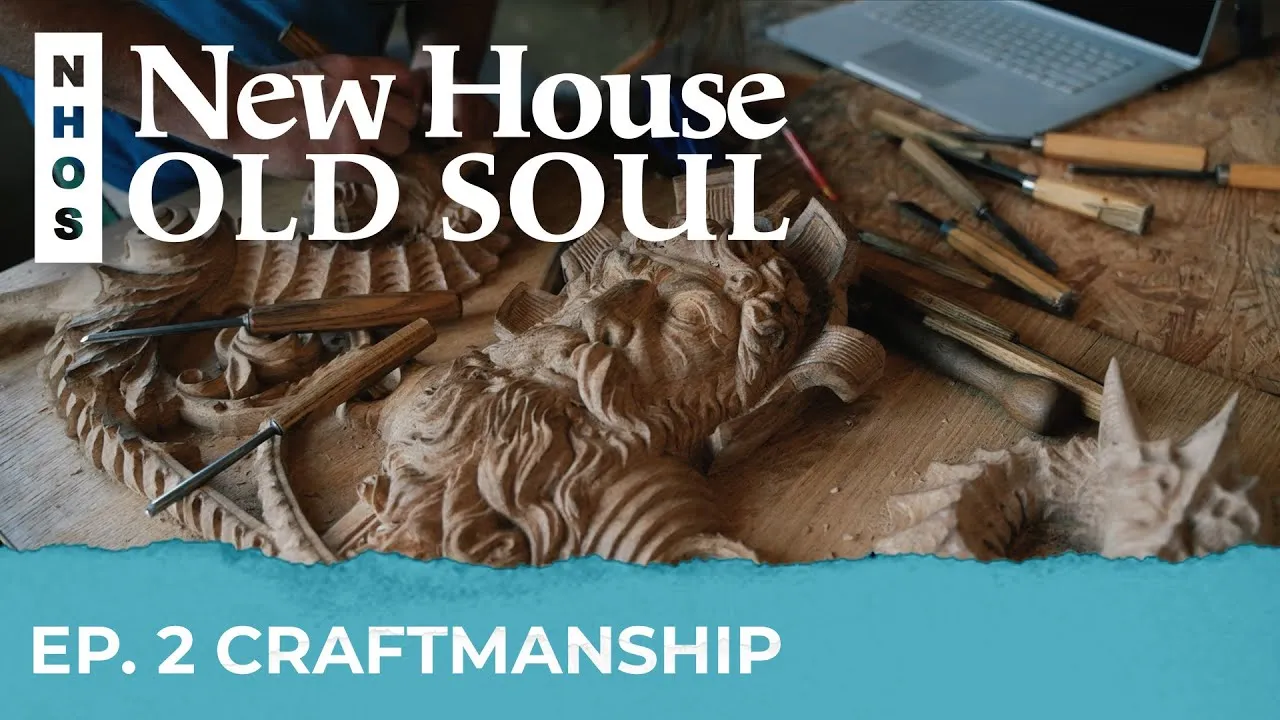
Fossil has been working with us for over two years now. We met about 10 or 15 years ago through Facebook, and I had the opportunity to see his incredible work in Kiev. With 30 years of experience as a master craftsman, Fossil has raised our bar and expanded our capabilities. His expertise and skill enable us to undertake challenging projects and achieve a higher level of craftsmanship. Currently, Fossil is working on an intricate plaque carving for a client in New York. The architect provided us with a design that involved multiple layers and complex details. Instead of relying on a CNC machine to execute the design, we entrusted Fossil to carve it by hand. This decision allows for a more lifelike and rich result, surpassing what a machine could achieve. When it comes to creating something unique and beautiful, craftsmanship plays a vital role. Fossil’s craftsmanship is evident in his previous work, such as the capital he carved for the Kell House project. Replicating historical elements like this requires the skill and dedication of a craftsman. Hand carving is not a common practice, but it is essential when creating intricate, lifelike details that bring the past to life.
Now, let’s head to the shop and explore how we build our doors and windows with craftsmanship in mind.
Welcome to our shop, spanning approximately 25,000 square feet, where we custom mill and manufacture historic millwork. In our pursuit of matching the past, wood quality becomes crucial. We don’t simply pick up pre-cut boards from a store; we order quarter-sawn lumber like this oak or salvage historic lumber such as longleaf pine. Our wood goes through a process of denailing and resawing to ensure its quality.
In the finish mill, the assembly of our custom products takes place. Unlike a typical production cabinet shop, we prioritize craftsmanship and benchwork over quick assembly on the floor. Our skilled craftsmen build and assemble items with meticulous attention to detail. Here, Jimmy is working on a door, incorporating an English-style molding known as a Mason’s miter. This technique requires precise cuts and fitting to achieve a beautiful result. We believe that by investing more time and effort in our craftsmanship, we create products that will stand the test of time.
Craftsmanship is especially critical in restoration projects. Take, for example, the Mason County courthouse and its historic courtroom furniture from the early 1900s. Rebuilding and replicating these pieces require various skills, from selecting the right wood to creating custom moldings. We strive to match the past by studying and imitating the craftsmanship of previous eras. Each detail, including the joinery and construction techniques, contributes to the longevity and aesthetic appeal of the finished product.
Joinery, in particular, exemplifies craftsmanship. The choice between pocket screws and traditional mortise and tenon joinery demonstrates the difference between a quick and easy solution versus a long-lasting, skillfully constructed joint. We opt for mortise and tenon joinery as it provides superior strength and durability, ensuring our doors and windows stand the test of time.
Our machines, like the hollow chisel mortiser and jointer, are built to last. They embody the craftsmanship we value. We understand that investing in quality tools and equipment allows us to achieve better results.
Craftsmanship is about making incremental changes that contribute to the overall quality and longevity of a project. Our commitment to craftsmanship is evident in our material selection, construction techniques, and attention to detail. We strive to provide value to our clients by building with longevity and beauty in mind.
Next time, we will explore foundations and how craftsmanship plays a role in building a solid and long-lasting structure. Stay tuned for the next episode of New House, Old Soul.