Foreword by Ian Thompson, Editor
As our built environment evolves, the methods we employ to deal with end-of-life buildings become increasingly significant. This conversation discusses demolition versus deconstruction.
Demolition, as we know, is the traditional and most common approach for dealing with end-of-life buildings and has its own advantages. It’s often quicker and less labour-intensive, making it a time-efficient choice for many projects. This method involves tearing down structures in a way that doesn’t typically prioritize the salvage of materials for reuse. As an observer, I find the destruction of buildings quite interesting, almost telling the story of the building’s life in reverse.
As Grace mentions, buildings have traditionally been designed for this type of end-of-life process—to be ripped apart and crushed for landfill or downgrading. They were not intended to be repurposed in any way.
However, this demolition approach has significant environmental implications and often overlooks the potential value of the materials within the buildings. As our awareness of the environmental impacts of waste and the need for sustainable practices grows, the construction industry is being urged to rethink this approach.
This is where deconstruction comes in as an alternative. Deconstruction is a more deliberate and careful process where buildings are disassembled to recover materials for reuse and recycling. As Grace points out, designing for deconstruction allows buildings to serve as stockpiles of valuable materials. But this practice is extremely rare, especially when cost is a driving factor. This method aligns more closely with principles of sustainability and the circular economy, reducing waste and promoting the efficient use of resources.
Deconstruction, however, presents its own set of challenges. It can be more labour-intensive and costlier than demolition, particularly if buildings have not been designed with deconstruction in mind, which is likely the case for almost every building over 20 years old. The increased use of labour can, however, be viewed positively as an opportunity for job creation, though this perspective may not resonate with many developers.
In this context, the key lies in the design stage. Designing buildings with deconstruction and reuse in mind, using modular components, reversible connections, and robust materials, can facilitate easier and more effective deconstruction processes, making it a more viable and appealing option.
I, for one, feel there’s a great opportunity to leverage off-site manufactured building techniques to allow these buildings to be disassembled in the same way they were assembled on-site, thus almost completely negating waste and environmental impact.
Ultimately, the choice between demolition and deconstruction should be considered carefully, taking into account environmental impact, potential for material recovery, and the specific circumstances of each project. As the conversation with Grace highlights, shifting our design thinking and embracing the principles of the circular economy are crucial steps towards a more sustainable construction industry. However, it should be said that this movement may not gain pace any time soon especially when finances are hard to secure, and the cost of development continues to rise.
Demolition versus Deconstruction: A Circular Economy Debate – Video Transcript
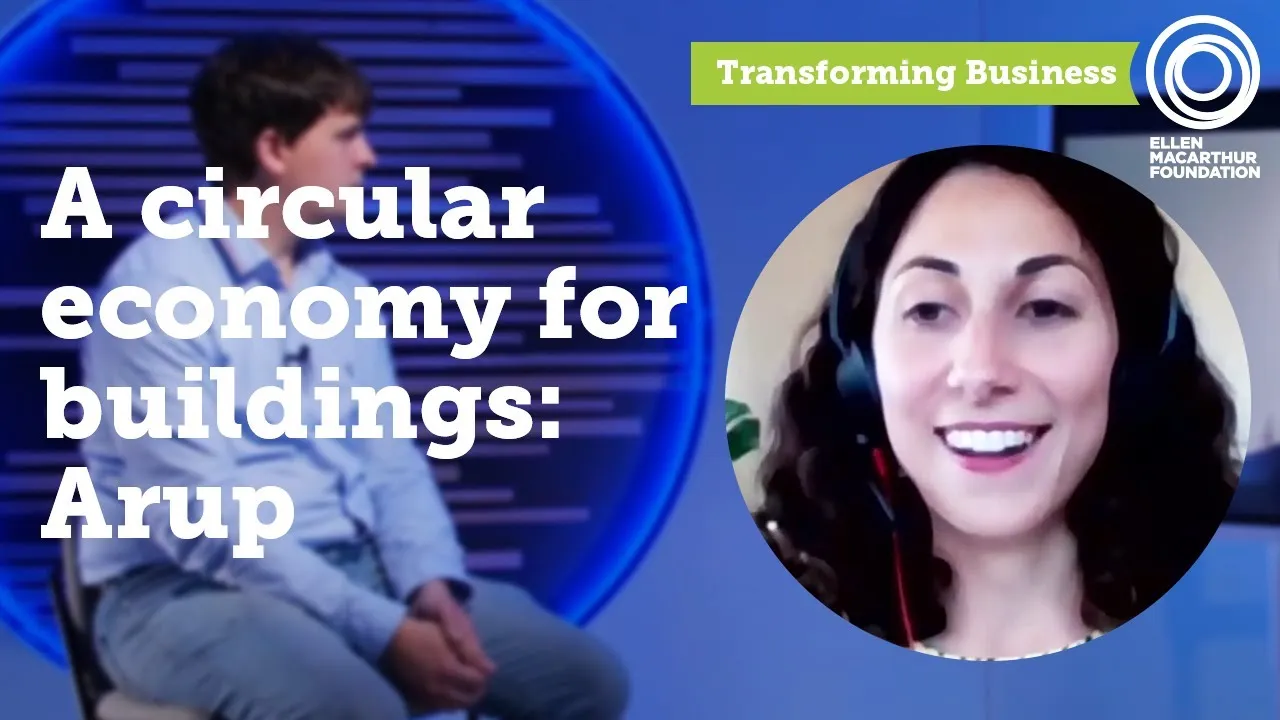
So, thank you, Grace Di Benedetto, for being here with us today as part of our Circular Economy Show by the Ali MacArthur Foundation. Um, I would like us to start the conversation by talking a little bit about something I read the other day. I was reading the BBC News, and I saw this article that said that a UK, the UK’s top engineers are urging the government to stop demolishing buildings. And I couldn’t help but ask myself, why are we still doing it? So, I, I was like, I need to ask this to Grace.”
“That’s absolutely right, um, it is a big question. Why are we demolishing buildings today? From the outset, it seems like it doesn’t make sense. We have these fantastic stores of materials that are high quality and valuable materials. We’ve spent millions of pounds to create these buildings. Why are we letting them become piles of rubble?”
“And there are many reasons for it. The buildings that have been designed have not been designed to be taken apart. They’ve been designed to be ripped apart and crushed for land for landfill or for downgrading. So there’s, at the moment, many logistical issues um to actually deconstructing buildings as opposed to demolishing them.”
“There’s also a really big challenge around if we are to switch to deconstruction um, what are the costs associated with that? And uh, that can scare a lot of, of clients um from, you know, choosing deconstruction over demolition um.”
“So, yeah, there’s a, it’s a really big subject um, but I think the key, the key item is at the design stage um. So it’s what our engineers and architects and designers can do um, to change from the demolition to deconstruction. And that’s why we are here today to hopefully give the audience uh, a little bit of an overview of what that can look like in practice.”
“So, what does better design for buildings look like? And what specifically is designed for the construction?”
“Sure, so design for deconstruction is a philosophy where buildings are designed intentionally for material recovery and reuse at the end of life. So, like I said, currently buildings not only have zero value at the end of life, but they also actually cost money to demolish and process the waste.”
“So instead, when we design for deconstruction, you have this fantastic ability to create buildings which, which act as these stockpiles of, of these valuable materials that can be easily taken apart and used in new buildings instead of virgin materials. And in doing that, that helps us to sort of chip away at the enormous amount of carbon emissions which are associated with the build environment.”
“And in terms of, in terms of actually doing this practically, the deconstruction like the ideal deconstructable building is very similar to, to a Lego, Lego building. So, we try and design components that are modular, connections that are reversible, just like Lego, and materials that are robust and reusable. And we want to try to avoid using any paints or coatings that might be difficult to remove.”
“And we want to ensure that the components of the building are easy to access, and there’s a plan for how they can sort of safely be removed without damaging the item.”
“And, um, I mean, you, you brought it this up in your first, in your first answer. The importance of, of design of the design stage and, you know, how much of our environmental impact is determined by decisions that we made in that crucial design stage um.”
“And right now, I love the Lego explanation, by the way, it makes it quite simple to understand for somebody like me who doesn’t understand a lot about the built environment. But surely in the real world, there are some challenges that come to this. It’s, it’s not as easy and as simple as, as the Lego toys uh are. So, what are some of the trade-offs and challenges that you’ve experienced?”
“Yeah, so in terms of um, yeah, challenges, there’s definitely a challenge in getting our building clients on board. So, there’s currently a perception that design for deconstruction um, increased costs. But we have found that some of the easiest and cheapest interventions, like just having a deconstruction plan and using material passports, are actually some of the most powerful when it comes to deconstruction and reuse.”
This demolition versus deconstruction debate is really a debate between dollar cost and environmental cost.
“So, a challenge in designing for deconstruction is increased costs at the end of life of the building, and the lack of incentives to overcome this. So as designers, we can help remedy this by supporting circular business models and specifying reused materials in the buildings that we design today.”
“And can you ask us, you mentioned this before, but what is a material passport?”
“Yeah, sure. So, a material passport is basically a digital identity document that contains information on all parts of a building um. It’s a tool that helps us to understand the value of materials in a building and which parts of it can be reused and recycled.”
Continue Reading
“And for people who are looking for reclaimed materials to use on new projects, material passports can give them a level of reassurance that the performance requirements can be met. And it also helps building owners to see, see their building as a sort of bank of materials rather than just this sort of worthless pile of rubble, which encourages deconstruction over demolition.”
“And I mean, obviously, as you speak, it comes to mind that one of the benefits is probably, you know, reducing the amount of waste that the built environment produces. But what are other benefits that perhaps designing for the construction can have? Economic or environmental, any kind of benefits?”
“Sure, so 11% of global carbon emissions is attributed to the carbon which is embodied in the materials that we use. So in designing for deconstruction, we are potentially opening up a, a stock of materials that can be reclaimed at the end of life and reused in new buildings. Which then in turn reduces the carbon emissions associated with new buildings um.”
“And in terms of um, economic, you know, in going for design for deconstruction, you know, one of the challenges that’s often cited is the increased use of labor at the end of life to deconstruct. You know, in order to, to unbolt everything, rather than just go through it with an earth mover, involves a lot more people. But that is a real great opportunity for job creation.”
“Um, as is, you know, refurbishment of things that come out of existing buildings for, um, for reclamation is also a really labour-intensive process that, that can create jobs in the local economy.”
“And Grace, you, you work for Arab and, and you obviously have a lot of experience working on the circular economy and, and the built environment um. So let’s talk a little bit about what is happening already. Um, I know you have a building that our audience has seen before in, in a video called One Triton Square. What makes this building so special or different from others?”
“Sure, so to start with, it’s a refurbishment project, which is something that’s becoming much more common um, but it is still perhaps not the norm. So that project, One Triton Square, is an existing building that was built in the 90s. And the client wanted to maximize the value of the site by increasing the floor area by around 70%.”
“If we were doing business as usual, the design team would usually say like, 70, there’s, there’s no way that we can make that happen without demolishing and rebuilding. But instead, they found an opportunity to retain much of the existing structure while adding new stories and infilling empty space. And ultimately, this resulted in 56% of the embodied carbon compared to a new demolition scheme.”
“And that’s sort of the in-situ reuse story. But part of it that I find really interesting and different is that rather than replacing the facade, which looked quite tired and perhaps dated, what they did is they dismantled it and transported around 3,000 square meters of it to a pop-up factory where each panel was inspected, cleaned, and had the gaskets replaced.”
“And then it was installed back on the building, which resulted in a 66% saving in cost. Um, and even things like paving and other roof materials were reused products from other demolished building buildings.”
“This is a, this is a great example of, of dismantling a building and, and refurbishing and a great example of the circular economy. But are these options scalable at the moment?”
“Yeah, I mean, there’s nothing about design for deconstruction which means it can’t be used on projects of any size um. But there’s definitely, um, an education piece that needs to be done to develop guidance around design for deconstruction. Not just for clients, but also for designers, contractors, demolition experts. So that they really understand the technicalities of achieving it.”
“And I think to scale, we also need more case studies and more large-scale demonstrators can really reassure stakeholders and insurers. And I think really a, really big part of it, as with many circular economy interventions, is making sure that it’s instigated early on in the project. So this really helps to sort of bake in a culture around circular design um, and kind of moving away from that linear consumption thinking um.”
“If you try to do design for deconstruction as a sort of bolt-on at the end of a project, it really isn’t efficient, and it doesn’t quite work. So, we have to bring this thinking um, this kind of bigger idea of the circular economy, across the way that we design, we make, and we use materials and well, everything around us basically um.”
“So we’ve spoken a little bit about uh, you know, reusing materials, the importance of design um. I wonder um as well, Grace, is there a market for, uh, reusable sorry, recyclable steel or all these materials, cement, that are used in the construction industry? Is there a market at the moment? And what can we do to create a better one or better conditions?”
“Yeah, so it’s in the UK it’s at its very early stages. There are some um, some organizations which are ahead of the game in terms of providing reclaimed structural materials. For instance, for things like brick, that’s been done for ages, that’s really common material to reclaim.”
“But I think the challenge here is that you kind of put into this, uh, chicken and egg situation. So for instance, if I wanted to get hold of 35 tons of reclaimed steel, I would really struggle to find that quantity of material in existence. And so I probably would think, I would maybe do a look online, and I wouldn’t find anything um.”
“And because of that, the people at the end of life, the demolition contractors and the salvagers, they don’t see any demand for these materials. And so, they don’t think it’s worth the additional effort to carefully deconstruct, to store, and to refurbish the materials because they just don’t see people who are wanting it.”
“But this shouldn’t stop us right from designing for the construction. As you said in the beginning, we might not have, you know, all the answers yet. But we have to start somewhere if we want to make this transformation possible.”
“That’s, that’s absolutely right. Yeah, I’ve, I think with many things in the circular economy, you often start to get almost a bit confused around the circularity of responsibilities um. You know, why should we design for deconstruction when there’s, there’s no market for it at the end?”
“But, uh, it’s funny because a while back I was, I was making dinner and I got to thinking that, that someone must have invented the tin can before the tin opener. And I googled it, and in fact, the tin opener was only brought to market some 50 years after the invention of the tin can. So the inventor designed it knowing that it was something transformational but without having all the answers to know how it could be used.”
“And like you said, Lara, you know, in terms of circular economy and design for deconstruction, we shouldn’t wait to have all the answers to start doing what’s in our area of influence um. You know, once we start doing what we can do, that will start the engine of the circular economy, and it will make reuse more viable eventually.”
“And I mean, you just mentioned the area of influence and in our previous conversation, you told me everyone has a role to play. I’m just a structural, a structural engineer, but what inspires you to bring the circular economy to your work? And what does it mean for you to be part of this?”
“Yeah, so for me, the circular economy, it feels so obvious. You know, especially as a structural engineer, some of the materials that we use like steel um, you know, they go through a process. You know, the primary production of steel involves mining and, you know, mining that has, you know, as we know, some damaging effects on the environment and the communities that surround it. And it’s transported, you know, maybe from Australia to China and then in China, it’s processed and then it’s sent to the UK where we do all sorts of uh, you know, processing to it. And then eventually it goes in the building.”
“It just feels so obvious that instead we use our local buildings and deconstruct them and re-implement those into new buildings instead of going through this, this crazy convoluted global process. I just, for me, it feels like the obvious solution to so many issues, to volatility in the global markets as well.”
“Thank you, Grace. I think that is a great answer to finish this conversation. Thank you so much for being part of the Circular Economy Show.”
Related
A circular economy for buildings
Circular Economy Principles for Achieving Net Zero in the Built Environment
Harness the Power of the Circular Economy with the Free-to-Use Circular Buildings Toolkit