
Foreword by Ian Thompson, Editor
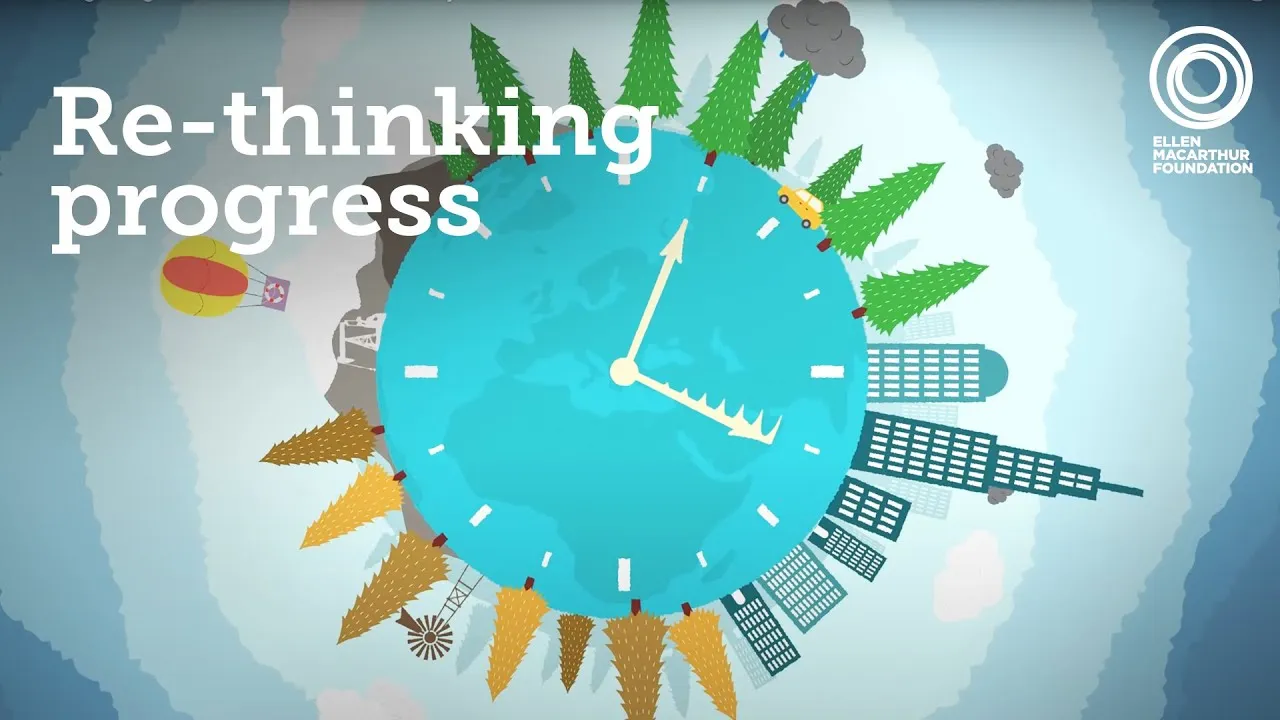
Our newest contributing author the Ellen MacArthur Foundation published this very simple yet effective animated explanation about how the circular economy works, and how businesses can transform and adopt to a less harmful impact on our environment.
Dame Ellen MacArthur is best known for her solo sailing voyages around the world. In fact in 2005, Ellen MacArthur became the fastest solo sailor to sail around the world.
Her home base in the Isle of Wight (United Kingdom) is in fact not too far from where I used to teach sailing on the Solent and it’s a place where I learned a lot about people and their interaction with the elements, especially bad weather.
After circling the globe – carrying everything she needed with her – Ellen returned with new insights into the way the world works, as a place of interlocking cycles and finite resources, where the decisions we make today affect what’s left for tomorrow.
There’s a world of opportunity to re-think and re-design the way we make stuff. ‘Re-Thinking Progress’ explores how through a change in perspective we can re-design the way our economy works – designing products that can be ‘made to be made again’ and powering the system with renewable energy. It questions whether with creativity and innovation we can build a restorative economy.
Explaining the Circular Economy and How Society Can Re-think Progress
Video Transcript:
Living systems have been around for a few billion years and will be around for many more. In the living world there’s no landfill. Instead, materials flow. One species waste is another’s food. Energy is provided by the Sun. Things grow then die and nutrients return to the soil safely. And it works.
Yet, as humans, we’ve adopted a linear approach. We take, we make, and we dispose. A new phone comes out, so we ditch the old one, our washing machine packs up, so we buy another.
Each time we do this, we’re eating into a finite supply of resources and often producing toxic waste.
It simply can’t work long-term. So, what can?
If we accept that the living world’s cyclical model works, can we change our way of thinking, so that we to operate a circular economy? Let’s start with the biological cycle. How can our waste build capital rather than reduce it? By rethinking and redesigning products and components and the packaging they come in, we can create safe and compostable materials that help grow more stuff.
As they say in the movies, no resources have been lost in the making of this material. So, what about the washing machines, mobile phones, fridges? We know they don’t biodegrade. Here, we’re talking about another sort of rethink. A way to cycle valuable metals, polymers, and alloys so they maintain their quality and continue to be useful beyond the shelf life of individual products.
What if the goods of today became the resources of tomorrow? It makes commercial sense.
Instead of the throw away and replace culture we become used to, we’d adopt a return and renew one, where products and components are designed to be disassembled and regenerated.
One solution may be to rethink the way we view ownership. What if we never actually owned our technologies, we simply license them from the manufacturers? Now let’s put these two cycles together. Imagine if we could design products to come back to their makers, their technical materials being reused, and their biological parts increasing agricultural value and imagine that these products are made and transported using renewable energy. Here we have a model that builds prosperity long-term, and the good news is there are already companies out there who are beginning to adopt this way of working. But the circular economy isn’t about one manufacturer changing one product. It’s about all the interconnecting companies that form our infrastructure and economy coming together. It’s about energy, it’s about rethinking of the operating system itself. We have a fantastic opportunity to open new perspectives and new horizons instead of remaining trapped in the frustrations of the present with creativity and innovation, we really can rethink and redesign our future.
To learn more about The Ellen MacArthur Foundation and the circular economy please visit their website here.