Foreword by Ian Thompson, Editor
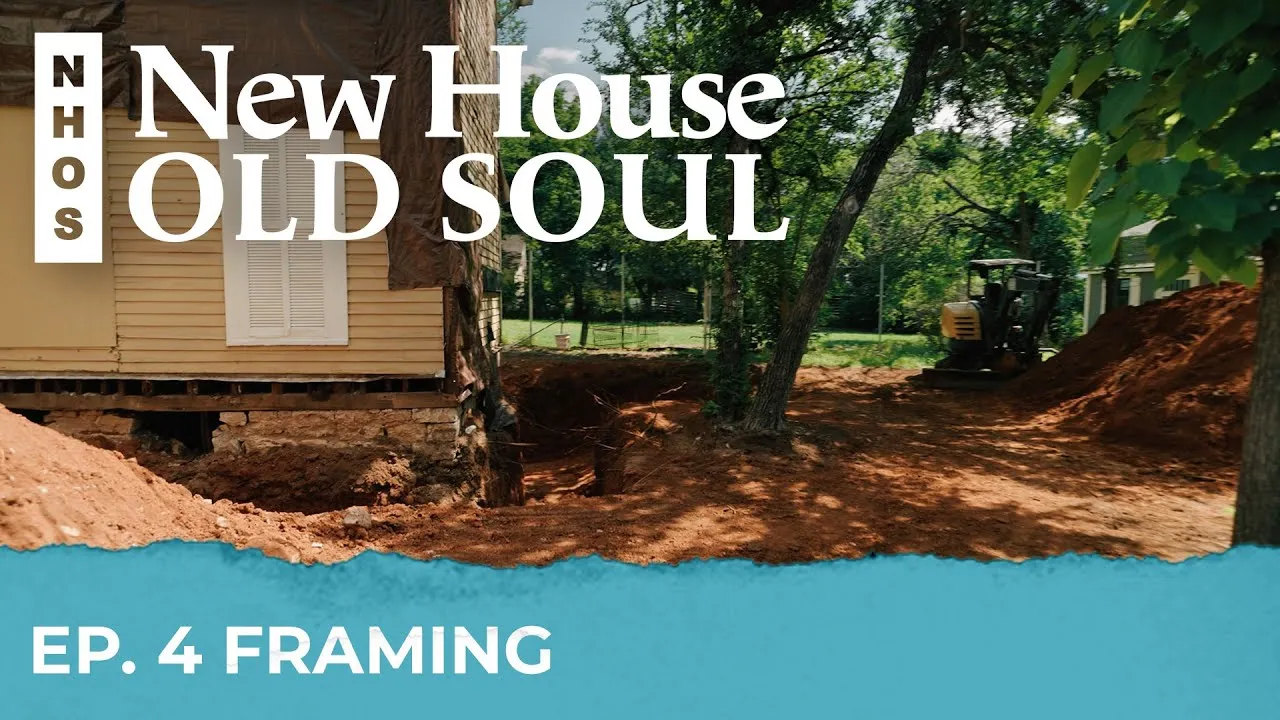
“Framing” New House, Old Soul – Ep. 4
Video Transcript:
Welcome back to New House, Old Soul. We’re talking about framing today and the history of how some of these things are put together. Maybe you’ll see this on some of your builds, but then how to build quality again today.
Build Original Series hosted by Brent Hall, New House, Old Soul, sponsored by Stellar Floors and the Unico System.
Thank you.
Okay, so talking about framing, how to think about it essentially, we’ve got three types of framing. There’s the early Timber framing, okay, this lasts from the earliest periods in America (1640-1740). I suppose there’s one earlier, the Log Cabin, right? A log cabin would be a different type of framing. We actually have both at the barn project. We’ll go out and check that out. But Timber framing is, you know, let’s just say 1700 to 1840. Okay, really right around this period of time, 1840, things started to begin to change. The next type of frame is called balloon framing, okay, balloon framing is from 1840 to 1920. And then you’ve got Western framing or deck framing, okay, which starts around 1920 to today.
Okay, so Timber framing is essentially if my house is up, the pieces that are going to hold the house together are large Timbers, okay? And they were made into bents, okay? And essentially, you’d make a frame here, right, and this would be called one bent, okay? You would lean this up, and then you tie it together with a Gert that went across here, and this bent and these bents would be held together. Right, and so you saw this when the barn was going up that they actually built these bents up and then crammed them into place and then they tied it together. Right, then they kind of locked this thing together, but the Timbers are probably average eight by eight, sometimes ten by ten, there’s a massive summer beam out there that’s like 20 by 12, it’s huge. This is the way timber frame was put together as western expansion took place as we were growing very fast. The number of Timber framers moving West, Chicago was right around this time period 1800, 1820, 1840, you have the Erie Canal in 1820, 1830. So, Chicago is really growing very fast. It’s growing so fast there’s so many immigrants coming in that there’s not enough skilled labor to build the timber frames, and so they start to put houses together in a different way. Now there’s a story that this guy invented it, but for my research and my understanding, this is something that evolved and grew over time out of necessity because there was not enough Timber framers here. Guys began to put houses together with hammers and nails.
If I look at this timber frame, you would have a mortise that goes inside here, okay, mortis is the inside piece, and then you’d have another piece with a Tenon, right, and the Tenon would slide into that mortise, and then they would get pegged. This mortise and Tenon joinery for Timber framing was almost like building Furniture. It was crafting these houses that is put together. And then you’d have a brace that locked everything together. Then you kind of got some structural rigidity. In this case, you’re basically taking a stud and a plate and you’re nailing it together. Okay, now the skill level to do this was much lower, obviously, than building a timber frame. The whole idea of a balloon frame was a derogatory term, meaning it looks like a balloon, it’s going to blow away out of necessity really grows and really becomes the dominant form of building.
Continue Reading
Now if you look at the catalogs for how they put together the balloon frame, it takes a little bit of a hybrid of the timber frame because what you’ll see is that there is a Big Timber on the plate on the bottom. These studs go down, and they’re actually mortised into that beam. Where did they get that? Why would they mortise into it? Because they come from a Timber framing background, right? And so it wasn’t a complete 2×4 plate, two by four header, and everything nailed together. It evolved over time, so by the time we get to Western framing in the 1920s, the big timbered plate at the bottom kind of has gone away. Sometimes I’ll hear people talk about going into an old house and they say there’s no headers over the windows and doors. I can’t believe these guys built so cheaply and so badly. Well, in truth, that’s the way it was planned, and that’s the way it was laid out.
If I look at these framing plans, this is an 1870s book, it’s a pattern book from Bicknell and Comstock, and basically what they’re showing is this house is framed right here. So they’re showing the stick framing that’s happened here. If you zoom in and look, there are no headers over those windows, okay? And so if I have an opening and everything’s stick-framed, they did not build a header, okay, to span this opening. There are no cripples, there’s no King studs, and Jack studs or anything in here, they just ran their studs right across. They stuck a window in that opening, and they didn’t worry about building any kind of a header like that we would do today.
When you look at houses and realize they did that, sometimes there’s a sag here that takes place, especially in Bungalows from the ’20s. You get a window that’s six or eight feet wide and no header; you actually do get some sags. But in a Victorian with a two by six window, you’re really not getting much sag there if there’s a Big Timber on the bottom, okay, and the stud went all the way up to a second floor, okay, so then your plate’s up here, and then your roof rafters go up. Let’s just say this is a two-story house. How did they hang the first floor? What did they do? They actually put in a ribbon band or a girt right there that was notched into the wood, and then their floor joists actually sat on top of that ribbon band, okay? They didn’t really fall apart, but it does seem precarious the way they locked these houses together. The problem is, and what happened is, in this cavity right here, there’s nothing stopping the airflow that goes between here, airflow or fire. If there’s a fire here in the basement, it runs right up the outside of the walls, goes right into the attic, and the house burns down very quickly. Remember the Great Fire of San Francisco, the Great Fire of Chicago; the city went up in flames so fast, part of it was because of no fire blocking in balloon framing.
There was another problem with this, and that’s the way the wood expands and contracts, but mostly it was fire that was causing the problems and causing the change. And so again, if you remember our map of the United States, if in 1840, 1850, they’re discovering balloon framing out here, by 1900, 1920, they’re doing Western framing out here. This is because the migration is going west; we’ve got the frontier out here that you have a lot more building and a lot more fast construction going on out here. And so when you get into Western framing or deck framing, essentially what happens is, I do not build a stud that goes all the way up the wall like this. Instead, what I’m doing is I am building a first floor; I put my joists in; I’m decking it; I build my second floor right on top of that first floor. And this is called Western framing.
When they changed their building methods, so instead of having floor joists that hang onto that ribbon band, they instead deck this out, deck this out. That stopped the fire problems, that stopped movement problems because one of the other problems was as far as expansion and contraction that balloon framing caused. So here’s your history of framing. We are now in this Western framing world; this is how we build houses today. This is what is code; this is how we got there. If we’re going to build a new house with an old soul, what do we do, right? Are we taking anything from this balloon framing tradition and applying it to new houses? Not really, but we are taking this Timber framing tradition and applying it all the time. There are businesses and companies in the business of taking down old barns, restoring them, and putting them back together. We’ve got a project going just like that; I want to take you out there and show you the magic of these old timber frames and why they’re so fun to live in, why they take us back to a different place in time. In fact, this project I’m going to take you to, we actually have a log cabin; we’ve got some timber frame, and we’ve got some new framing. So it’s a great project to go check out because we’ve got a lot of history and a lot of old soul things that we’ve applied to this new house.
Okay, how do you get a new house with an old soul? Part of it is you’re taking that story and the narrative framing, right? Especially log cabin and Timber framing because those huge Timbers are things we’re not used to seeing; they evoke an age; they evoke a story, a narrative that we keep talking about. That’s like, oh when did that happen? What’s the story behind that? Why did they do that? Why is that there? So this cabin, right? We’ve got two stories here; we’ve actually built a log cabin. Right there wasn’t an original one; we’ve fabricated this story, right? Where there’s originally a barn or the first structure on this property was a log cabin, later it got added a timber frame, which is what’s inside; that’s the story, and that’s the background of this house. So then when you drive up, you see The Silo; you see the framing, and then immediately you go, where am I? What’s going on? You know, what’s the story behind this?
The earliest type of framing is, of course, Log Cabin framing. Now when you get into that Log Cabin framing, what is it going to, are you just going to stick logs on top of each other? No, we’re actually using historic building techniques and historic Timbers to evoke the right feel and the right age. These are antique Timbers, okay? So the antique gives us the hand-hewn marks, right? We see the ax marks; we see the age right there, how these were made. This is a dovetailed corner; so the dovetailed corners, you can see each of these is a dovetail, right? It’s bigger on this end than it is on this end; it keeps it from pulling away, right, that locks it in. This Timber is locked in between these two; this Timber is locked in between these two, that dovetail Corner stops that. The great thing about antique Timber is that it lasts so long, right? We’ve got really tight growth rings; we’ve got a lot of Heartwood. And so we’ve got Timbers that not only look really cool but will last a long time. The next stage after log cabin is Timber framing, let’s go inside, and I’ll show you that timber frame Barn; this is Timbers, right? It’s called Timber frames because it’s framed from Timbers. Events I was talking about that this comes in sections; there’s a bent section, here’s a bent section; this whole roof and triangle and everything are all pegged together; you can see the large pegs and the mortise, which shows you that there’s true mortise and Tenon joinery, the way this is all locked together. So essentially, what happened, the way this Barn was put together, it was dismantled in New York; it was taken down. So they would have taken out all the mortise and tenons, pulled all the things, they would have documented that, they would have marked each little piece with a map that would have drawn out on a plan, hey, this where this number this, this where this board goes, this is where this board goes. So the whole thing would have been documented, taken down; it was actually taken to Montana where they’ve got a huge yard, this company, and they reassemble and rebuild these things. If one of these beams was rotted or something happened to it, they would replace it. And so they essentially reconstruct this thing, put it on the truck, driven down here, showed up here, and they actually picked it up with the crane. So they rebuilt these vents, picked them up with the crane, and come and drop them in place. So we already had our foundation; we already had our base ready for them to come set it, drop it down, and then these pieces, these cross pieces right here are the ones that tie it together. So they bring a big bent in, and then they lock it together with these pieces, those dirt pieces that come and tie it across. And so you can see the bracing; you can see all these pieces as it’s all tied together. So we start at one end, bent, bent, bent, bent, right, are all laid up, and then it’s all put together, can be put together in about a day, so it’s pretty quick. This is that massive beam I was talking about; it’s called a summer beam; there’s a hole in it as if this was part of a mill or something that was spinning or something that was going on in here. Look at this right here, here’s my mortise; the Tenon fits in here; I’ve got an old Peg that’s still sitting inside there. So here’s our joinery coming together, and so this now we are using the past; we’re using a historic piece of fabric to communicate a story and a narrative. So we’re using framing to help create that story, help us tell that story.
What do you do about modern framing, what do you do about new framing? Obviously, we have framed this up with standard lumber. So what are we thinking? What’s going on? You can see over the door that there’s a door header over the top of that door opening. How do you put this together? We are not Timber framing our houses anymore; now you can, right, but just for ease and everything else cost, it’s better to go with conventional lumber. But remember, conventional lumber these days can be really cheap. Did you know that about 10 years ago, the Southern Yellow Pine Association basically had to change their span charts? Okay because Southern Yellow Pine was no longer as strong as it used to be. What’s that about? Basically, if you have a ceiling or a ceiling joist that’s the size of ceiling joists or the size of Joists you put into a floor is determined by a span chart; it’s an engineered chart that basically makes sure that you don’t over span an opening so that your 2×8 is properly able to support the weight this over the top of it that span charge started changing, that the 2×8 would no longer span as long an opening as it used to. So what was going on? Well, just like with woodworking when we’re building with our 100 Year window, we are building it with great wood because we know that ninety percent of the reason why those historic Windows last so long was because the wood quality was so good. The same thing that happened with old growth Yellow Pine, Oak, and all the old virgin growth Timbers. The same thing has happened to the building industry and the framing industry. So we think it’s really important to get good quality Lumber; just because you can’t see it behind here doesn’t mean you shouldn’t have good quality. And so we are oftentimes talking to people about using number one yellow pine versus number two, and what’s the difference? Well, number one will have fewer defects, okay, there’ll be less weighing; the size of the knots change. And so when we want walls to be very straight, when we’ve got very tall walls, oftentimes we’ll frame those Long Tall walls with LSLs, right, a laminated strand Lumber, basically that is an engineered Lumber. Look at this top plate right here; this top plate is made with LSLs, right, that’s a strand Lumber, this top board here is an engineered piece of wood; it’s called AdvanTech is what we’re using; it’s an inch and a strong. So we are no longer using inferior materials; we’re using heavily engineered materials to make sure that we’re still building with quality. You know, after you’ve built the walls, you’ve got a flat deck; now you’re going to put the roof on, how do you do that? Well, one way to do it is actually to get engineered trusses, roof truss systems that come in pre-made; they come on an 18-wheeler, and they actually crane them into place, much like we craned our bins in. And why did they do that? They do that is because it’s cheaper and faster to build it that way. The most difficult part of framing is a roof system because there is a lot of geometry that goes into your joist where it needs to be braced, how you cut in the bird’s mouth, how you cut this angle at the ridge; all of those different things require skill, require craftsmanship, and it’s a much cheaper and faster way. You don’t have to have as skilled a craftsman to set a roof truss system as you do to stick build it. Stick building it, you have someone who’s laying it all out on the job site. With a truss system, it comes from a factory that way, and you just kind of put it up. We would obviously advocate for a stick-built system because we think we get better quality that way. Quality is still, you know, at a premium for that new house old soul.
So I don’t know a better way to communicate that old soul than something like this, right? You look at the barn wood; you look at the framing; you look at the hand-hewn lumber, right? All of communicating this age and this building from another era. So one of the other tricks that people do, sometimes they’ll just take Timbers like this and put them in the ceiling, right? As if it’s been a little Timber framed, that’s a good way to do it, that is a start to it. But when you see the way it’s historically been put together, sometimes those things can look like a cliche; they can look forced. And so part of the reason why I study the past and look at the past is I want to be able to build with authenticity. And so sometimes those beams in the ceilings end up getting too far apart, and all of a sudden they’re four or six feet apart, and it looks like, oh, they just kind of attacked some old Timbers in the ceiling as opposed to looking like the house had an original flooring structure that was put together. If you watch my video on timbered ceilings and stuff, I talk about layering that you have big beams and intermediary beams and small beams fluorine, right? Because those were the ceilings, and then the floors of the upstairs. And so the further you get into it, the better your story is going to be. And using architectural salvage won’t look like a cliche; it’ll actually look real and have real value. You look at this window; we’ve got a big beam going across the window; you might go, ah, why’d you do that? Well, we wanted to do that; we wanted to have this beam that runs across this window because it does communicate that this house was built over time; it makes you curious, right? It makes it draw you in. So as opposed to a lot of houses today where everything looks the same, you know, the tile looks the same, the walls look the same, all the rooms look the same.
Okay, guys, so new house, old soul, how to do it right. We’ve talked about foundation; now we’re talking about framing. We’re going to talk about the other parts of building, but the framing is something that you might forget, that you might go, ah, that doesn’t matter, you know, that’s hidden in the walls. There’s actually stories that we can incorporate. Certainly, a timber frame building, but you can have accents like this that come into your house; they give it an old soul. Be thinking about a narrative. Fight for getting this kind of character and this kind of detail into your houses, and you can evoke that old soul in your new houses.