Table of Contents
Contributors
Video by:

Content by:

Introduction: Securing Freshwater for Future Housing Projects
As the demand for sustainable development grows, ensuring access to drinkable water has become a critical challenge, especially for large-scale housing projects that may operate off the current utility grid.
The situation has become so dire that New Zealand-based company WaterCare recently announced that all new developments in many prime housing development areas not already connected to the water supply – or those without consent to connect – will face a seven-year wait before potentially gaining access. This decision has, as you can imagine, brought many development projects in Auckland, New Zealand, to a standstill almost overnight.
Traditional freshwater sources are increasingly strained by climate change, urbanisation, and prolonged droughts. Yet, an innovative solution is emerging: deep-sea water is now drinkable, thanks to groundbreaking desalination technology that leverages the natural pressures found in the ocean depths.
This article explores how deep-sea reverse osmosis (RO) is transforming saltwater into freshwater in a cost-effective and environmentally friendly way. By offering a scalable alternative to traditional desalination methods, this technology could play a vital role in supporting off-grid housing developments and reshaping how communities access clean water in the face of growing global water scarcity.
How Deep-Sea Water is Now Drinkable
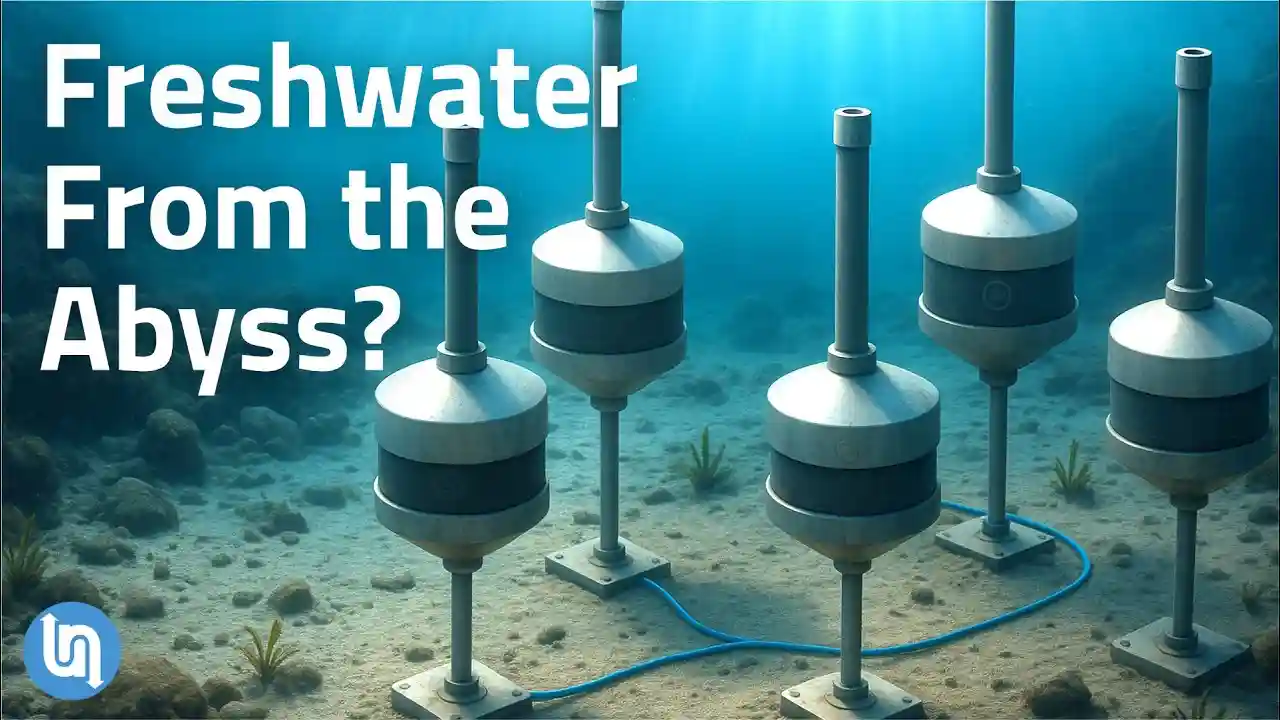
The science behind deep-sea water desalination lies in utilising the natural pressures of the ocean at depths of 400 meters (more than 1,300 feet) or more. Companies like OceanWell and Flocean have developed advanced systems that install desalination pods on the seafloor. These pods use reverse osmosis (RO) technology, but instead of relying on fossil-fuel-driven pumps to pressurise saltwater, they take advantage of the natural forces at play in the ocean depths.
This process is both efficient and sustainable. The deep-sea RO pods use suction on the freshwater side of the membrane to draw water through while returning a majority of the remaining saline water back to the ocean with minimal environmental impact. The result? A system that consumes up to 40% less energy than traditional land-based desalination plants, making it a more sustainable alternative.
Why Turning Deep-Sea Water into Freshwater Matters Now
The fact that deep-sea water is now drinkable couldn’t come at a better time. Around the world, freshwater scarcity is reaching critical levels. In the southwestern United States, for example, decades of drought have reduced reservoirs like Lake Mead to historic lows. The Colorado River, which supplies water to over 40 million people, is drying up, and the impacts are reshaping daily life. Droughts are also intensifying across the globe, driven by climate change and increasing demand from growing populations.
While traditional desalination plants have stepped in to help meet some of the demand, they come with significant drawbacks. The energy-intensive processes they rely on emit large amounts of greenhouse gases, and their byproduct, concentrated brine, can harm marine ecosystems. Deep-sea desalination offers a cleaner, more efficient alternative to these challenges.
The Environmental Benefits of Deep-Sea Desalination
Unlike conventional desalination plants that return highly concentrated brine to shallow coastal waters, deep-sea desalination disperses brine more effectively. This is because the process doesn’t squeeze every last drop of freshwater out of the saltwater. Instead, it returns 85–95% of the intake water back to the ocean with only a slight increase in salinity.
To minimise any potential harm to marine life, companies like OceanWell are designing systems that pump the brine higher into the water column, where ocean currents carry it away and dilute it naturally. Additionally, the deep-sea RO pods operate in the ocean’s “twilight zone,” where biological activity is minimal. This eliminates the need for harsh chemical pretreatment, making the process even more environmentally friendly.
Scaling the Technology to Make Deep-Sea Water Drinkable
While the idea that deep-sea water is now drinkable is promising, scaling this technology presents logistical challenges. These systems require significant infrastructure, including pipelines running miles offshore and desalination pods installed at depths of up to 600 meters (2,000 feet). However, companies like Flocean and OceanWell are already overcoming these hurdles.
OceanWell is planning a pilot project in 2026, with its first commercial deep-sea desalination farm set to launch near Los Angeles by 2028. This facility is expected to produce 25 million gallons of freshwater daily, enough to meet the needs of a small city. In the future, offshore wind farms could power these systems, making them even more sustainable and reducing their reliance on traditional energy grids.
A Sustainable Solution for the Future
The fact that deep-sea water is now drinkable represents a significant step forward in addressing the global water crisis. By harnessing the power of the ocean’s depths, this innovative approach provides a cleaner, more efficient way to produce freshwater while minimising environmental harm.
While this technology holds immense promise for coastal regions, it’s important to remember that desalination alone isn’t a silver bullet. To truly secure our water future, we must also focus on conservation, wastewater recycling, and sustainable water management practices.
Still, the race to harness the potential of deep-sea water is a race worth winning. As companies continue to refine and scale this technology, the dream of providing clean, drinkable water to drought-stricken communities is becoming a reality—one drop at a time.
References
- OceanWell – Moving Desalination Offshore ↩︎
- The Colorado River Basin is experiencing the worst drought in recorded history. ↩︎
- The US megadrought won’t just end – it will change the land forever ↩︎
- Southwestern North American megadrought ↩︎
- A 1,000 Year Drought is Hitting the West. Could Desalination Be a Solution? ↩︎
- Mesas, Cliffs, and the Ancestral Pueblo ↩︎
- What is causing the megadroughts in North and South America? ↩︎
- Dust Bowl ↩︎
- Global increase in the occurrence and impact of multiyear droughts ↩︎
- Severe droughts are getting bigger, hotter, drier and longer ↩︎
- List of U.S. states and territories by area ↩︎
- Future global urban water scarcity and potential solutions ↩︎
- Claude “Bud” Lewis Carlsbad Desalination Plant ↩︎
- Energy is vital to a well-functioning water sector ↩︎
- Is Desalination a Solution to Freshwater Scarcity in Developing Countries? ↩︎
- Reverse Osmosis ↩︎
- Electricity Statistics by Country ↩︎
- Environmental impact of desalination technologies: A review ↩︎
- Energy-water-environment nexus underpinning future desalination sustainability ↩︎
- A Blueprint for 100% Solar Desalination ↩︎
- Hydrostatic pressure plants for desalination via reverse osmosis ↩︎
- A new wave of desalination startups argues that deeper is better ↩︎
- Oil and gas from the sea ↩︎
- Flocean’s Deepwater Desalination Reforms A Vital But Costly Industry ↩︎
- Subsea Desalination ↩︎
- OceanWell Secures $11 Million in Series A to Build Deep-Sea Water Farms and Supply Abundant Fresh Water ↩︎
- Background Interview with OceanWell CTO Dr. Michael Porter ↩︎
- Waterise – Sustainability ↩︎
- Flocean ↩︎
- OceanWell and LVMWD Announce Partnership to Pilot California’s First Blue Water Farm ↩︎
- OceanWell – An Introduction ↩︎
- Subsea innovation meets proven technology ↩︎
- Slaking the World’s Thirst with Seawater Dumps Toxic Brine in Oceans ↩︎
- Introducing OceanWell ↩︎
- OceanWell Water Farms ↩︎
- Fouling prevention, preparing for re-use and membrane recycling. Towards circular economy in RO desalination ↩︎
- Waterise – Who We Are ↩︎
- Flocean Milestone: New data validates commercial readiness of subsea desalination ↩︎
Related
Can Nanotechnology Redefine Our Future Home Water Usage?
Harnessing Pressure: Exploring Water Pipe Turbines for Clean Renewable Energy