
Table of Contents
Why is it designers and specifiers often specify subpar products?
After three decades in design and construction, I’ve witnessed countless projects where seemingly excellent choices led to unexpected complications. The issue? When selecting the best building products, we’re usually swayed by the performance, ascetics, or financial kickbacks of the product whilst neglecting crucial factors like installation practicality, sustainability, and health implications.
Beyond Performance: Identifying the Best Building Products
When I began my career in the 80s, we selected building products primarily based on their published performance data, or local availability – U-values, vapour resistance, fire ratings and the like weren’t that common – certainly not in housing projects. Today, these metrics are very important, but they represent just one dimension of a product’s true worth.
Consider the typical specification process: a designer, engineer, or builder reviews technical data sheets, comparing products against design requirements. They could specify the product with the best performance-to-price ratio on paper. Job done, or so they believe.
What this approach misses is everything that happens between delivery to site and the building’s eventual demolition – the true building’s lifecycle. Let’s be practical and just consider the building cost.
The True Cost of Installation Challenges
I’ve stood on too many building sites watching skilled tradespeople struggle with products that looked brilliant in the catalogue but proved a nightmare to install. These challenges manifest in several ways:
Material wastage: Panels manufactured in dimensions that don’t align with standard timber or steel frame spacings create offcuts that cannot be utilised elsewhere. On one housing development I reviewed, I calculated nearly 18% of external cladding went straight to skip due to this mismatch. That’s 18% financial wastage too.
Installation complexity: Products requiring specific sequencing or specialised fixings extend programme times. When tight construction schedules get compromised, the knock-on costs of delays far outweigh any performance benefits.
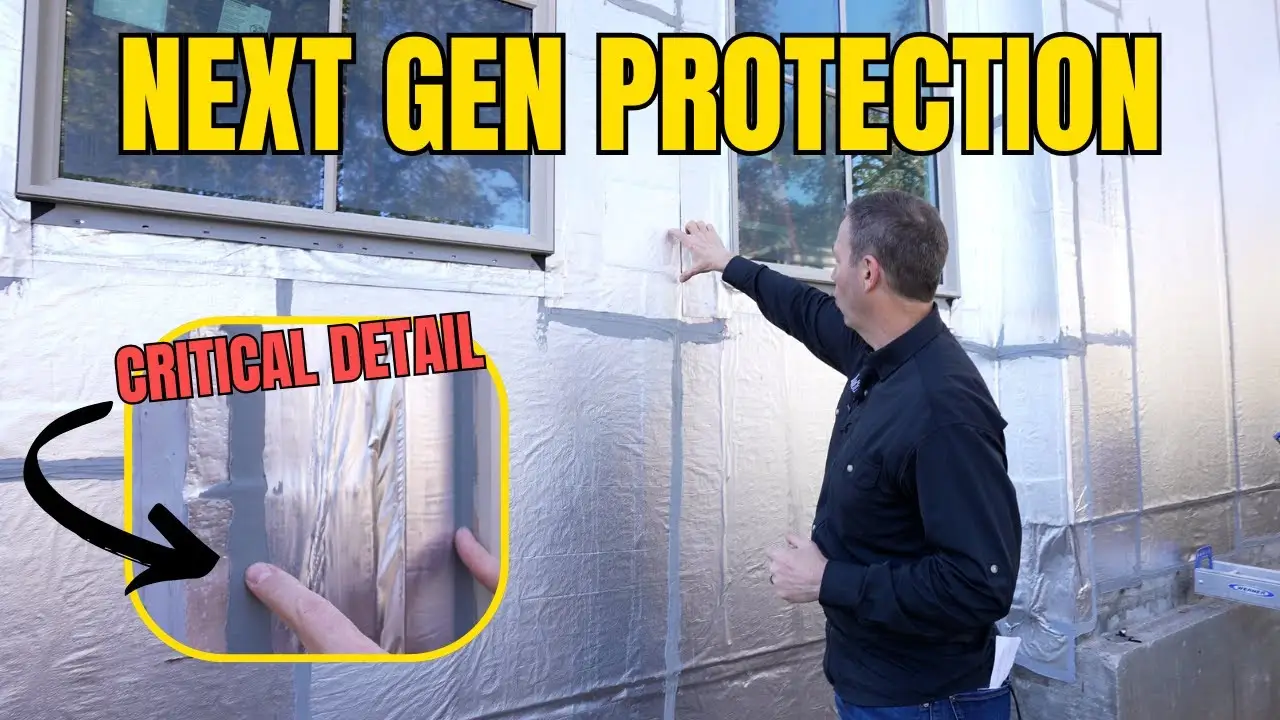
System incompatibility: Building elements don’t exist in isolation. That foil-backed air barrier with exceptional thermal performance? It’s brilliant until you puncture it with hundreds of rainscreen fixings or discover mobile reception inside the building has been compromised.
Check out Matt’s video on this very issue. Matt praises what he feels is a very good performing product, but does it tick all the boxes?
Video supplied by Matt Risinger and The Build Show
Health Implications Beyond Occupants
We’ve become increasingly conscious of how building materials affect occupant health, with VOC emissions and indoor air quality rightfully receiving attention. However, we often overlook those most intensely exposed – the installation teams themselves.
Installers working with certain products might spend hours daily handling materials that release particulates, require adhesives with strong solvents, or demand awkward installation practices. The health implications can be profound, particularly with cumulative exposure over decades.
Let’s take treated timber for example, it’s full of very bad chemicals that when cut get breathed in – unless you’re wearing a good face mask that is. To date, I have never seen builders wearing facemasks on a building site when cutting treated timber.
I recall one skilled carpenter who developed severe respiratory issues after years of cutting fibre cement boards without adequate extraction. The product specification never mentioned the silica content or recommended cutting methods. And we all know about Asbestos – it was once thought of as an extraordinary material, hence why it was used so often.
Maintenance Matters
A product’s contribution to building performance doesn’t end at handover. Understanding maintenance requirements is essential for true lifecycle assessment.
External renders promising 30-year performance may require specialist cleaning every five years. Mechanical ventilation systems with impressive heat recovery efficiency might need filter replacements quarterly. These ongoing interventions carry both financial and environmental costs rarely factored into initial specifications.
I love timber joinery, but if I’m totally honest it’s an absolute pain to maintain. I have even got to the stage of my life where I won’t use it in my own house builds – even though nothing beats it for looks in my opinion.
A Holistic Approach to Finding the Best Building Products
After decades in the industry, I advocate for specification frameworks that consider:
- Whole-system integration: How does the product interact with adjacent materials and building services?
- Installation practicality: What are the waste factors, specialist tools required, and potential challenges for installers? Is it easy to install?
- Health implications: Not just for occupants, but for those handling materials during construction and maintenance.
- Lifecycle assessment: Including maintenance regimes, replacement intervals, and end-of-life disposal considerations.
- True cost calculation: Looking beyond purchase price to include installation labour, waste management, maintenance and replacement costs. Don’t forget transport from supplier to site costs.
Collaboration Is Key
Achieving truly optimised buildings requires breaking down the traditional barriers between designers, suppliers, and builders.
Early contractor involvement in specification decisions brings practical installation knowledge into the equation before choices become fixed. It can save the project a lot of money if the design is influenced by the people who actually construct the building.
Similarly, facilities management professionals offer valuable insights into maintenance realities that should influence product selection from the outset.
The most successful projects I’ve delivered have involved collaborative specification workshops where designers, suppliers, contractors, specialist subcontractors and client maintenance teams evaluate options together.
Finding the best building products isn’t merely a technical or purchasing exercise – it’s about understanding the human, practical and long-term factors that determine a product’s true value.
Only by adopting this holistic approach can we create buildings that perform as intended, not just on paper but throughout their entire lifecycle.
Related
Guide to Choosing an Architect for Your New House Project.
Guide to Choosing The Right Builder For Your New House Project