
Foreword
by Ian Thompson, Editor at The Build Review
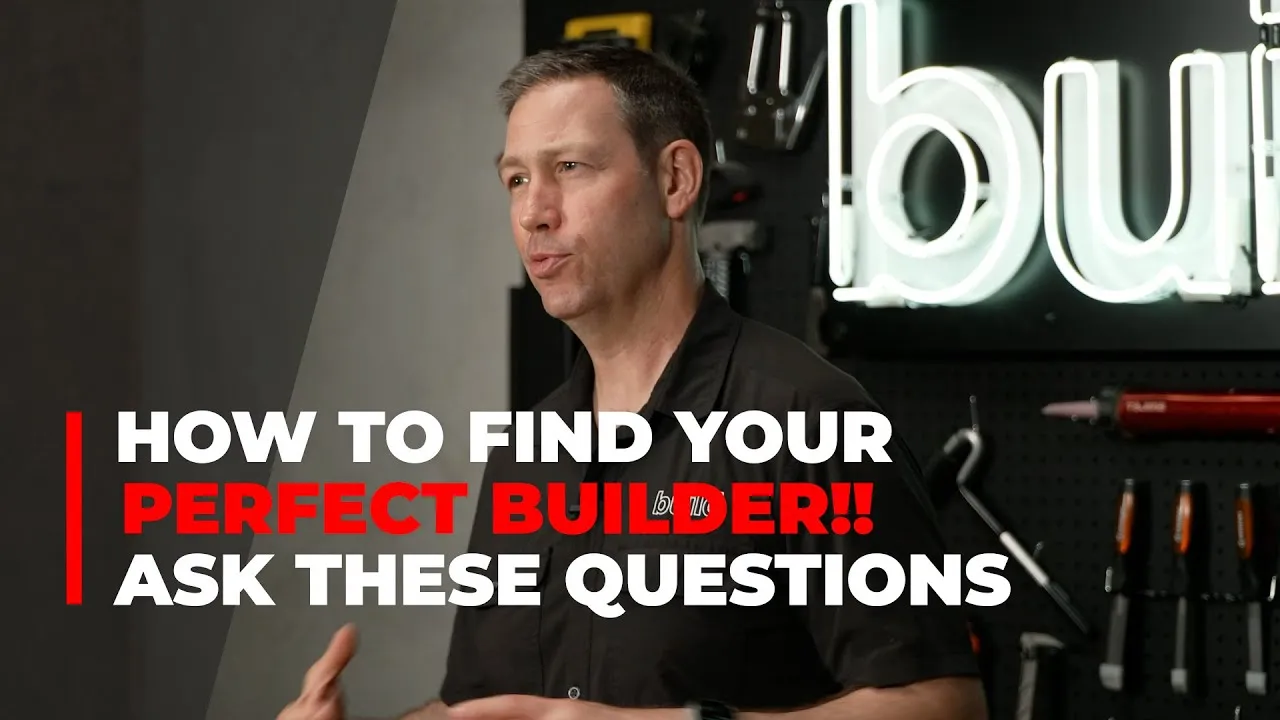
Matt’s discussing his tips to help you employ the right building contractor for your new build or major renovation project. Please consider that whether your prospective builder answers the following questions honestly is another matter entirely.
My advice is to ask to speak with previous customers about their build experience, and importantly gauge their project scale and complexity against your own project requirements. Ask previous customers whether their builder was easy to communicate with? Came in on budget? Were they efficient and did they plan and order all their materials in advance so that they avoided delays?
If you’re using a new building system or a building system that isn’t common in the area and your chosen builder hasn’t used it before then you will be paying for their education in one way or another, and they may be a bit slower, but that doesn’t mean don’t employ them. Good builders will adapt and learn quickly so go with your gut feeling on this.
Also, the bigger building companies aren’t always the best so make sure your chosen builder has the right resources and equipment to do the job properly and efficiently. If you’re not sure ask around, ask their suppliers at the local builder’s merchants for example.
Finally from me, the cheapest isn’t always the best choice. I prefer to pay my guys slightly more by putting them on performance bonuses. If they hit a milestone earlier or on time then pay them a bonus. In the grand scheme of things most tradespeople will work better if you dangle a carrot in front of their noses. But don’t take your eyes off the prize, make sure they are efficient and build well. We can all build fast and terribly!
Top 20 Builder Interview Questions
Over to Matt:
If you’re planning on building your next house, you need to be sure to ask these 20 questions before moving forward with a prospective builder.
1. What is your approach to water proofing strategies and window installation?
2. How many years of experience do you have?
3. Who will be responsible for building my home?
4. Can you show me examples of similar past projects or current projects you’re working on?
5. What’s your educational background and do you have any relevant certifications or memberships?
6. Have you been involved in any bankruptcies, unsatisfied judgements or litigation, and if so what happened?
7. Can you explain why you build a better home than others?
8. How do you handle change orders on your projects?
9. How do you estimate the cost of the project and ensure it stays in budget
10. Can you give me an example of a problem on a past project, what was the situation, what action did you take and what were the results?
11. Tell me about a house you worked on with a difficult client. What was the situation, actions, and result?
12. Tell me about a time when you used logic and good judgement on a job site.
13. Tell me about a time when you had to many things to do and you were required to prioritize tasks. How do you organize your day?
14. Can you give me an example of how you motivated an unwilling subcontractor or inspector to go your way.
15. Whats the worst failure you’ve had on a building after the owner moved in and how did you handle it.
16. Tell me about a time you had to fire a subcontractor
17. How did you manage a client’s unreal expectations?
18. Tell me about a time you dealt with someone who you didn’t like or personally didn’t like you?
19. Can you provide references from past projects?
20. Are they local?
Video Transcript:
Alright guys, usually I come to you talking Pro to Pro, but today’s build show is a little bit different. I’m really talking to you as a consumer, as someone who’s interested in building a custom home. And I’m going to give you 20 questions to ask your builder to interview them and find a really good builder for your custom home. Today’s build show is all about the top 20 interview questions. Let’s get going.
Okay, so the genesis of this video: I published a video not too long ago with my builder friend, Brian Long, where five years ago, he interviewed for a very cool custom home. He didn’t get the job; another builder got it. And if you saw the video, it’s been a pretty big deal. It’s been frankly a big disaster for those clients. Now they’ve had to come back and hire Brian to rip the entire outside of the house off and redo it.
So before we get into the interview questions, first let me say that the litmus test for a good builder in my mind is how do they deal with water? You know, water is eighty percent of the construction defect litigation. So before you even come to an interview with a builder, we need to be looking for builders that understand water management. One easy litmus test for me is if that builder is used to and normally building with cardboard sheathing, I would scratch them from the list. That goes for custom builders like me and my friends, or I would tell you that’s also true of production builders that you’re evaluating. It’s just not a good, durable, long-term product. It’s really hard to do good water management details with it, with very traditional good overhangs and gutters. You know, those houses can work, but if you start getting more modern or more difficult architecture, it’s a no-go. That’s a litmus test. So water management, number one.
Also, when you’re out there visiting job sites prior to that interview, this is where you can get a feel for: Are they organized? Are they clean? Do those job sites look good? Does it look like they’re an organized, efficient, effective builder who really takes pride and care in what they do?
But ultimately, getting to the very first question when you’re sitting down and you’re interviewing that builder: What is your approach to waterproofing strategies and window installation? Now, if you’re a Build Show longtime subscriber, go back and check my videos. I think you can build a great house with house wrap. I’ve really moved away from it, but if you’re building traditional architecture with overhangs and gutters like I said, you can make house wrap work. But we want to make sure that those windows, number one, are installed well. You’ve got a sill pan under those windows, that they’re taking water management details seriously, that that house wrap is not blowing all over the place on the job site, that they’re using head flashings on their windows. Those things are really important to you as you’re thinking about which builder to interview.
Next up, how many years of experience do you have in the construction industry? This is an interesting question. I’m not necessarily advocating you hire a builder with 30 or 40 years of experience. There are lots of young builders that have very little experience but have caught up to speed and have been educating themselves. This isn’t necessarily a question of only hiring a builder with decades of experience, but what you’re trying to figure out is how do they keep themselves up to date? How do they learn? What magazines do they read? What videos are they watching? Are they staying up with the latest building techniques? We can’t build houses like we built them 30 or 40
years ago because houses today have much
thicker and much different insulation
codes. So we don’t just want a builder who’s doing things old school like they built in the 70s or 80s or 90s. We want someone who’s really up with the best techniques, the best building practices, the best building products, and is really going to be interested in building you a bomber custom home.
Number three, who will be responsible for building my home? In other words, when you sit across the table with that man or woman as your builder, are they the ones who are actually going to be building, or do they have project managers or superintendents or somebody else? If it’s me, if you’re interviewing me, I’m not actually the builder out in the field anymore. I’ve got gosh, eight project managers with various levels of experience. I have project managers and assistant project managers. They’re the ones who are actually in the field all day long. But one difference I think that I have when I come across this interview question is I say, you know, one thing that really makes my company different is I’m using the same subs for years and years and years. So the same framer that was framing my house is 13, 14 years ago is the same framer, same crew today. And I was, you know, a dozen years ago out in the field every day as the solo builder. I’m not anymore, but those are the kinds of questions you want to try and figure out who’s actually going to be in the field building your house.
Number four, can you show me examples of your past projects that are similar to what I’m looking to build? And do you have any active projects that I can visit? If you’re building a real modern house, you want to see that the builder has done that before. If you’re building a house with flat roofs, you want to see that the builder has done that before. Not so much modern farmhouse versus transitional. That’s not as big a deal. But if you are building a style that’s a little different or, frankly, a little more robust waterproofing needed, you want to make sure that builder has done that before, and that’s really important.
Number five, what’s your educational background, and do you have any relevant certifications or memberships? This is really getting back to that how do they stay current question. I’ve been a member of the Home Builders Association for, gosh, 20 years now. The whole 17 years I’ve been in business for myself, 18 years I’ve been in business as a custom builder. And I think that membership, the Custom Builder Council in particular that I belong to, has been vital in my success and my growth as a builder, businessman, and as a builder when it comes to building science and best practices.
Okay, here’s a tough question, but I think it’s a really vital one. Have you been involved in any bankruptcies, unsatisfied judgments, or litigations? And if yes, please explain. This isn’t a litmus test. If you’ve been in business long enough, I feel like you’re going to get sued, but you want to find out how they handle it. Is this a builder who immediately says, ‘Oh, the owner was crazy,’ or do they say things like, ‘Yeah, I had this issue a couple of years ago. Either we settled it or we went to court or whatever it was. Here’s what I’ve learned from that. Here’s what I’ve taken away. Here’s what I do differently.’ And if they won’t get at that, I think that’s a good question. Did you have any blame to play in that lawsuit? We want honest answers, and I think surprisingly, people will give you very, very honest answers to those hard questions.
Number seven, can you explain why you believe you build a better home than other builders? I think this is a great one. Just ask the question and show up and let them answer that.
Number eight, how do you handle change orders during the construction process? This really gets a little bit towards a fixed price versus Cost Plus. We don’t have time to go into that today. I do everything Cost Plus in my business, but there are lots of great builders out there that do everything fixed price. So this isn’t necessarily that, but you do want to find out how changes are going to be handled. Is there a change order fee? What’s that process look like? How long is it going to take to integrate that? I’ve never seen a project that didn’t have any change orders, and depending on your level of pre-planning, if you do a lot of pre-planning, you may not have a ton of change orders. You’re certainly going to have some if you’re not a great pre-planner and you can’t visualize things very well or you’re not doing 3D renderings. Maybe you’ll be surprised how many changes you’re going to have, and you need to figure out how that builder is going to manage those ahead of time.”
Number nine, how do you estimate the cost of a project and ensure that it stays within budget? Another kind of follow-up on that is how many of your projects come within their budget or come within their contingency amount? It’s a great question to ask and just see what they say about that.
Number ten, can you give me an example when a problem happened on a past project during construction?
What was the situation, what action did you take, and what were the results? They call this the STAR method. I was actually a corporate recruiter for a couple of years recruiting young builders, and this is a great method. We don’t want pie in the sky examples of things like, ‘Well, you know, in this scenario, I might do XYZ.’ You want concrete examples of when a problem happened, what did you do, and what was the result of that? If you ask it in a concrete way like that, you’d be surprised. I think people will give you a very honest answer.
Next one, that’s very similar: tell me about a house you worked on where you had a very difficult client. What were the situations, what were the actions you took to keep that client happy, and ultimately, what was the result of that?
Another STAR question. Give me a specific example of a time when you used good judgment and logic to solve a problem on a job site. You know, builders, we don’t have a script. This isn’t a McDonald’s hamburger playbook. Even though I’ve got a 50-page set of plans and a 100-page set of specs, there’s 10,000 ways I could build that house and 10,000 different schedules and a hundred thousand different subs I could use. So we need builders that have good critical and logical thinking skills. Questions to figure out how they solve problems and figure out things on the fly, this is really good.
Next up, number 14. Tell me about a time when you had too many things to do and you were required to prioritize tasks. How do you organize your day and how do you schedule subcontractors? This is a really good one. I’ll be honest, I’m not the most organized guy in the world, and that’s a big reason why I’m not in the field all day. But my people are very organized, and so I need people around me that are very organized. And this is really one of those questions that if you’ve got a one-man show, a one-woman show builder, you need them to be very organized. If they’re a multi-person company, then you need to find out who is the organizer and will they keep my project and the organization of my project on task.
Number 15, tell me about a time when you had to motivate an unwilling subcontractor or inspector to go your way. This is a great question again. We deal with unwilling people, and the pandemic sure brought that out. We had a lot of issues, frankly we still do today, with the busyness and the marketplace for getting people out to the job. So you want to find some concrete examples of how they handle that.
Number 16, what’s the worst failure you’ve had of a building after a client moved in, and how do you handle it? Great question.
Number 17, tell me about a time you had to fire a subcontractor, and how was the project affected after that happened?
Number 18, tell me about a time you were able to successfully deal with another person, even when that individual maybe didn’t like you personally or vice versa. Actually, I don’t love that question. I might toss that one out.
Number 19, tell me about a project you’ve done where the clients or architects had an unrealistic expectation, and how did you meet or change those expectations? Gosh, that’s like 80 percent of client satisfaction, as expectations management. We need as builders to figure out what our clients’ expectations are and either meet those expectations or change those to more realistic expectations. So this is a good way to try and figure that out for that person across the table from you.
Number 20, can you provide references from past clients or projects? I know this seems a little bit old school, but you know what, even if they’re, of course, giving you good references, those people you call are gonna, just like the builder, give you honest answers when you ask them hard questions. That’s probably a whole other video of what you should ask references, but you want to ask for references. You want to make sure that the builder is willing to give those to you, the client’s name and number and email, and you do want to actually call those references. I’m shocked by how few of the people that interview me and my company actually call my references. And there’s lots of good information, lots of good insight from someone who’s been a past client. And generally speaking, we want references that are relatively current. A small builder who’s only doing one or two projects a year, not everyone’s going to be willing to be called for a reference, and that’s not necessarily a bad thing. But you don’t want references from 10 years ago or 15 years ago. You need to keep those relatively current.
And a bonus question, question number 21, which I say to the end but it certainly could be the very first question: Do you watch the Build Show? I love hearing from you in the comments that you’re using my methods, that you’re learning from these videos. I always think of my videos as pro to pro, but of course, so many of you that are watching these videos are engineers or doctors or attorneys or IT professionals that are going to build a house, and they want to know what the pros are saying. And you watch my videos, so big thanks for your support, guys. I suspect I’ve missed a couple of questions, comment below on something that I’ve missed. And if you thought these questions were helpful, I’d also like to hear that below. Really appreciate your support, guys. If you’re not currently a subscriber, hit that subscribe button below. We’ve got new content here every Tuesday and every Friday. Follow us on TikTok or Instagram. Otherwise, we’ll see you next time, on the Build Show.