Foreword by Ian Thompson, Editor
Timber has considerable construction benefits and environmental attributes which make it a preferred material in the design and build industry. The future is undoubtably moving towards the adoption of mass timber construction due to its lower resource usage, stability, and added strength.
There are many reasons to optimise our timber designs, because the trend has historically been to follow the building code’s minimum recommendations, not design for efficiency and ease of build.
To gain maximum value for Timber use , it is important that designers , builders and consumers understand their role in good industry practice , business as usual practice and poor practice.
Mark’s presentation will outline the important and current issues that designers and specifiers can implement to achieve the ultimate benefits, offered by the selection and use of this remarkable material. Mark will contend that many designers and builders are not achieving the best value outcomes possible and offer some practical recommendations and tips for better results.
Speaker Mark Thomson – B.Arch. A.D.B.E.T. – CEO at Eco Effective Solutions & Board Member at Responsible Wood Mark is a multi-awarded Queensland Architect with over 30 years’ experience in the commercial building and design sector. He is the Immediate Past President of the AGDF (Australian Green Development Forum), a Board member of the Griffith University Eco Centre and Micah Projects, a not for profit (NFP) social justice organisation He is a Faculty Member of the GBCA (Green Building Council of Australia), Greenstar Accredited Professional and EarthCheck Accredited Professional. Over the past 25 years, he has held company directorships in property development, hotel, design, environment and pollution technology organisations. He co-founded the Centre for Sub Tropical Design in 2005, whilst an Adjunct Professor at QUT, and was Corporate Sustainability Principal of the Schiavello Group of Companies, Australia’s largest commercial furniture manufacturer and fitout construction organisation.
Unleashing the Power of Timber Design: A Sustainable Journey
Video Transcript
Good morning everybody. It’s great to be here for another Wood Solutions webinar. I’ve had the benefit of participating in many of these before, like you are now, so now I’ve got the job of trying to keep you informed and educated hopefully over the next 45 minutes.
So I’m quite passionate about the use of timber, and I’ll get into my presentation now and hopefully share with you this morning.
So that’s now up on the screen, Alistair. Yeah, that’s all good, Mark. So go ahead.
Terrific. Excellent. So the topic of my presentation today is to get the ultimate timber benefits uh through using wood. And this is something that uh, I feel very strongly about and hope to share with you some of my experiences over practice over a number of years.
So just getting my slides going which, for some reason, are not happening. Just…just click on the screen and then try again. Sometimes they lock up on the first one. Yep. Yeah, they seem to have. Right. Excellent. Yeah, for some reason they do lock up.
So, look, start off with today. I’d like to acknowledge the traditional custodians of, um, where I am at the moment, which is in Brisbane. And they are the Turrbul people, the Jagara people, the Nunggabura people, and the Jagara people. And I think it’s important to acknowledge elders past and present, and recognize the sovereignty of their land. That the sovereignty of their land was never ceded. And I envisage a community where justice, awareness, and equity form the basis for regenerative environment generations.
And I think it is important to acknowledge uh where we’ve come from. And um, and today, what I’d like to do is to give you a general overview of the benefits of timber that I’ve come across, to give you my perspective on why Australian timber is so important, why we should be using it and promoting it, to share with you the issues that we all have with timber, and to hopefully make sure we don’t overlook them, like conscious a lot of people do, to talk about how we get the maximum benefits, and to give you some tips on things that I’ve learnt over the years to make using easier.
So each piece of wood can be unique in grain, color and line. And so as a designer, this is an amazing material to work with. So we understand the general benefits of wood as being lightweight but strong, it’s easy to process, to finish, to maintain, to repair and, more recently, we’ve come to understand, through life cycle assessments, that would outperform many other materials in terms of embodied energy, air and water pollution, and has a much lower carbon footprint.
So in summary, there are many benefits in using wood. And benefits in construction are that it’s generally safe, easy to work with, cost effective, versatile, and is naturally anti-corrosive. And of course, the uses for timber are multi-fold. We’re using regulated formwork for landscape purposes, for structural purposes, and we’re seeing more and more the use of timber internally for wall linings. Traditionally it’s always been used for joinery, but we’re seeing many new furniture forms adopting the benefits of wood.
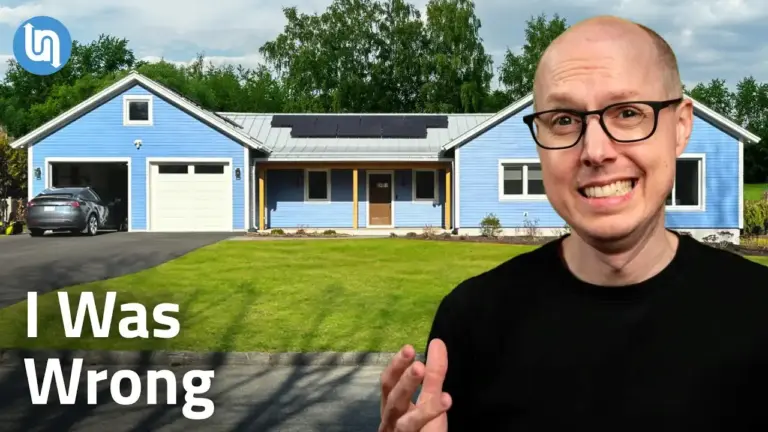
So in my, my own story is um, dealing with wood uh in my own home. And literally 20 years ago, I designed this home in the outskirts of Brisbane with the eco resident meaning for ecological and healthy. And my objective for myself and my family was to design the most environmentally friendly home that I could. And it was timber that I moved towards in terms of understanding the best opportunities in delivering that outcome.
So for me, with something that I had used before, but never used as extensively as I did in my own home, one of the reasons for that was, as I said, because of its environmental qualities. And I ended up designing an engineered timber home using predominantly plywood and using it for internal surfaces, structurally and pretty well right through the home. It’s it’s effectively a plywood home.
And one of the amazing things uh that I learned was using a structurally stable material like marine plywood, which is apparently what was the predominant material in my home, I could actually pre-fabricate it and get accuracy and get design detailing done in a way that was not possible.
This is my home outlaid at the Construction Training Center in Brisbane, where my builder led space to to basically pre-assemble. And I call this hybrid construction because, as you can see, most of the home was panelized, and they delivered it to site and assembled.
I guess it was the detailed detailing that I went through with my builder to look at how, how timber was used and how to get the maximum value and benefit from it um and I learned that the detailing of timber is particularly important. And ventilation and detailing is essential. One of the problems we’re seeing with a lot of timber use in this day and age, particularly as we move towards the path of, the housing is that there’s not enough ventilation provided for some of the joints.
In the case of my own home, this was elevated up off the air, and we use very conventional details to provide durability for the timber, for termite protection. As I said, it’s a lightweight plywood home where we use timber structurally, and used uh lvl, basically as all the uh structural materials. You can see on the slide on the right that the timber outrigger that was supporting the roof, and use a glass cap on the end just to completely protect the end grain of the timber.
Continue Reading
So we went to a fair bit of detail and consideration. And most of the upper parts of this building are protected by the roof cladding or roof shooting of some type. It was a very deliberate attempt to look at how we use timber, how we could get the maximum benefit from it, and how we could come up with detailing, but was quite cost effective and quite easy to endure.
20 years later, um, I’ve, I lived in the home for 10 years. And 20 years later, is a slide on the right whereby the house has been painted. And I guess one of the maintenance issues that I’ve come to understand with timber is that unless you really understand how the timber is going in 5, 10 and 20 years time, it may not be getting the most benefit from it.
So in my case, the finishes that I chose initially were a clear stained ester pole. And I myself had re-coated the house at least once. But the cost of doing that on a long-term basis, the current owners made the decision to change that. And so now the house structurally is as good as it ever has been, but it has a different experience due to the an easier maintenance regime by using different finishes.
And I guess the flexibility of the system that we used for my home was then developed to look at a few other simple buildings that my office was involved in at the time. And the benefits that we found were using smaller sheets, having, using smaller panels I should say, and using plywood in particular, whereby we can assemble it very simply and effectively, just using either jacks in a couple of people.
So this became a very cost-effective way of building. The the gridular building system, which was the basis of both my home and a number of buildings that I’ve done for, effectively a structural timber plywood, it’s generally clad with other wheels to achieve its protection.
This is the Logan Waste Administration building. We also embraced a whole lot of environment and demonstrated how we could use timber in a very cost effective manner. And it’s interesting, because engineered timber and marine plywood as many of you know, are not the [Music], not the cheapest materials to use from a timber point. But what I’ve learnt is if you use these materials really efficiently, they become very cost effective.
Now, the home I moved into in years later was an older Queenslander. So once again, timber was a dominant material in this home. And I did a major extension to this home to satisfy the needs of my family. It was very hard to leave my first home, but I found that, as it was on the outskirts of Brisbane, the challenges of living sustainably meant that I needed to reduce my transportation burden um, and both for my family and on the environment, and move a little closer into town.
So uh buying a traditional Queenslander seemed to be the obvious choice. And I guess in the extension work that I did, I made sure that I used timber as extensively as I could. So instead of using gyprock, which is the conventional internal material that we’re using residentially, I’ve used again plywood. And I find this particularly useful in domestic work because it gives the ability to sort of hang and use the walls of the building in a way that you can’t if you were using hip rock.
You could see my son’s rooms here. I created faces over the cupboards and a little loft. It’s all done in the carpentry trade and, made by by reducing the number of trades that you have on a project, you can actually increase, costs and decrease costs. You get the maximum benefit from using the one. It’s real. So again even this new home although completely different from a design point of view,
I was successful in being able to use timber in ceilings, floors used new timber windows. And again all of these materials were selected and certified and chosen for their environmental qualities as well as their cost efficiencies. During both building processes I struggled occasionally and found that when you are really quite adamant about using particular types of timber, there’s a lot of people out there that will actually tell you what you want to hear.
So unless you are quite facilist about making sure that you’re getting what you’re specifying people will substitute things. And often you’ll be told that things are not available so you’re offered another alternative. So it’s particularly important that you make sure that you are aware of what timber is available at the time you’re building because otherwise you’ll most likely be constantly challenged to ensure that sorry be constantly challenged with other alternatives.
And inevitably you might find that those other alternatives don’t have the same qualities that your originally specified material had. So you need to be you need to investigate this and you need to work with youtuber suppliers and rulers to make sure that the timber you’re after is all available, always available. The other thing that’s quite important to understand is that the timber that we are using a lot in furniture and the timber that’s available in retail outlets is not always the timber that you might think.
So for much of the furniture that I’ve used in our homes over the years, I’ve always tried to use recycled timber and I’ve learned many valuable lessons. That recycled teak and recycled timbers generally, the way they’re promoted is that they may not be all of the timber in a particular piece.
So I’ve had a number of discussions with people in retail stores to actually make sure that I am getting recycled timber because it’s not uncommon for furniture to have a recycled badge, but you can find that only 20% of, sorry only 80% of the timber is recycled and the other 20% might be virgin rainforest timber.
So um, it’s really important to understand the timber you’re using and and where it’s coming from. And as I’ve learned in using timber so extensively to understand the maintenance of it is another factor because as you’re working and living with the material itself, it has these amazing benefits but unless you maintain it correctly, you don’t get the advantages of those benefits.
Oh, I’m passionate about making sure that we are working within our means in our environment. More recently, uh, like many of you have come across the concept of regenerative design. This is a real shift in thinking, uh, from sustainable design, which is what I’ve always been advocating, work towards a whole new approach where we need to be regenerative. So that means we need to reuse materials and hopefully uh have a lesser burden on the planet by continually sourcing new materials.
So the regenerative design approach is something that I think need to study in a bit more detail and this is a particularly favorite project of mine which is designed for deconstruction. This is by architects Architectures and Set the McCormick of New South Wales.
What’s particularly interesting to me about this is this concept of design for deconstruction. So it’s actually using materials in a way that they are assembled can be disassembled and reused time and time again and this is one of the unique things that to me, timber and one of the amazing benefits that timber can provide, because its life can go well beyond the life that it’s first used for.
And in seeing projects like this, I’ve come to understand that you do need to understand it doesn’t happen accidentally so one of the ways is to analyzing building design uh, complexity to make sure that you use there’s a great demand for composite materials in buildings these days, and I’m really concerned with this trend because composite materials are very difficult to recycle.
So I think it’s really important to minimize the different types of materials that you use and timber seems to be the perfect material to be able to use in many different ways in a structure, and also if you use them in a way that is valuable they are worth recovering but the other thing that’s important is to make sure that the records of your designs are actually kept and the as built drawings which is something we will become aware of in the building industry recently.
The requirement to deliver as built drawings. It’s important to put records type of timber and where that timber has come so in summary to leave clues for future owners and builders that you’ve considered that this material will be reused and potentially recovered in the future.
I don’t know about you but this is a completely different way of thinking about how we design buildings and this is what I call the regenerative or restorative approach to building which I’m excited to think is something that we can all work towards to get a far more sustainable information.
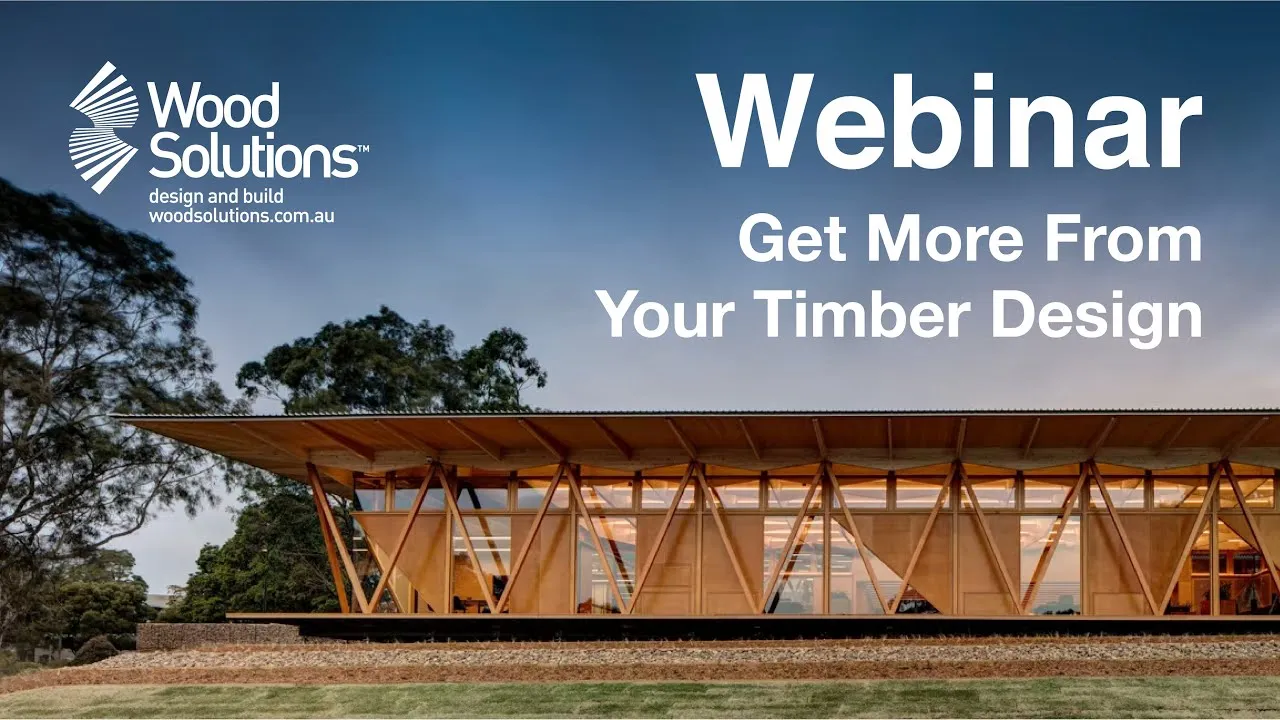
So again this particular building the macquarie university you can see isn’t compromised in design or appearance by this design for deconstruction approach. And the other thing that’s really working in our favor at the moment is that we’re seeing the development of a whole fastening and one of the other things to ensure that the durability of your design and buildings is maintained is to make sure that you are always using using the correct fastening technique and we have mechanical these days.
It makes our life for builders much easier and the devil is in the detail so it’s important that we actually think about the fasteners and think about the methods in which they’re utilized and how they look again this provides another design opportunity to actually integrate um timber and fastenings in a way that is really attractive and adds value to a building.
I was in Melbourne a couple of weeks ago and stumbled across this exhibition, Melbourne art gallery, Victorian art gallery and again to me it’s another example of how timber can be used and particularly in a prefabricated and using computer generated design there are just so many opportunities that timber can create from a an aesthetic and there are some really exciting developments happening in the moment.
And I’m sure clt, if you’ve attended some of the previous wood solution webinars, you’ll become able to become familiar with CLT particularly from a commercial building point of view, it’s exciting to understand that it’s now being used domestically as well for individual homes and this is actually on the wood solutions website.
So we’re seeing timber being used in a way that it hasn’t been before, products and new sustainable products that we can use to continue most this sustainable material. Interestingly, when you start looking around you can see that elsewhere in other parts of the world, CLT has really taken off and in this particular instance you can see that the CLT is actually the roof structure.
So if you think about how we traditionally build uh roofs with trusses and frames and everything, this is a to me a fantastic solution to think that CLT can just become the structure, the interior finishes and deliver a whole exciting new design opportunity and method to deliver what I think is a far more sustainable solution. But you can see from that little image on the right hand side how by lifting the timber up off the ground and even using CLT as a roof structure you can get a very um solution.
This is a Dutch project but I can see this being utilized in Australia again. Um, overseas we’ve seen some pretty amazing timber solutions and timber being used in ways that perhaps we haven’t thought of here in terms of modular design and and this again is a design for deconstruction solution whereby this external framing is actually able to be um taken off um retained and put back on again so very different solutions in terms of thinking how we put together,
We’ve had this idea that building there forever which the structures of buildings should be, but many of the elements of the buildings can explain and be flexible and again this is the design aspects of timber that I think make it unique in our current workplace and work opportunities.
Now there are many terms that are being thrown around at the moment and the circular economy is one that many of you have no doubt heard about, but the three principles behind a circular economy is to make sure that you design out waste and pollution and that you keep those products and materials in use, and that you regenerate natural systems. And of course, once again timber is that material that really allows us.
So I feel really strongly that if we as designers and we as a timber industry really start embracing this new way of thinking, it can we have the resources in our own country and we can make sure that we use and make sure that our resources in this country can continually be maintained and utilized.
And the other exciting thing that’s become more prevalent is the use of understanding of biophilic design which is where timber and other natural materials are utilized in a design sense to get a whole lot of other benefits and we’re realizing that it’s actually really healthy to to be surrounded by natural materials and timber.
And certainly in the homes that I’ve lived in, I’ve actually had indoor testing done particularly with some of the engineered timber that I’ve used to prove to myself and my family that these environments actually be healthier than the traditional materials we tend to use within our own homes.
So the finishes we use, the materials we use, and the design approach we take uh is is exciting to understand getting even timber also has a couple of challenges being natural and cellular, cellular it tends to move and in different climatic conditions. Um, i find with the timber door in my own home at the moment, I can tell at different times of the year it expands and contracts, so right now it’s just rubbing a little bit but in summer.
So it actually tells me the time of the year because actually while you come to understand which moves and which doesn’t but it’s also prone to pests, to rock to move, and it’s the understanding of how treatments and everything are used with timber that enable us to get its ultimate benefit but it’s also important to understand that we can have a whole lot of different opportunities but we need to understand these finishes and understand the maintenance of them.
There are two slides of buildings on two different parts of the world where the timbers being deliberately left to age and I’m not sure about you but I’ve had many clients in the past who um not necessarily want their buildings to look like this but others who think it’s quite magical that you can see the quality of the timber.
In particular I think, um, one of the things I’m not done particularly well here in Australia is understanding how water runs off material. It’s something we need as designers to pay a lot more to and understand how the finishes we use need to protect the material and and also have an environmental concept.
So as I said the qualities and the expectations of timbers is something that you need to talk with your clients. And the people using your buildings because a lot of people expect timber will look as good as it did the day it was installed. But unless you have and understand the maintenance regimes required you must decide
So I’ve become quite um particular now about explaining to my clients that unless they maintain the timber and they understand that maintenance is required every five years, um they’re not getting the full value of the timber. And and also the selection of timbers for their location in terms of where they’re going to get, not density of the timber, something that I think is really important.
In greater detail, one of the things that I think we’ve tend to become a little bit lazy with is the understanding of using timber specifications. And I think it’s a bit of a problem in our industry at the moment that we just throw a specification together and then pick a particular type of timber solution and then push it onto the builder and say go away and make this work.
I think this is something where designers need to get a much better understanding of these actions that occasionally exist in standard specifications. I think it’s really important you to get involved in the specifications of the project but, uh, that often exist in specifications don’t become the reason that your builder can come back to you and fully, um, this and I have to use this because it’s this is the only thing available.
The other thing that timber makes us think about more and more is some of the health aspects. Although I said before biophilic design is very healthy, we need to be considering the manufacturing of timber in relation to off-gassing of various, uh, glues and things that we’re using and even controls.
So sometimes these elements can actually put a less than ideal environmental quality to the timber. Some of the traditional treatments we’ve used in preserving timber have been very toxic. The great news now is that we now have many more environmentally considered solutions, but again we need to seek these out because unless you ask for these, you may not be getting exactly what you think.
The detailing becomes incredibly important and I’ve learnt in the various projects I’ve been involved in that unless the move is properly detailed, unless you understand how to protect in-grains and allow water to run off timber, you are not getting the maximum value.
But again, these are some typical details which I’m sure many of you have seen, but like me you’ve probably seen many instances where these details are not used and the the net effect of that is that we are starting to waste this wonderful material we have access to and therefore needs to be replaced more.
I had the fortune of going to Japan a number of years ago and I saw buildings over there that were hundreds of years old, and to see the attention to detail that they put to innovative ways.
So designed for durability is one of the key things that I think we need to pay more attention to and the ways to do that is by detailing and using uh overhanging eaves to protect timber, sacrificial capping is either used traditionally or in a modern way to to give added value to the timber.
I mentioned before the importance of uh ventilation and making sure as we start closing our buildings up using passive house techniques, we need to make sure we have considered the appropriate movement and ventilation of timber, therefore we’re not creating moisture traps.
And obviously any protective finish we use, we need to understand the life of that finish, and then at the end of its life, is it going to be completely replaced or designed for deconstruction or uh doesn’t have to be um treated in the way it is the servicing of that, something that’s been in the design.
Now another thing that I’m rather passionate about is using local timber, and I think this is one of the best ways to demonstrate a local quality concept. It’s the way that we support our regional communities. And I’ve come to learn through my involvement in responsible wood, independent director, that our timber industry is probably amongst the most regulated industry in the world.
And but some of the challenges that have had in the past, they’re being overcome. Those challenges perhaps existed 20 or 30 years ago and one of the key things that we’re understanding now is the carbon benefit.
The good news is that most Australians are now associating wood as an environmentally friendly material and as a carbon film. So all of these timber buildings that I hope we’re all developing up and sinks and they become a benefit to our society and our community into our environment.
There’s still concern about um, issues of gestational or deforestation, and these are the sort of issues that we need to be confident make sure that we’re doing our part in specifying the thing.
I’ve become aware of is that the amount of greenhouse gas and emissions they’re associated with from overseas, which is now equating to 3.1 percent of global green emissions is predicted to go up to 10%. And that’s the the cost of transport around the world, which again is another reason we should be using local timber.
I think it’s interesting to understand that uh forest harvesting isn’t necessarily a pretty thing, but if done well and managed well, uh it it actually achieves great outcomes. And uh, as Alistair reminded me when I was talking about this picture on the left, uh, which is an example of uh responsible timber harvesting, he said it sort of reminds you every time you go building and you need to clear a block of land, in the past we used to clear the entire block.
Now we need to think about top soil and vegetation. So this approach that has been adopted in the industry, we’re now thinking about our individual in terms of trying to protect and maintain some of the benefits of what’s been made before.
I think it’s interesting to see how um environment regenerated, so this is a harvesting site done in 1988, five years later you can see the prolific regrowth and then some 17 years later it’s an amazing regeneration. And I think it’s important to understand now that we have one of the best forest minute management systems in the world, that we should be proud that the systems and the mechanisms we’ve adopted in our country have delivered a good industry for us to use.
The other thing which is always very topical is that we’re keeping jobs in our country by using. What are the criteria for sustainable for management? It’s important to understand that when we talk management there are so many different factors that are brought in or considered. So we think about the biological, biological diversity of the forests, we think about water resources and contribution to carbon cycles both nationally and internationally.
So I’ve come to learn and feel very strongly that um, as responsible and environmental designers, using timber from certified sources, and one of the things I really want to stress today is unless you are using timber one of these two global forces, FSC being the first stewardship council or PEFC, you do not have any guarantee that the timber that you’re using is not.
Means that unless you have a certified source, you really have no way of knowing whether that timber is actually legal timber. It’s been from a an illegal logging point of view, from a slavery point of view. So I really believe we have a responsibility now to make sure that the timber will use always comes from a certified.
And responsible wood is the um, that find that you should be looking up for, responsible wood certification means that that timber does come from a hundred percent uh sustainable managed forest that is legal, and it also comes, so it can be validated that the timber has actually come from animal floor. It’s important to understand that um certified timber is not as prolifically available as we think it is.
What I mean by that it is available, but it’s often substituted by non-certified timber. And so one needs to be really careful when designing your building and out on site to make sure that what you have specified actually here in Australia. We have some amazing local tim, blackburn, victorian ash and um, to name a few, that are the basis of our certified timber um. So most of the engineered timber made in Australia also comes from.
And PEFC, which is the body that responsible is associated with, is got some amazing initiatives at the moment all that it’s forcing trees from responsible sources and not just within forest and so outside forest.
One of the questions that you often gets asked is do we have enough timber for the future? Um, I guess this is a problem we have with all of our building resources. Do we have enough because the world is rapidly uh using its finite resources? I’m happy to say that um, you have enough, but it’s only enough if we make that it comes. We have some good examples around the world whereby um other countries have really embraced the timber industry and made it a national part of their economy.
I really think Australia needs to follow the example of such countries and actually really take on board this desire to use timber and use it and to support the industries to understand that we are running out of timber is quite important. Yeah, currently planting more trees than we are taking out and this is also that we tend to forget that unless we are using timber from sustainable sort of certified sources, we can be contributing to the problem.
But how do you find out what is certified timber and how do you find out what is sustainable? Well, by some fantastic guides available to us and the wood solutions people um are also at the forefront of making sure that a lot of timber divide and come from sustainable sources.
It’s not just in green star project and various environmental projects where we should be thinking about not just the certification of timber but the certainty that the timber is actually being supplied as what’s been specified. I encourage that you have a look at the eco specifier guides.
It gives you a really good overview of how you can use sustainable timber, not just for framing but those indoors. I think the other thing to understand is that our society is making decisions not always on sustainability but on durability, occupant satisfaction and on visual aesthetics.
Before environmental issues are actually thought, as designers we need to make sure that we’re bringing the environmental qualities to the solution in a way that we have, I think a professional response. We’re faced in our current day with a lot of natural disasters, and the thought is our timber resource and the answer is yes.
But one of the amazing qualities that we have is that here in Australia we’ve been able to salvage a lot of the timber in certified forests that were affected by those catastrophic fires we’ve had recently.
So again, it’s important to understand that by using local and supporting local timber, we’ve actually got circular systems in place to ensure that we can… I’m conscious of time and I’d also just want to point out that, um, many of our timber suppliers and everything, I think in terms of bringing out missing policies, it’s always important to understand that some of these policies don’t always get implemented in the way that you might think.
Um, so if you note down the bottom of this particular slide, by December 2020 all timber and our products originating from… originate from third-party certified forest FC opinion. Now fortunately, Bunnings and a number of other organizations have done a great job in actually delivering them. But um, if you’re thinking about using local timber, understand that local is only a small… that is supplied through organization.
It’s great to see now that uh, responsible UFC is now starting to think on the marketing material um, for many of our suppliers. And again, it’s important to make sure you don’t look for it, you may not be doing that. But COVID has also had an impact and it’s having a supply chain issue and giving a number of organizations the opportunity to delay some of the policies or to delay some of the programs that they had.
So once again, now more so than ever, it’s important to make sure that we are getting… uh timber from… Our solutions for the future are to use more local timber, to use reclaimed timber wherever possible, ensure that timber is detailed correctly, to understand that engineered timber is a lot more sustainable than small concrete and plastic.
You need to make sure the timber treatments and the toxicity issues uh, that are associated with timber, are not polluting and there are many good products around now that go a long way to solving these problems. And over the next um uh…over the future we should be thinking about this concept of design for deconstruction and understanding that we should never throw out a piece of timber, but it should always be positioned for recycling.
Something uh, just coming up in terms of being aware of maintenance and everything, is understanding how many products have warranties but again, unless those warranties are activated we don’t get the full benefit of the timber and the service life that is possible.
And I think it’s also really important to make sure that when you look for some of these, through some of this information, the wording is such that it says “we encourage our suppliers”, “we will strive to reduce”, or “we will continue to participate in schemes.”
And that’s why I’ve learned that it’s so important to be putting the documentation uh, to make sure that the things are actually being delivered because there are many people out there that will tell you that they’re using certification, they won’t actually be able to deliver the evidence that it has been used.
I guess I’m really here to advocate that we should be using Australian fiber, we need to make sure that our timber is uh, from a certified source, and that uh, to the absolute version that you get the ultimate benefit from. Would you design well, you need to specify well, you can’t accept verbal references. You need to get the paperwork to make sure that what you are asking for is being delivered.
“Designed for deconstruction” gives us the opportunity to plan for the next life. And I think that um, better record how we’re using timber to ensure that we’re getting the maximum benefit from.
I’m happy to say that Wood Solutions and a number of other people in the timber industry are doing a great job in terms of getting some of the environmental messages and some of the renewability messages out. But it’s up to us as designers and specifiers to make sure that we actually keep the ultimate benefits of him are delivered.
I’ll finish up there and i hope, I’ve given you a bit of an outline of how important I think it is that we do use local timber. We use certified timber and we understand that timber is a material that we can get the ultimate benefit from if we vote for certain principles. So over to you Alistair. Thanks Mark, that was fantastic so well done. So if we’ve got questions for people online please type them in. We’ve got a few questions here but if you’ve goto thers please put them in.
We’ll get through as many as we can. So Mark you mentioned earlier on when you were talking about your own home you built that you used lvl studs rather than softwood studs. I’ve got a question from Franklin just asking why perhaps we don’t see more alveolar studs used rather than saw and softwood. Any thoughts?
Yeah look i think the simple solution is there’s a perception that it’s dearer, but I think when you design it correctly, the added strength that you get from LVL means that you don’t need to use as much of it as if you’re using conventional timber. So what I learned in my own home, my first home, was that you can actually use timber really efficiently. So the engineered products like LVL and glulam and everything give you the opportunity to use timber or you have to design it that way, but you can use it a lot more efficiently.
I’m very clear that the materials that I put in my first home would have cost maybe five or ten percent more than conventional construction, but by designing it well, that benefit was counteracted and in fact it became a very economical way to build because of the way it was built and designed.
That’s a good point and also when we speak to builders sometimes, they, they speak about how sawn timber can often move and they have to straighten it, yet with LVL it’s quite stable. There’s a lot less movement, so it might cost you a little bit more but there’s less actual effort in, you know, perhaps coming back and reframing up or straightening up your walls.
Well the great thing about my first house is that it was entirely uh assembled on the site and the footings were poured later, so the whole house could be leveled and positioned to be perfect, and then the puddings because it was all propped up on the thing uh the footings were the last thing that were poor and the house uh to this day is dead level, straight, and uh um an incredibly strong structure.
You also mentioned, Mark, about doing residential homes using cross laminated timber or plywood and Roger asks, “How’s the best way to accommodate services there such as plumbing or electrical, integrating that into the frame of the home?”
Look, I, I’ve found, and I’m a Queensland architect, so we have a tendency here to lift things up off the ground and particularly on sloping sites, using that space under houses for services and everything is the ideal thing. Um, but certainly with services in CLT, um it is a case of the the most common thing I’ve seen done is CLT being used on one side as a finished surface, and then possibly a cavity or something on the other side to conceal services with another lining.
But upon saying that, again it comes down to design. Um, it’s really important to think about where all your services are going. My very first home, I was concerned about electromagnetic radiations, so we actually thought about where all the wiring was going in the house and by actually thinking about these things, um, in an early sense we actually saved money by reducing the amount of service that we used in the house, just by thinking the whole festival went through.
So, so again it comes down to early thinking and an understanding that you’re trying to be as efficient as possible, and um, and also have building a little bit of agility for future change, and the great thing about lifting houses up off the ground is that you’ve always got access under. I’m not a great uh fan for slave on ground.
Yep, um, James asks, “When you were talking about sort of circular economy and end of life, if you might want to comment on preservative treated products and, you know, what we can do there in terms of reuse and recycling at end of life.” Well, that’s why I feel so strongly about keeping good records of materials, because I’ve seen a lot of timber potentially thrown away because there’s been some question mark as to what the bit of the timber has been.
If you understand what the treatment is, you can then take the appropriate precautions for it. As I’ve said before, we’re finding a lot more treatments that are, should we say, friendlier to the environment than past treatment, but one of the consequences is, is they may need more maintenance or more attention. And this is why the whole design for deconstruction approach becomes really relevant, because sometimes it’s possible to remove something, treat it, and then put it back, as opposed to completely throw something away.
So it’s a completely different mindset that I believe we need to be thinking about in terms of, we used to build forever now, and I’ve come from a background of a commercial interior design where fitouts can often be done every five years. The wastage that I’ve seen in that industry is just criminal. So I think we need to think in our domestic, or our domestic construction, that changes get made, you know, alterations to houses are made on a fairly regular basis. Um, so to actually be thinking that um, you can actually take a wall out and plug another wall back, and actually do something else with those materials rather than wasting them, is a mindset that we need to be adopting from here on in.
Yep, just one more question before we finish up. Um, Scott asks or mentions that he’s noticed in America they’re starting to build external wars walls using 140 deep studs spaced at 600 centers, so this allows for extra insulation to be put in, giving a wall a greater R-value, and he’s just asking what do you think about that being utilized over here and would it sort of meet our sort of standards and practices here in Australia?
Uh, as you’ve heard me say before, I’m not a great believer in what I call composite construction. We actually sandwich, uh or sorry, products are made so that things are stuck together. I’m a great believer with insulation to use um, uh either foil insulation, um sarcing and the like, and then to use air. So um, there are some quite interesting insulation, um, materials around natural insulation materials.
They’re always worthwhile, but coming back to your question, I think the wider um, a structural wall is the greater the opportunity for insulation. For sound insulation, for thermal insulation, so I think again, um building up this idea of layering facades is going to be the solution that we’ll have to adopt in terms of better thermal insulation.
And I also think it’s important to understand that insulation is something that needs attention from time to time as well, particularly if it ever gets wet. So again, having access to that, uh, a large design for deconstruction if you can pull panels off and inspect things or insulation, it’s something that I think, uh, is a good thing to do.
So as you’ve probably gathered, I’m actually advocating that we’ve got to stop and think about the way we’re building at the moment, and we think um, a solution that’s going to give us a better thermal insulation, better, better metal solutions, and thicker walls is one of the ways to…
We’re just over 12 o’clock so we might uh stop this. I thank you once again for an excellent presentation, and on behalf of all the people attending today, um, just a couple of points, um, for for those attending, uh, remind you again if you want to see a re-recording of this or see any of the other webinars that uh, certainly they’re available from the woodsolutions website.
So just go to that link there under resources and click on that and you can certainly access them. Also you’ll find on the wood solutions website a whole range of other resources you might be interested in, including some of our new “in focus” videos that we’ve been putting together recently, um.
So our next webinars in two weeks time on the 8th of June and the topic then is “Advanced Pre-fabricated Architecture” and the presenters there will be Ben Natural and Andrew Peter from Framarket, and that will be a really interesting presentation that day about the different types of architectural prefabricated buildings that are available now in Australia. So, so don’t miss that one. So I thank you once again, thank you Mark, and uh we’ll sign off now but uh we look forward to seeing you all again in two weeks time.