Foreword by Ian Thompson, Editor
In this video post, Brent delves into the history of bathroom fixtures and styles in the USA, with a focus on the classic styles.
As designers, we acknowledge that the majority of our customers lean towards modern and trending styles. However, it’s important to consider that certain design choices can become outdated quickly. While 99% of customers tend to follow the current trend, occasionally we encounter individuals who opt for unique and personal styles, which lends a refreshing change to our work. Don’t be scared to add your own style to your own project because it’s you that has to use it.
One aspect Brent doesn’t touch upon is the selection of plumbing systems used in new builds. This is a critical area that warrants discussion with numerous suppliers and plumbers, but remember most plumbers only use one system and that’s the system they know and want to install.
Today there are many excellent hot and cold water piping and connection systems available that offer flexibility and ease of installation or replacement, so shop around. Personally, I prefer to avoid outdated cast iron, galvanized steel, brass and copper pipes and fittings, where possible as even the most minor alterations usually require a plumber’s assistance, and any changes in tank inlet or outlet positions can escalate costs.
Furthermore, it’s advisable to install a water shutoff valve at every sink, bathtub, and toilet. This allows you to swiftly shut off the water supply at that particular location in the event of a problem, without disrupting the entire water system. Doing so can prevent potential flooding and conserve water.
Another critical point to consider during your house design is the positioning of your hot water cylinder. Ideally, it should be as close as possible to the fixtures to save water and energy while waiting for the hot water to arrive at your shower or sink. It’s astonishing how often this simple design guideline is overlooked in many projects.
Lastly, if you’re considering a solar hot water system, ensure you purchase a system that prevents glycol from leaking into your hot water supply. Glycol can be highly dangerous if ingested, and even a small amount can cause serious harm. I once experienced a system failure due to a low-quality tank coil rusting internally that allowed glycol to leak into the tank water supply. Despite the two-year warranty period having expired, the Auckland based company showed little concern. I often wonder why more systems don’t incorporate safeguards to prevent such occurrences in the first place.
Right, over to Brent.
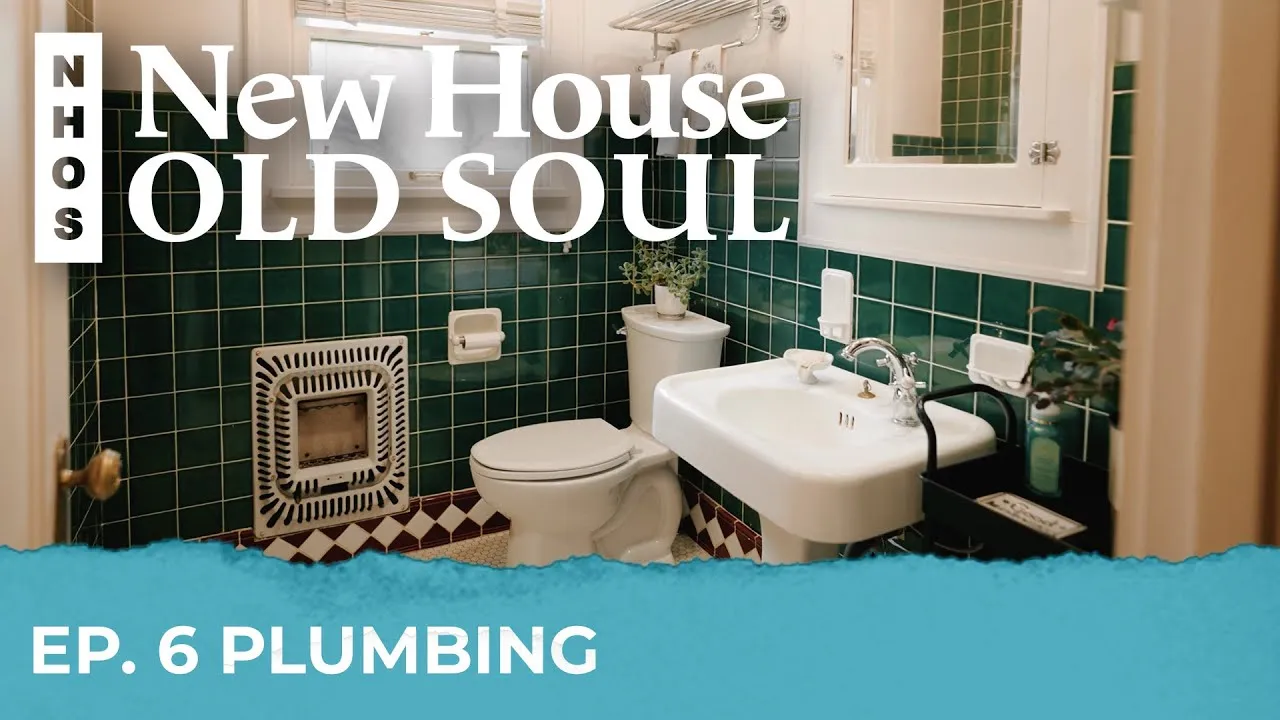
“Plumbing” New House, Old Soul – Ep. 6
Video Transcript:
Welcome back to New Household Soul today. We want to talk about Plumbing fixtures. Today, we want to talk about bathrooms, the definitive things, and how to get it looking great.
Build original series hosted by Brent Hall, new house old soul, sponsored by Stellar floors and the Unico system.
Thank you.
Plumbing is a technological advancement. Obviously, 20 percent of houses have running water by the turn of the century. 20 percent have a flushing toilet by the 1920s, okay, running water comes a little bit before the flushing toilet. It isn’t until 1940, okay, 1940, that half of houses in America have running water and flushing toilets, and we don’t have full adoption of running water and flushing toilets until 1960, okay? So it’s kind of weird to think about, but remember we’re a very rural country, that most people live on farms. Getting running water out to those places is hard. But technology is only something that maybe in the last hundred years has become, you know, important, and maybe in the last 70 years until kind of full adoption.
What that means is that as this technology has grown, there have been definitive periods of time where things change and things happen. I mean, if you think about just this technology adoption, the job that we’re doing in Granbury, Texas, is an 1881 Italianate house in Granbury. And we see from the Sanborn Maps, which are basically property maps that laid out for fire companies how buildings were made, what technology was there so that fire companies could basically establish an insurance rate. So interestingly, the Sanborn maps in Granbury, Texas, where we’re doing that job, we have one from 1893, 1898, 1905, and 1910. In the 1905 Sanborn maps, you see on the front of the street, four-inch water pipe, okay? And so water wasn’t, you didn’t have running water until at least 1905, maybe a little bit earlier than that in Granbury. So running water is just starting to happen in that town. And interestingly, that house had no original bathrooms on the inside of the house. So 1881, they were using an outhouse until at least 1910, right? 1905, 1910 before they started running the water into the house. There are clues as we go forward. I don’t know if you remember the kitchen picture with the plumbing pipe that you would see or the curtain that would hang in front of the sink. But one of the theories of why they showed those pipes was because it was a sign of wealth, right? That you actually had running water in your house.
1900 to 1920, okay, most bathrooms are white, okay? Think about the clawfoot tub by 1910, okay, maybe a little bit earlier, it was realized that profit tubs were hard to clean around and that a lot of dust and a lot of things gathered up underneath those things. And so you then have the drop-face tub that takes over Plumbing design, and then white tile was everywhere because it was sanitary, it was clean, that’s what everybody wanted. By 1930, though, you begin to see all these colors get introduced. And so I remember that 1924 house we went and looked at on the build show, we were looking at a green tile bathroom, okay, that’s a typical 1920s 1930s deal as greens and blacks and purples and had all these colors. In fact, you know, here is a salesman sample from crane Plumbing, okay, and this is probably from the ’30s based on these colors in here, but you have color sample tiles, okay, and there’s black, okay, it was a color that was popular. There’s a blue one, pink was a popular color. So these tiles were offered and showed to clients. There’s yellow and the ivory Citrus yellow. If you look at advertisements from that period, there was all kinds of crazy fun funky colors, and that lasts up into the 1950s and ’60s. And so you have these periods of change, right? The hexagonal tile that was so popular right around the turn of the century grows into in the ’50s a little two or three-inch hexagon. Right? And so that four-inch tile is popular throughout the turn of the century into the ’40s and ’50s. And so I’m time-stamping all of these different materials because they all have an origin and an age.
Finishes, okay, brass was an important finish before 1900, but by 1920, especially in bathrooms, chrome and nickel were almost everything. You think about the plumbing handles, they were almost always a cross handle, and you had two separate, you had a hot and you had a cold. Right? Pedestal sinks, pedestal sinks were how you plumbed a sink in a bathroom until probably 1950 or 60. The vanity did not come about until the ’50s and ’60s. And so you have the freestanding things from the ’40s with the arms that went down. And so what I’m describing is the time-stamping pieces as you look back to the past. Now remember that bathroom at the Pennsylvania farmhouse, right? We had that hex tile with the colored inserts. The reason we did that, we wanted to convey this old feel. Right? And so if I’m building a mid-century modern house, okay, my Plumbing fixtures are most likely going to be a bright color. I’m going to have really funky things, okay, that hearken back to that 1950s era. If I’m building a 1920s Colonial Revival house, okay, I’m getting hex tile, I’m getting pedestal sinks, I’m getting Chrome and nickel fixtures, I’m doing a medicine cabinet. And so I’m inputting all of those things into that bathroom to convey that age. Now, it doesn’t have to be exactly hex tile. Right? So many of these marble mosaics are available today fairly inexpensively that I can do the herringbone, the hex tile, or a weave pattern, any of these different things that are available today because those things are copying the past. Those things are looking to the past, and they do them very well. So there are ways to infuse that look, still have a very contemporary space, but because you’ve grabbed parts and pieces from the past, you are communicating well.
There’s also the how-to of how we get Plumbing into our house. For years, until after World War II, most supply lines in the houses are galvanized pipe. Now, if you’ve worked on an old house at all, you know that those galvanized pipes, say you got a three-quarter inch galvanized pipe, you know it’s half-inch on the interior. By the time it’s gunked up with stuff over 30, 40, 50 years, sometimes that little hole that’s applying water can be a quarter of an inch. And so you might not have high pressure in your house in your historic house, you go, yeah, these pipes are no good. Well, you’ve just got old pipes that need to be cleaned up. So we don’t run supply lines into our houses with galvanized pipe anymore. We do it with copper, we do it with PEX. So there are guts and there’s things inside the wall that are things I would encourage you to do that are better building practices that we’re doing today that work really well. So for water heaters, we’re typically doing a tankless water heater today because of their efficiency, and Rheem, one of the sponsors for this episode, they’re one of the oldest Plumbing brands in America. So they’ve been around for so long, they really understand the ins and outs of Plumbing. So there are advances and things that I’m encouraging you guys to put into your bathrooms to make the house efficient, to make it so you don’t wait 10 minutes for your water to get warm. But it’s recirculating lines, those are all things that were on the cutting edge of our houses. So behind the walls, where it’s cutting edge as possible, outside what you see when you walk into the bathroom, we’ve infused an old soul.
Continue Reading
So this new household soul is not all old house with these old looks. It’s cutting edge and then aesthetically looking as beautiful as possible. I’m really trying to help you build a timeless house. And so to do that, you are picking and choosing materials that aren’t at the new home store. Okay? Because the new home store is going to show the latest materials, the latest materials, the latest materials, the most popular materials, rightly so. I’m trying to pull you out of that world so that you can start thinking about other options and other materials. Another product I’m thinking of is the porcelain tiles made to look like wood. Very popular for a little bit of time, and I think they’re still putting them in places. That is going to be one of those products that we’re going to look back in 10 years ago, “Yeah, what were we thinking?” Just realize that there are those products that are just going to stand out to us 10 years and be like, “Uh, what were we thinking, right?” Sometimes you want your new house to feel contemporary and new and fresh, but also feel timeless. And so the reason we didn’t put an IKEA kitchen into that stop house was because it would have been inappropriate. But their bathroom, think about that. That bathroom was a historic bathroom, but it was kind of ugly, right? It had that pink tile and those weird details. It was inefficient. And so we went back in with timeless materials. We went back in with marble. We went back in with a wainscot. Things that aren’t going to be dated, but made that a much more updated, contemporary, new-old house bath.
Another good example of a house that looked a little bit dated was our Italian Revival house that we just started. I don’t know if you remember that bathroom. It had the columns going to the ceiling. It had the big deck-mounted tub with a gooseneck deal, totally red from 15, 20 years ago. That was a dated space. The cabinets, they used the tile they used, the dome ceiling, the silly columns. Those were all things that appear dated today, right? There’s a reason why we tore that out is because it looked so out of place. Now remember what that house is, okay? It’s hard because there’s so many additions that weren’t very good. But that is a supreme Italian Revival house by a great architectural firm in 1908, 1910, built to the peak of quality. Right? It was built like a commercial building, concrete floors. It’s amazing. So what was that McMansion bathroom doing in there? And even if we don’t say 1908 is our time period, we’re going to do a 1908 bath. We’re going to hint at that, right? We’re going to hint at those details with the cabinetry and everything else so that it looks timeless and looks better. So we’re going to run over to Thistle Hill. This is a great 1904 historic house that has a lot of original bathrooms in it. We’re going to look at those features that are original, some bathrooms that have changed over time. We’re going to look at the materials in those bathrooms. They have those toilets with the high tank on the wall, right? And so let’s be students of the past. Let’s be students of how things used to look so that we can make better decisions today.
Thistle Hill, 1904. When it was originally built, what you see behind me is the rubble for the old water tower. And the water tower was this wonderful historic feature that you’ll see pictures of that was almost a beacon. It was a beautiful way to have a water tower on your property. Now, why would they have a water tower? They needed water pressure, okay? So this is pre-when running water was free throughout the city. They would have tried to plan for having their own water in their own water well so that they could have one of the luxuries of modern life at that time. Historic bathrooms are typically fairly good size, but there’s very few of them, right? This house has a disproportionate number of bathrooms compared to most houses in this era. Most houses built to this time are two and three-bedroom, one-bath. And so usually the size is okay, there’s just not a lot of them. So let’s go inside. I want to show you some bathrooms upstairs, right? And in these main levels, you’re going to see beautiful subway tile. You’re going to see decorative tile. So let’s go check it out.
We are in the powder bath downstairs. What a definitive floor right here. Look what’s going on here. And this is an original floor, and I can tell because of how tight these grout lines are. They’re about a sixteenth of an inch. And look what we got here. Here’s Penny tile, okay? Penny tile. It was really hot probably 10 or 15 years ago as a new tile material, but it goes back to this period of time when Penny top, hex tile, and square tiles were all kind of the mosaic patterns that were laid on floors. And look what they did here. They laid out a lot of different colors. They’ve got a white background, they got red, and they got yellow in here, all inside this original hexagonal tile. So I love that original tile with the square butt edge. There’s also a Dal-Tile that has a rounded edge. The grout joints look much wider in that Dal-Tile than they do in this in this original tile. Subway tile on the wall, cap molding. Looks like that’s going to be a kind of the definitive detail. This toilet with the high tank up there so they can build proper water pressure and everything else was the reason why they had a high tank like that. But the fact that it’s clad in wood is really interesting. All of these things are definitive character-defining elements that kind of give Plumbing, give these features life. As we go up, we’re going to look at different stairs. There’s three bathrooms upstairs. There’s a fourth bathroom in the attic level that was for the help. They’re all very different. They’ve been changed around at different times, so it’s really interesting because there’s a lot of sleuthing you can do, figuring out when something was available and when something wasn’t.
So we’re in another bathroom at Thistle Hill, and you begin to start seeing changes and differences going on here. There is a medicine cabinet over there, there’s a sink here. This sink looks like it’s from the ’40s. This toilet also has kind of those same lines, and you know the great thing about some of these old fixtures are stamped and dated. And this one says November 21st, 1943 or ’45. So this bathroom got changed around, and that would make sense because this kind of hexagonal tile, this large hexagonal tile, is popular in the ’40s and ’50s. So it looks like we had a redo at some point. They kept the original tub, they kept the original medicine cabinet. Something was going on here, right? There was something… there was things coming out of the wall that they capped off at a later time. The whole thing about plumbing and plumbing parts and plumbing fixtures is that they are communicative. We can date things, right? Look at this. Look at that soap dispenser right. We know that that’s in the last 10 or 15 years. But look at this, look at the light cover on this, this push-button light, right? That thing is, we believe, original. So this tile, we see this subway tile and what a two by four. It’s a really pretty shape. Notice there’s not a lot of grout line movement or room between there. And we’ve got a cap mold. We also have a base, right? A very definitive base right that goes on here that would go on on this spot right there. So there’s some cool things in here. Some things are old, some things are new. Some things have been changed, but this one, you know, the sink, where all these things where I suspect they’re in the same place, but they have changed the floor. So maybe they took out the floor and moved everything around. I don’t know. Old bathroom, but things have definitely changed. Things are changing in here. Again, we’ve got the high water tank. Remember, we’ve got that in that downstairs bathroom. This tile has changed, and here’s a real subtle thing. This is a Dow-Tile, and what you’re going to notice is that there’s a little bit of a rounded edge and the grout line gets a little bit bigger. So the grout line changes from, you know, this grout line is probably a sixteenth of an inch, okay? This ground line is more like an eighth of an inch. The grout line in the bathroom downstairs is smaller than this. It is tighter than this, and so it doesn’t have a rounded edge. It’s a square edge, and so it appears much tighter than this. So I know this floor has changed, right? When things have been dated, we’ve got a clawfoot tub. This is an original sink. And this sink shows up in other places. And in other places, I’ve actually skirted it and kind of hid these bars. But here’s the original P-trap, and there’s kind of cool parts and pieces in here. This could be originally nickeled or chromed again. So there’s some cool features. I do know that they’ve changed the handles. They’ve got a 1950s lever handle here, and these most likely cross handles. So original tub, original parts and pieces, original toilet, some original cool stuff. They’ve got this granite in here, which is kind of an interesting feature. I don’t know whether they moved these doors around and something changed, but they’ve got granite on both stores, and we’ll just have to look and see if that’s something different that we see later. Some of the challenges you run into is that that little faucet right there is no longer to code. Now why is that? Because there is no drain line in this thing. There’s no way for the water to get out of here. So this thing is actually not to code. One of the things that makes it hard to use kind of some salvaged parts and pieces is because these things no longer work. But you could get around that. We know that the house, in iterations of its life, was once this girl’s home, and we think that this was changed around that time. That would explain that kind of 1940s, 1950s sink here, as well as that one in that other bathroom. But look at the wall. Okay? So we know this is the original bathroom because it has that subway tile. That’s a new sink, obviously. The shower wasn’t there. Maybe it had been a small sitz bath. The toilet was a different toilet. But again, original bath, changed up. And if we’re going to restore this, right? We start pulling away some of those 1940s pieces and start reintroducing some of these historic pieces because we want to tell a consistent story.
Now let’s go upstairs. I’m going to show you the servant’s area, right? This is where the help would have lived, and their bathroom is very different from this, but it tells a good story, and that’s the whole point. Let me show you that.
So now we’re in the help’s path, right? And so one, it’s cool because we know things haven’t changed. Look, there’s the original faucet. That’s what that lever handle looked like. It was oftentimes labeled like this, and so you can find examples of kind of cool features like this because this bathroom hasn’t changed. Look, what’s happened to the wall? Instead of the subway tile, we have this board that you could buy that looks like tile but it’s basically a sheet. Sometimes this was done in other houses with plaster on the wall, then they would screen across here with the plaster and actually make it look like tile. So different things that they were doing at that time, but it’s very different. Now the whole point of this is to help you start seeing with your eyes some of the clues that give these historic houses character, these historic houses this meaning in this narrative. Right? The fact that we’re in a serving area, we got beadboard on the ceiling. What an interesting detail that they’ve got in here. So conditioning your mind to seeing these small details to help you infuse narrative into your new house and giving it an old soul.
Hall, hope you enjoyed episode six on Plumbing, the new household soul. I want to talk to you right now about Rheem water heaters, in particular, the tankless water heaters. You know, almost every project we do now has a tankless water heater because they’re so efficient. And Rheem is the godfather. They’ve been around for so long. In the early 1900s, they were one of the early innovators in hot water delivery. And so if you’re trying to get that new household soul right, what we’re trying to do in our project is trying to create the most beautiful house we can get along with the most efficient house we can get. Water heaters are one of those tools, one of those innovations that really changed the way we build and the way we live. So I want to thank Rheem for being a part of this. And I want to thank you guys for being a part of our show. If you’re just seeing us for the first time, make sure you subscribe below. Tell your friends, share it with your friends, tell them to subscribe. We’ve got some exciting episodes coming up that we’re going to want to keep you in the loop about. And if you’re just joining us now, make sure you go back and watch all five previous episodes.
All right, welcome back. And I hope you enjoyed that episode about Plumbing fixtures and how they’ve evolved over time. Plumbing fixtures are a crucial part of any home, and their design and materials have changed significantly throughout history. Understanding the history and evolution of Plumbing fixtures can help you make informed choices when renovating or building a new home, allowing you to create a timeless and functional space that suits your style and needs.
If you have any more questions or if there’s anything else I can assist you with, please feel free to ask!