Table of Contents
- What Are Building Systems?
- Why Don’t We See Greater Advanced Building Systems adoption?
- Building for Disaster Resilience: Framing, SIPs, and ICF Compared
- Standard Timber Framing: Pros and Cons
- 2. Structural Insulated Panels (SIPs)
- 3. Insulated Concrete Forms (ICFs)
- Quick Comparison Table
- Summary
- Choosing the Right Building System
- Related
Content By Ian Thompson. Video by Matt Risinger
What Are Building Systems?
Have you ever wondered what exactly defines a building system? It’s surprising how many building and construction professionals don’t fully understand the term. Simply put, a building system refers to the way a building is constructed – the materials, products, and methods used to create its foundations, floors, walls, and roof.
Building systems typically fall into three categories: lightweight systems like timber (stick framing) or light steel-framed construction, medium-weight systems such as solid or mass timber, and heavyweight or high-mass systems like reinforced concrete.
It’s important to remember that no one building system is perfect – each building system has its own set of advantages and drawbacks, and they’re often chosen based on factors such as availability, cost, climate, durability, ease of construction, site conditions, and building code constraints. For example, wind zones, steep slopes, or challenging ground conditions might influence your choice.
But here’s the thing: more often than not, building systems are chosen simply because they’re what the designer or builder knows best. Does that sound familiar? A seasoned property developer I spoke with recently dismissed a reinforced concrete post-and-beam system because he hadn’t used it before and didn’t understand its application in house construction. His reaction highlights a common issue: a lack of knowledge and familiarity often inhibits the adoption of more effective building systems.
It’s also worth considering that there are literally 100’s of different building systems available globally today, but the following three I would consider to be the most commonly used in home construction, certainly in the USA, but I might be wrong, so just go with it.
Why Don’t We See Greater Advanced Building Systems adoption?
The problem isn’t just about what designers and builders know – it’s also about myths and misinformation in the industry. For instance, a real estate agent recently told me that plaster-clad homes in Auckland, New Zealand, typically sell for 10% less than non-plastered homes. This perception, based on misinformation, can ripple through the industry unnecessarily. In reality, plaster is a fantastic product – as long as it’s installed correctly in a well-designed wall building system. But isn’t that the case for every building material? A great product paired with poor installation or incompatible materials will inevitably cause issues.
So, what’s the takeaway here? Don’t let hearsay dictate your decisions. Do your own research and question what you hear about “good” and “bad” building systems.
But isn’t that the case for every building material? A great product paired with poor installation or incompatible materials will inevitably cause issues.
The way we can solve this is through better education, knowledge sharing, and collaboration, which could help more companies and communities adopt more advanced building systems that produce more affordable, efficient, and resilient homes.
Building for Disaster Resilience: Framing, SIPs, and ICF Compared
In today’s video Matt [Risinger] teams up with Fred Malik, the director of the USA based Fortified programme, to discuss resilient building systems. The conversation, recorded in hurricane-prone Mississippi, focuses on three primary construction methods: standard framing, Structural Insulated Panels (SIPs), and Insulated Concrete Forms (ICFs).
Their video discussion highlights the pros and cons of each system, their ability to meet Fortified [USA] standards for resiliency, and the importance of proper execution and attention to detail in achieving durable, disaster-resistant homes.
Fred explains that the Fortified programme is designed to improve the durability of homes in North America by setting higher standards than traditional building codes. The programme offers different certification levels, such as Silver and Gold, which focus on mitigating damage from extreme weather events like hurricanes. Key elements of the program include fortifying roofs, ensuring proper connections between structural components, and addressing vulnerabilities such as windows, doors, and corners.
Fred emphasises that homes built to Fortified standards are designed to withstand severe weather events, but achieving these standards requires careful planning and execution. Regardless of the building system used – whether standard framing, SIPs, or ICFs – builders must pay close attention to good workmanship above all else.
Below I’ve collated a generic pros and cons list for each of the tree discussed building systems.

Standard Timber Framing: Pros and Cons
1. Timber Framing (Stick Framing)
Timber framing is the oldest building method of the three – and is a common method of building houses, using wood or light steel to create the structure. It remains the most common system globally due to its familiarity and adaptability.
Pros:
- Cost-Effective Materials: Timber is generally affordable in most countries and readily available, making it a somewhat budget-friendly option.
- Industry Familiarity: Most designers, builders, and tradespeople are trained in timber framing, which reduces the learning curve and the risk of errors.
- Design Flexibility: Timber framing accommodates a wide range of architectural designs and is adaptable to various site conditions, including sloped or irregular terrain.
- Ease of Repairs: Modifying or repairing timber-framed structures is straightforward due to the availability of materials and the widespread knowledge of this method.
Cons:
- Multiple Layers Required: Timber frame homes are only structural, meaning they require additional components such as insulation and bracing elements to perform the same as ACF’s and SIPS. These layers add complexity, cost, resources, and additional installation time to the build.
- Labour-Intensive: Timber framing often relies on multiple trades (framers, insulators, sheathers, etc.), increasing coordination challenges and the potential for delays.
- Weather Dependency: On-site construction is vulnerable to weather-related delays, and timber is susceptible to moisture damage if not properly protected during the build.
- Lower Resilience: Without reinforcement, timber framing may struggle to perform in disaster-prone areas, such as those affected by hurricanes, earthquakes, or high winds.
- Ongoing Maintenance: Timber is vulnerable to rot, pests (e.g., termites), and moisture, requiring regular maintenance to ensure long-term durability.
- Quality Issues: Timber often has knots and splits when drying in the walls. These issues can lead to structural failure, as well as water/vapour ingress when walls buckle and linings move/crack.
2. Structural Insulated Panels (SIPs)
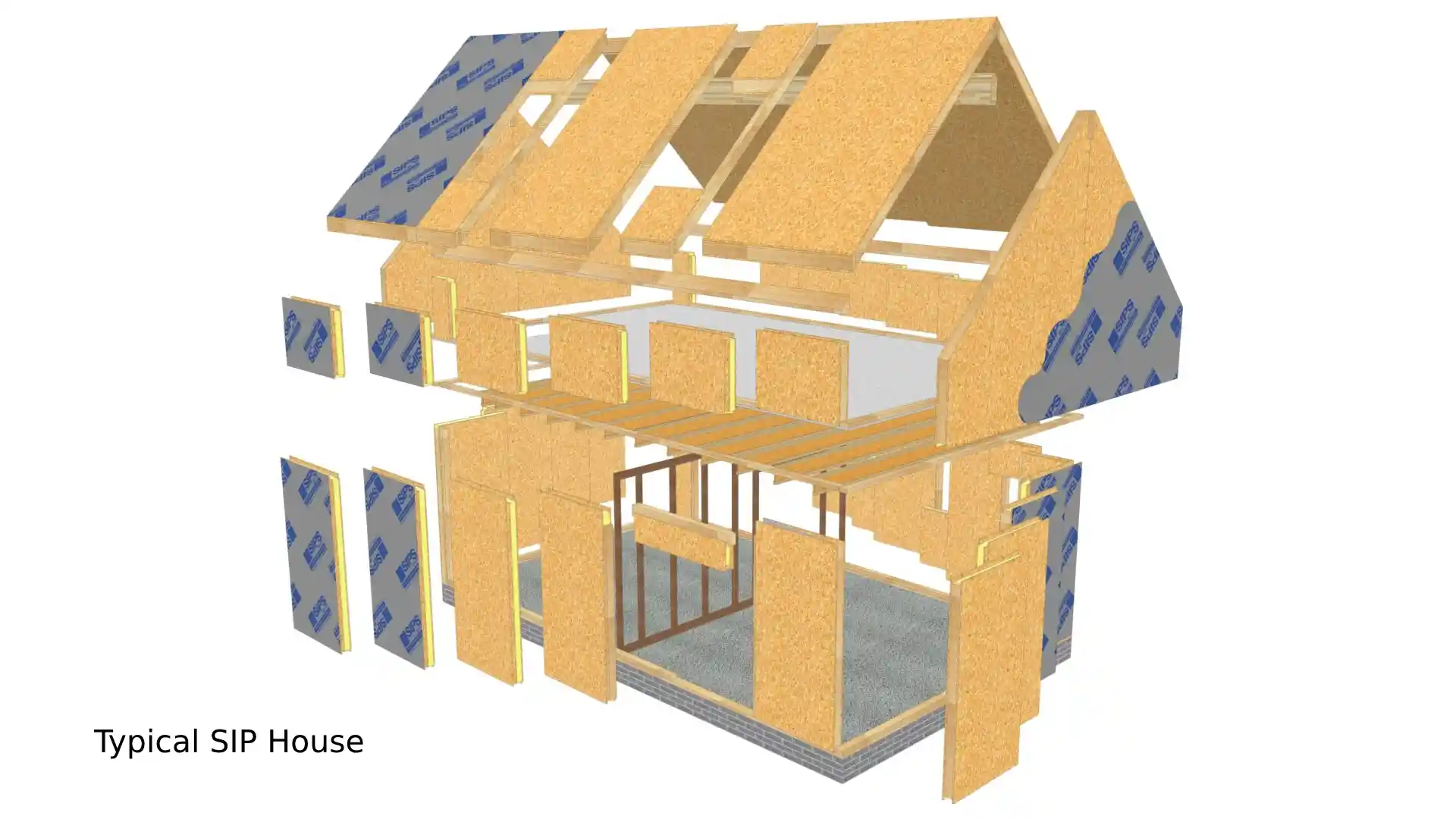
SIPs are prefabricated panels made by sandwiching rigid insulation between two structural boards (commonly OSB). They are known for their energy efficiency and structural performance, making them a popular choice for high-performance homes.
Pros:
- Integrated Layers: SIPs combine structural sheathing and insulation in one unit, adding strength and good bracing properties to the wall, floor, or roof.
- Energy Efficiency: SIPs provide excellent thermal performance and airtightness, resulting in significant energy savings over time.
- Faster Construction: Prefabricated panels arrive ready to assemble, reducing on-site labour time and the number of trades required.
- Resilience: SIPs offer good structural integrity, making them suitable for areas with moderate disaster risks like high winds or heavy snow loads.
- Reduced Thermal Bridging: The continuous insulation in SIPs minimises thermal bridging, which can be a common issue in timber framing.
Cons:
- Higher Initial Costs: SIPs are more expensive upfront than timber framing, though energy savings and reduced labour costs can offset this over time.
- Specialised Design and Installation: Proper assembly requires skilled labour with specific knowledge of SIP systems. Mistakes during the design phase and installation can undermine their performance.
- Limited On-Site Flexibility: SIPs are prefabricated to specific dimensions, making on-site modifications difficult or costly. They are geometrically (almost) perfect, making use on an uneven foundation a challenge to install.
- Vulnerability at Joints: Weak points can occur at panel connections if not installed and sealed correctly, potentially affecting energy performance and moisture resistance.
- Transportation Costs: The large size of SIP panels may increase transportation costs, particularly for remote or hard-to-access sites.
- Manufacturing: Not all SIP manufacturers are equal, with some SIPs being much higher quality than others. Personally, I avoid SIPs that uses formaldehyde in their OSB.
- Weather: SIPS still need protecting form rain – especially the OSB. Those panels need to be wrapped and sealed as quickly as possible, especially if installed in the rainy season.
3. Insulated Concrete Forms (ICFs)
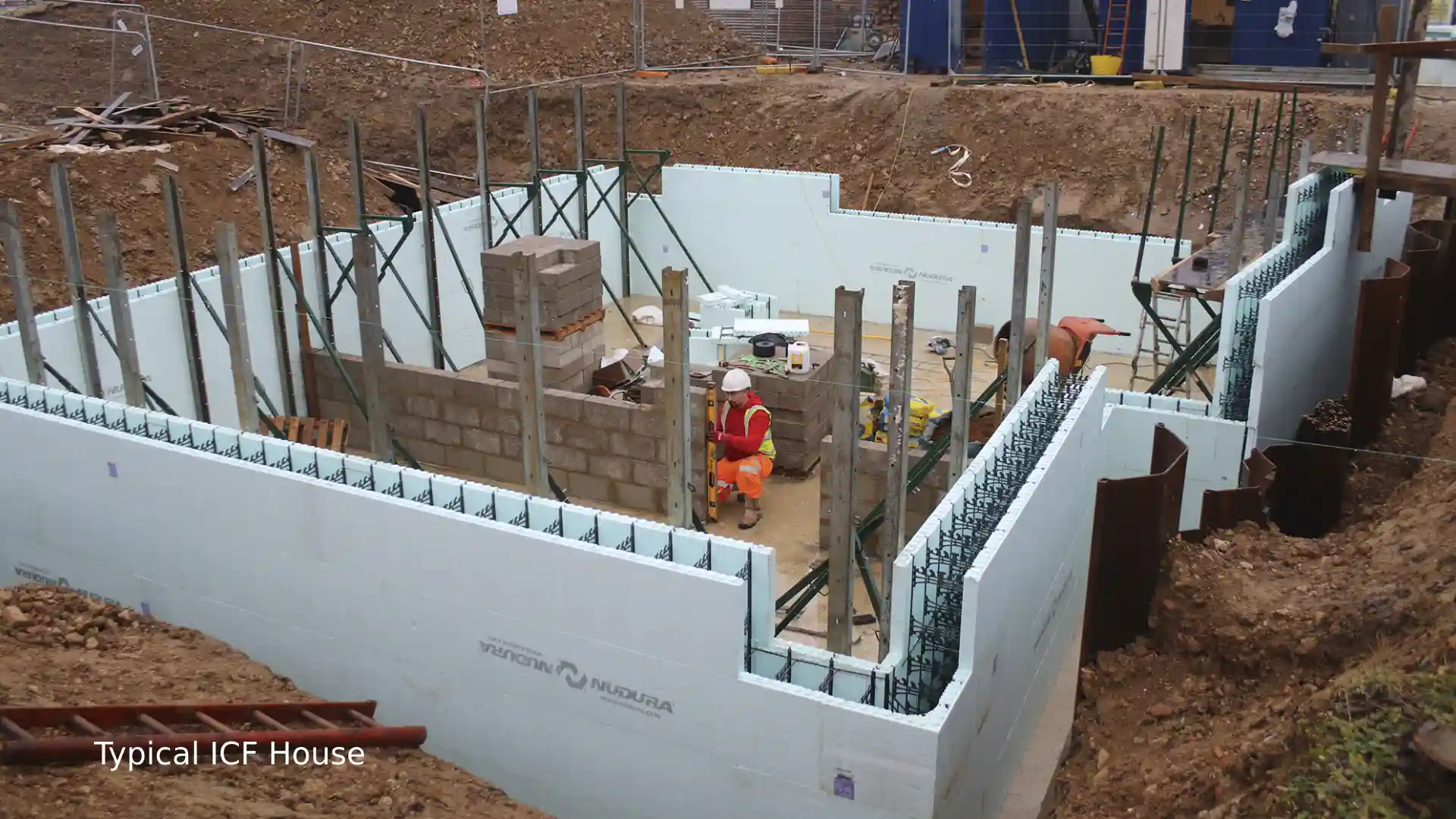
ICFs are hollow foam blocks or panels that are stacked and filled with reinforced concrete. The foam remains in place as permanent insulation, creating a highly durable and energy-efficient structure.
Pros:
- Exceptional Durability: ICF walls are incredibly strong and impact-resistant, making them ideal for disaster-prone areas (e.g., hurricanes, tornadoes, earthquakes).
- Energy Efficiency: ICFs provide continuous insulation with excellent thermal mass, resulting in reduced heating and cooling costs.
- Soundproofing: ICF walls offer superior sound insulation, making them ideal for homes in urban or noisy environments.
- Moisture Resistance: The foam and concrete combination is highly resistant to mould, mildew, and rot, offering long-term durability.
- Fire Resistance: Concrete and foam materials provide excellent fire resistance, enhancing occupant safety.
- Resilience: ICF structures are designed to withstand extreme weather conditions, high winds, and flying debris.
Cons:
- Higher Upfront Costs: Both materials and labour for ICF construction are more expensive than timber framing or SIPs.
- Specialised Labour Required: ICF installation requires skilled professionals who are familiar with the system, which may not be readily available in all regions.
- Slower Construction: While straightforward, the process of stacking blocks, bracing walls for concrete pours, placing reinforcement, and pouring concrete takes much longer than SIP assembly.
- Heavy Construction: The weight of the concrete adds complexity and load to the build and usually require thicker foundations, especially on poor soil.
- Limited Design Flexibility: ICFs work best for simple, boxy designs. Complex architectural features will add additional effort and cost.
Quick Comparison Table
| Feature | Timber Framing | SIPs | ICFs |
|---|---|---|---|
| Cost | Low to moderate (material only) | Moderate | High |
| Energy Efficiency | Moderate (requires additional layers) | High | High |
| Resilience | Low (requires reinforcement) | Moderate to high | High |
| Speed of Build | Moderate to Slow | Fast | Moderate to Slow |
| Labour Requirements | High (multiple trades) | Low (specialised crew) | Moderate (specialised crew) |
| Design Flexibility | High | Moderate | Low to Moderate |
| Durability | Moderate | High | Very High |
| Weather Dependency | High | Moderate | Low to Moderate |
Summary
Each system has its strengths and weaknesses, making them suited to different project needs:
- Timber Framing: Ideal for smaller-scale, budget-conscious projects in moderate climates. While flexible and familiar, it requires additional layers and labour to perform at the same level as SIPs or ICFs. Good for restricted site access.
- SIPs: Best for energy-efficient homes where speed and performance are priorities. Prefabrication simplifies construction, but the system requires specialised labour and careful planning.
- ICFs: Perfect for homes in disaster-prone areas or projects prioritising durability and energy efficiency. While upfront costs are higher, the long-term benefits in resilience and performance make ICFs a worthwhile investment for many.
Choosing the Right Building System
When deciding between these systems, consider your priorities:
Is resilience and long-term durability your top concern? ICFs may be worth the extra investment.
Are you focused on budget and familiarity? Timber framing might be the best choice.
Do you need a high-performance home with a faster build time? SIPs could be the ideal option.
Related
3 Benefits of SIPs Framing vs Traditional Wood Framing.
ICF vs SIPs vs Framing – Pros and Cons
5 Framing Schemes for Mass Timber