Foreword by Ian Thompson, Editor
The Search for the Perfect Wall – Affordable, Sustainable, High-Performing, and Easy to Build
In today’s video, Matt delves into the concept of his “perfect wall” building system. But what exactly is a perfect wall? Is it a wall system that is affordable, quick and easy to build, uses sustainable (non-toxic) materials, or is thermally superior? Naturally, it’s all of these factors. Yet, if such a perfect wall truly existed, why isn’t everyone in the building industry using the same system – across all climates and building types? Surely, that would make sense, wouldn’t it?
This somewhat challenging question opens the door to a much larger conversation. The reality is that the building industry as a whole doesn’t really know what constitutes the “perfect wall.”
Builders, designers, and engineers interpret building science differently – influenced by regional climates, material availability, cost constraints, and even aesthetic or personal preferences. As a result, many countries still use stick framing that hasn’t fundamentally changed in over 100 years.
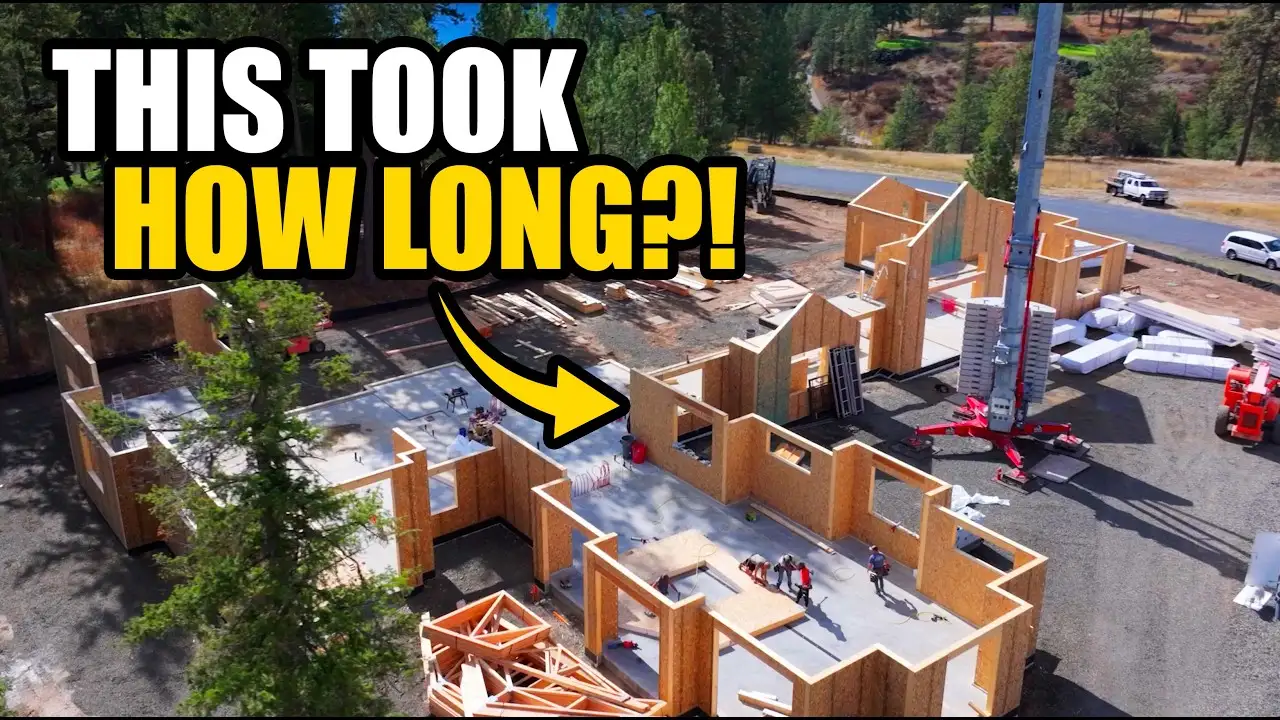
In Matt’s video, he reflects on his decades-long journey as a builder, sharing examples from four house building projects where he has refined his approach to framing and insulation. Along the way, he candidly discusses the obstacles builders face when attempting to adopt better methods and practices – even when those methods are proven to be better.
At its core, this video highlights the building industry’s ongoing struggle to balance building performance, cost, efficiency, sustainability, and simplicity. The pursuit of the “perfect wall” is not just about technical excellence; it’s also about making such systems accessible, practical, and adoptable on a broader scale.
Over to Matt.
The Concept of the Monopoly House – Origins and Principles
The foundation for Matt’s approach is rooted in Dr Joe Lstiburek’s seminal paper on the “perfect wall.” This concept emphasises that the structural framing of a house, wall and roof, when kept dry and at a stable temperature and humidity, can last for centuries – just like a well-preserved piece of furniture. The key lies in protecting the structural elements with four essential control layers:
- Water control – Preventing water infiltration, the primary enemy of wood framing.
- Air control – Sealing the building envelope to minimise air leakage, which can carry moisture to condensing surfaces.
- Vapour control – Managing vapour diffusion to avoid hidden moisture problems.
- Thermal control – Insulating the exterior to maintain consistent interior temperatures.
Dr Lstiburek’s illustrations show that this concept applies universally, whether for walls, roofs, or slabs. Risinger adopted these principles early on, experimenting with ways to bring them into real-world construction.
Monopoly Framing: A Practical Implementation of the Perfect Wall
Risinger has coined the term “Monopoly framing” to describe his implementation of the perfect wall concept. Named after the boxy, minimalist appearance of the Monopoly game houses, this method involves wrapping the entire house in a continuous, high-performance control layer. Over the years, Risinger has iterated on this technique across multiple projects, refining it to balance performance, cost, and buildability.
House 1: The First Experiment
The first house Risinger built using Monopoly framing was a modern, boxy structure with no overhangs. It featured:
- Traditional 2×4 framing sheathed with OSB.
- A peel-and-stick membrane applied as a continuous control layer, serving as the water, air, and vapour barrier.
- Exterior insulation (“outsulation”) to eliminate thermal bridging.
- Metal cladding for durability and UV protection.
While the house performed well, Risinger noted some areas for improvement: - The ventilated crawlspace and spray foam insulation under the floor were not ideal, resulting in a blower door score of 1.2 ACH (air changes per hour)—not as airtight as desired.
- Basic, off-the-shelf windows and doors contributed to leakage issues.
Despite these drawbacks, this project marked a significant step in understanding how to apply the perfect wall concept in practice.
House 2: Matt’s Own Home
Several years later, Risinger applied the lessons learned to his own home. Key changes included:
- Switching from peel-and-stick membranes to Zip System sheathing, which integrates air and water barriers directly into the sheathing. This simplified installation and reduced labour costs.
- Adding traditional overhangs and a more classic aesthetic to move away from the boxy look of the first house.
- Using LVL (laminated veneer lumber) rafters to create a clean, continuous insulation layer on the roof while accommodating overhangs.
The result was a more traditional-looking home with significantly improved performance. However, the process revealed the challenges of balancing traditional aesthetics with modern building science. Creating the overhangs required additional craftsmanship and time, adding to the cost and complexity.
House 3: Exploring Hunter Panels
In another project, Matt experimented with Hunter panels, a pre-fabricated system combining foam insulation, a spacer block, and a plywood layer. This system offered several advantages:
- Faster installation compared to layering insulation and sheathing separately.
- Built-in ventilation channels, eliminating the need for a separate venting layer.
While the Hunter panels worked well, they were more expensive than other options, and sourcing them added logistical complexity. This project reinforced the idea that while pre-fabricated systems can save time, their cost and availability must be carefully considered.
House 4: The Risinger Build Project
In his most recent project, Risinger further simplified the Monopoly framing approach:
- Utilising standard foam insulation boards (Atlas rooftop foam) in two layers, with a glass-reinforced fibre facing for durability.
- Replacing custom LVL overhangs with standard 2×4 framing, which was faster and less expensive.
- Venting the roof with a straightforward 2×4 ventilation channel, gapped for airflow.
This method proved to be the most cost-effective and buildable iteration yet. By using readily available materials and standard construction techniques, Risinger achieved excellent performance without excessive cost or complexity.
Lessons Learned: Why Isn’t Everyone Building the Same Way?
Risinger’s journey highlights a broader challenge in the building industry: the difficulty of adopting better methods, even when they are demonstrably superior. Several factors contribute to this:
- Education gaps – Many builders lack a deep understanding of building science principles, making it harder to evaluate new techniques.
- Cost concerns – High-performance systems often carry upfront costs that deter adoption, even if they offer long-term savings.
- Resistance to change – Builders may be hesitant to deviate from familiar methods, especially when clients prioritise aesthetics or budget over performance.
Risinger himself has evolved his practices over time, demonstrating the importance of continuous learning and adaptation. His work underscores that there is no one-size-fits-all solution; the “perfect wall” must be tailored to the specific needs of each project, balancing performance, cost, and practicality.
The Way Forward: Striving for Simplicity and Accessibility
Risinger’s Monopoly framing journey showcases the potential of the perfect wall concept to revolutionise residential construction. However, widespread adoption requires a focus on making these systems more accessible:
Incremental improvements – Small, manageable changes, such as adding exterior insulation or upgrading window installation practices, can pave the way for broader adoption.
Ultimately, the perfect wall is not just a technical achievement but a mindset—one that prioritises durability, sustainability, and affordability for the long term. By sharing his successes and challenges, Risinger invites builders to join him in pushing the boundaries of what’s possible in residential construction.
Standardising materials – Using off-the-shelf products like Zip System sheathing and foam boards can simplify implementation.
Education and advocacy – Builders need resources and training to understand the benefits of high-performance systems.
Related
House roofing – the risinger build
Building Airtightness & Control Layers – The Risinger Build Ep. 12
The Risinger Build: Episode 13 – Exterior Cladding and Trim
The Build Diary (Risinger Build Episode 10) – House Plumbing