Foreword by Ian Thompson, Editor
A significant number of building companies worldwide are small, independent firms with only a handful of full-time or contracted employees. Many of these companies start operating without proper small business training, leading to an absence of structured processes and inefficiency. As a result, these companies often incur additional costs for their clients, lose potential revenue, and end up overcharging due to their lack of oversight on time and materials usage, and need to make a profit. Such inefficiencies often lead to negative customer experiences and potential legal disputes. In fact, the building and construction industry is witnessing its highest levels of litigation, mostly stemming from avoidable business practice inefficiencies, bad workmanship and communication problems.
Surprisingly, there are limited educational resources available to small businesses in any industry. Most entrepreneurs are not taught how to start and run an efficient small business during their schooling or university years. As a consequence, many business owners simply “wing it” and hope for profitability and growth without a solid foundation.
The harsh reality is that over 80% of small businesses fail within the first five years!
Ian Thompson, Editor
Based on my 35 years of experience in the building and construction industries, I confidently assert that nearly every company I’ve worked with has charged me for more products than they actually used due to poor inventory management for each project. It’s rare for a job to be quoted accurately and come in under budget. While customers have come to accept this as the norm, it doesn’t make it right.
The harsh reality is that over 80% of small businesses fail within the first five years, largely due to the factors mentioned earlier: lack of planning, measurement, and training. Additionally, companies lose staff to better-run and larger organizations that invest in proper practices, training, and staff empowerment. In my opinion, besides price gauging, the lack of training and investment in small businesses is one of the biggest contributors to the exorbitant cost of construction today.
Having run my own small businesses since the mid-90s, I recently attended a business training course that my friend wanted to do and persuaded me to join, and it turned out to be an eye-opening experience. I made fundamental improvements to my own businesses, including how I train my staff, market to my customers, and allocate time for my own reenergising – yes, I am supposed to take time off work apparently. I realized the significant difference between working “in” my business versus working “on” my business, and it has been transformative.
In today’s video post, Matt Risinger talks about business coaching and how it helps building companies grow.
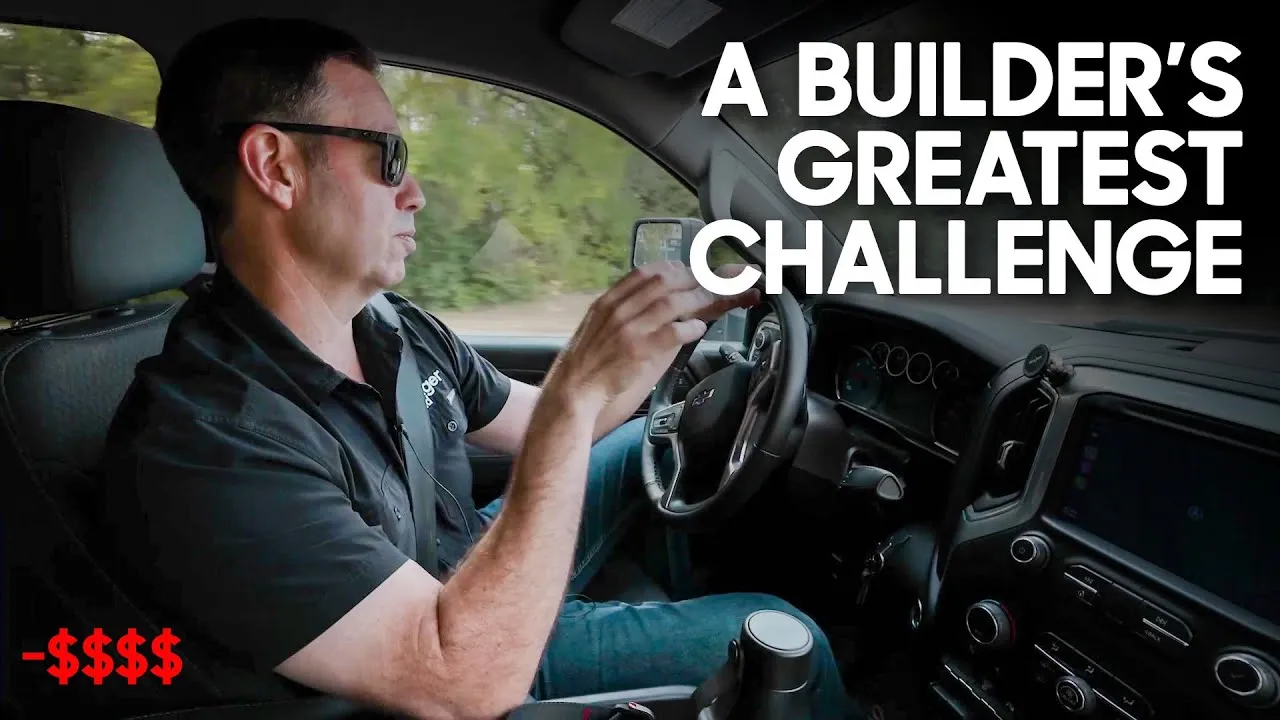
The HARDEST part of Building nobody talks about…
Introduction
In today’s Build Show, we embark on a journey to explore the transformative power of business coaching. Just as the host himself has experienced the ups and downs of entrepreneurship, we meet Frank and Amber from Moon Tower Construction, who have taken their business to new heights with the help of Breakthrough Academy. Over the past four years, they have witnessed remarkable growth, doubling their revenue and implementing crucial changes to their practices. From marketing to financial controls, hiring to long-term planning, Breakthrough Academy offers a comprehensive system to systemize construction businesses for success. Join us as we delve into their story and uncover the secrets to their remarkable transformation. Get ready for an inspiring episode of the Build Show focused on business coaching. Let’s dive in!
Video Transcript:
You know, over the years, I’ve made a lot of business mistakes. And if you’ve ever listened to my story on my podcast, I almost went out of business in 2012. I was several hundred thousand dollars in debt. I made a lot of business mistakes as a builder. On the Build Show today, we’re going to talk business coaching, and we’re going to meet another builder who’s really transformed their business. Now, they weren’t in the same dire shape that I was a couple of years ago, but they’ve been working with this company called Breakthrough Academy. If you’ve been on buildshownetwork.com, you’ve probably seen Benji’s videos. Really, really interesting company that helps builders grow their business, reduce their liabilities. Just a really terrific cruise. So in the Build Show today, we’re gonna go visit Moon Tower. This is a design-build firm here in Austin, Texas, where I’m based. It’s really doing some neat work, and I understand they’ve really grown and changed and transformed their business over the last four or five years working with Breakthrough Academy. Today, it’s Build Show all about business coaching. Let’s get going.
Okay, here we are. Let’s go see if we can find Frank and Amber from Moon Tower Construction. Oh man, check out this cool house. Holy cow, look at that core exciting and exterior insulation. Frank, Amber, y’all inside? Hey, there you are, guys. Good to see you. What a cool building, y’all. Thank you. We need a whole other episode about this building. I think this is a—I mean, from the cork on the outside to the CLT on the inside, I’m pretty sure everybody watching this wants to know more about this building, absolutely. But the purpose of today’s video, we want to talk about business coaching. I told these guys earlier that my business has changed dramatically, and I’ve experienced some coaching that’s really helped me. But you guys have used Breakthrough Academy. What’s it been like for you guys with Breakthrough Academy over the last couple of years? Or how long ago has it been since you started working with Breakthrough Academy?
We started with them a little over four years ago. And for us, it really took our small business into hyperdrive. I would say we started with a plateau that we were at, like, we were working on a lot of jobs, finding success. We didn’t really advertise, everything was word of mouth, which is great. We still do that today, that’s awesome. But we plateaued, and so we were thinking, “Hey, we’re not always holding ourselves accountable. It would be really great if we could get somebody else who’s been there and done that and kind of give us the cliff’s notes.” And Amber, what’s that meant for you guys over the last four years? What has it been in terms of your growth of revenues or maybe employees?
We’ve more than doubled our revenue, yeah. And as far as employees, I feel like we’re being a lot more mindful about our practices. We’re planning each year, taking time to really kind of think about what we want next year to be. And we’re meeting regularly, we’re looking at optics, we’re doing a lot more in the hiring process, spending more time there, being a little bit more meticulous, really creating a list of roles and responsibilities for each employee. So it’s a lot more organized, yeah.
And Frank, you guys are almost 100% design-build with maybe one or two projects from other outside architects, is that right?
Yes, how has that changed over the last four years?
Over the last four years, when we came into BTA, we were doing, I’d say, maybe more about a 30-70 mix. We were doing 70% design-build. But as we were working on our ideal clients, our best clients tended to be the people who came to us and valued the turnkey process. So that really launched a period of our work where we said design-build is the only way to go. And then through the pandemic and through, I guess, price escalations this year, we found that, man, we missed the diversity that we used to have, interesting. And through these check-ins we do, like quarterly strategic planning with the other builders that are in the group with us, and we do that with our administrative team, right? Because we’ve got plenty of people who are managing our job sites and doing our drawings, but Amber’s our design director, I’m the CEO. We’ve got our build director. We meet and we strategize. Yeah, and that was one of the biggest weaknesses that we saw going into this year, is that we didn’t have enough diversity of revenue streaming. So we made a switch. We started to bring in a little more build-only work again. Amber is the design director. I’m always fascinated today, and I don’t do design-build. I could certainly see me moving towards it in the future. But I was curious, when clients come to you as both a designer and the builder, how do you rectify that initial hard conversation, which is, “I want to build something really cool, but here’s my little tiny budget”? Tell me about that hard conversation you have. If you’re willing to put you on the spot.
I would argue that, in many ways, Maggie, our sales director, does have those difficult conversations first before they get to me. And she really tries to hone in on the priorities for the client, and she tries to set expectations from the beginning. So she will share comps of other projects, she will provide some initial pricing estimates of what she thinks that they’re targeting or they’re talking about, to make sure that they don’t come on board or we don’t blow them away with some numbers or something like that. That’s a good piece of advice for the builders watching that are design-build, is you’ve almost got that—not bad guy, I hate to use that term, but a little bit—you’ve got that bad guy earlier in the sales process so that when you get started on the job and you’re thinking about design and you’re an architect too, right?
Yes.
You’ve already got some of those initial bad assumptions out of the way, and you can start with more fertile soil, exactly. And we incorporate, you know, pricing exercises throughout our entire process so that also every step of the way, we kind of check in and make sure that all the goals are aligned. That’s awesome.
Frank, have you guys always been design-build since you started the company?
Since we started, absolutely.
And you guys have several architects on staff, is that right?
We do. Any advice for a non-architect like myself who might be thinking about moving towards design-build?
Well, I don’t think that being an architect is a requirement to have a design-build business. Yeah, for sure. We do have a lot of architects in our leadership roles, but I think it’s maybe just there’s a passion for that and a common language. But one of the groups, one of the other contractors that we work with in BTA was starting to dip their toe into design-build, started to do interior design, you know, just if for selections help when they were taking plans from another architect. They’re looking for that when the client was lookingfor a builder. But as we were meeting every year, seeing how much control we had over some of those processes or just how turnkey it was from the client experience, we hired an architect to start working with him. So you don’t have to be an architect to have a design-build business, but you should work with an architect if you can. I’ve worked with a lot of architects over the years, and as I think about my business maybe moving towards design-build, I do wonder if there’ll be some processes or things I’ll need to change. And I’m curious over the last four or five years that you’ve worked with Breakthrough Academy..
Can you think of any processes that you’ve really kind of made a big switch on over the last couple years in your business as you’ve changed direction?
Yeah, I mean, it’s very all-encompassing in terms of the amount of things that we would work into our business that I feel like we were exposed to through VTA when it comes to a transition into architecture or design-build specifically. The very first thing, I feel like we would look at is the marketing component because you want to have a different message, you know, and you probably don’t want to get rid of your construction business. Finding a way for both of those messages to come across to your clients would be one of the first places I would start. That’s awesome.
Yeah, last question before we switch because I’ve got Benji coming to my office, so I don’t really want to miss his, and I think he’s visiting with you guys while he’s in Austin as well. What can you think of any interesting metrics that you track today that you didn’t track four or five years ago before BTA? I started with you guys.
Yeah, I would say the biggest one is our gross profit percentage. We used to, I swear, when we started, one of our first interior remodel jobs, we probably based our business off some advice from a tile setter that was good, and she was an amazing lady. She was a boxer, she’s really tough. But she said, “Oh, you’ve got to be charging 25-25-25,” and it just burned into our minds. Like, “Hey, here’s this magic formula,” and we would always think we could run our business off, and this was an upgrade from counting screws when we built our first estimator, you know? So we ran with that for a long time, and it wasn’t really until BTA that we started to learn more about the difference between markup and what a gross profit would be. Yeah, so it was pretty frequently that we were just running on break even, not really knowing what break even meant from a business standpoint, but we knew it at the kitchen table or at the, you know, when we were just checking our bank account and everything. So I’d say that is one of the biggest, most fundamental changes: knowing your numbers and changing how you talk about percentages. That’s huge.
And so many people think that profit is evil or that builders are inherently trying to make a quick buck, and there’s a lot of great builders like Moon Tower and Wine Company that really value good work. But it’s important for us to make a profit every year, not just for our employees but also for our clients, so that we’ll be in business three years from now when they need warranty service or when something happens at their house, and for our employees as well to be around in the future. Anyways, with that being said, guys, big thanks to Moon Tower for showing this off. We’re coming back with Greg on your team that had a huge part in this particular house because there’s so much to break down on this house, so stay tuned for a future video here. But guys, I’m going to leave you, and I’m going to go find Benji back at the office. Okay, we’re going to finish up today’s video. I’m going to get a podcast going. Sounds good. To the tour, guys. See you back in the office.
All right, y’all, you’ve got to stay tuned for a future video on this, but this is a five-inch thick, all-wood CLT house with a vapor-open house wrap on the outside. And check this out, this is outside insulation and siding all in one. You’re looking at a tongue and groove cork that’s on the full exterior facade. This is pretty awesome. This is a fully natural product, pretty similar really to the cork in your wine cork, but this is the outside facade of the building. It’ll just gray out, it’s kind of naturally pest-resistant. Pretty awesome. I’m looking forward to hearing more about this. Let’s go find Benji.
Yeah, yeah, it’s been a pleasure. I just came back from seeing your clients and my new friends at Moontower. Oh yeah, they show you the courthouse? The cork house was ridiculous, so cool. It was so cool, it was an epic house. Yeah, we’re going to go back and film some more over that one. I’m glad, I’m glad, you should tell me about the Breakthrough Academy though. You know, we spent a little time talking about your general coaching that they’ve gotten and some of the amazing results that they’ve seen in their business, but tell me about Breakthrough Academy. What do people, what do builders watching this need to know about Breakthrough Academy?
Okay, so in a sentence, we systemize construction businesses for growth. We work with builders, GCs, remodelers, just like Frank and Amber here at Moontower, and we work with businesses like them who get to a stage in their company’s story where they’re really in need of better infrastructure. The type of clientele that we work with have grown to the best of their abilities using hard work and intelligence, but they’re at that point where, man, we need systems or this thing is not going to scale beyond the point that it’s at. So what we do is we implement the BTA management system. They get paired up with an industry-specialized coach, and week in, week out, we meet with them, we track their data, and we help them create the systems they need for the business to go where it should go, for them to work less, and for them to make more money doing it. That’s awesome, man.
Now, Breakthrough Academy is more than just coaching, though, right? Or more than just some tools or some kit for success. Tell me about the comprehensiveness of BTA.
So we, as I said, have a second we implement this BT management system, which is basically six core pillars. Okay, better financial controls to start. You need better data to make better decisions. An organizational structure that makes sense, so defining roles for all your staff, implementing KPIs to track, setting up reporting structures, building an org chart. We work a lot on recruiting and hiring, so that would be the third pillar, creating hiring funnels, attracting the talent that you need, rather than just kind of scraping the bottom of the barrel. Number four would be training an onboarding system, so how do you scale up those people, get them values aligned in as little time as possible? We work on their sales and marketing, and then number six, we build out their long-term planning and execution. So creating a strategic plan, communicating that to the team, and getting off to the races. Now, how do we do that? You said comprehensive, right? It’s more than just coaching. So we do content, coaching, community. Think about it as like a three legs to a stool. The content part is we have built all of the systems and template bullets and tools that you need as a business owner. Like, I’m sure, in rising your build, like you guys have spent hours and hours, if not months and months, creating SOPs and checklists for quality control and all that stuff, and you know how much work it is. So we’ve built all of that in a template form. It sits at about 80 or 90% completion, and they get to download it from our proprietary library. Them and their coach tweak it a little bit, and they get systems in place very quickly as a result. So that’s pretty cool. The content part, there are how-to videos for everything. The coaching is they get paired up with an industry-specialized coach.
We build out the strategic plan, we meet with them every week, and we make sure that this stuff gets injected into their business properly because, as you know, being an ideas guy, being a visionary, being a business owner, implementation is the hard part, and ideas are the easy part. So a lot of the time, owners need someone in their corner, holding their feet to the fire, and making sure that they execute all the stuff that they said they want to do. That’s a big piece. And then the last part is the community. So we have 500 members who are all very like-minded. They’re growing quickly, and we don’t really believe in this old-school approach where we don’t talk to competitors, we don’t share our numbers, we don’t want to give away our trade secrets. We think collaboration is better for the individual, it’s better for the space as a whole. And so a huge part of the service or product that we offer is putting these smart builders and GCs together so that they can work through problems as a group and kind of mastermind in that really unique way. So that is, yeah, it’s a lot more than coaching. That’s kind of our comprehensive approach, man.
As I turn 50, I wish I could rewind time and have met you guys when I started my company in ’05 because a lot of what you’ve talked about and a lot of what I see you shooting videos on a weekly basis over on buildshownetwork.com, these are topics that I’ve learned through hard work, through making a lot of mistakes and figuring it out. And I know there’s a lot of businesses like mine that are scaling up, that are changing owners, the second generation is coming on, and I bet they’ve just like what Moon Tower’s experienced. They’re seeing a lot of success by working with you guys.
We get that a lot. I wish I’d found this X number of years ago. So it’s definitely, we wish we were there too, but better late than never, and we can help people dodge a lot of icebergs and avoid a lot of painful headaches and mistakes just because we’ve seen it. And so yeah, that’s a really special thing, and we’re very happy to empower entrepreneurs in this space to build the business of their dreams. Love it, man.
Yeah, guys, if you’re not familiar with Benji and the team at Breakthrough Academy, they’re shooting one new video every single week over on buildshownetwork.com. If you go down to our contributors tab or the hamburger menu, you can go to Breakthrough Academy, and Benji and his team have amazing free content to really help you in your business break through to that next level. I really, I think your name is aptly, you did a good job thinking about your name.
Any other comments you’d make about that?
I’ll tell you what, the one thing that I think is cool about us being on The Build Show is you guys have so much incredible builder science-focused content. I mean, you guys go way down the rabbit hole and nerd out on all sorts of stuff, big and small. We’re a little different in the sense that all of our content is very, very focused on the business side of contracting, of construction. So if you’re at that stage where you need systems, you see the opportunity in front of you, and you just want to be shown how, check us out on The Build Show. We release every week, like you said. Love it, Benji. Thanks so much. Thanks for having me.
So good, guys. If you’re not currently a subscriber, hit that subscribe button below. We’ve got new content every Tuesday and every Friday. And oh, by the way, Benji, along with 12 other people, are shooting videos at their job sites, at their locations all during the week. We’ve got new videos at buildshownetwork.com. In the link below, we’ll have a link to sign up for our newsletter, twice a week, every Tuesday and every Friday. You’re going to get an email from our team saying, “Here’s what’s new on the network,” so you can hear from Benji and Jake and Steve and all the team out there on Build Show Network.
I’m super proud of what we’ve done, by the way. It’s all free content. I’ve only got one 15-second ad for you to sit through, and that’s it. Everything else is totally free and available for you because ultimately, when we make these videos here on YouTube and then all over on Build Show Network, we’re thinking, “Hey, what would me from 10 years ago want to know?” Including, “I wish I would have known about Breakthrough Academy.” This is really, really good content, guys. And all that content out there on the website is totally free. But that being said, follow me on TikTok or Instagram. Otherwise, we’ll see you next time on Build Show.