Timber Building Design: Maximizing Efficiency on a Budget
Timber Building Design: Executive Summary
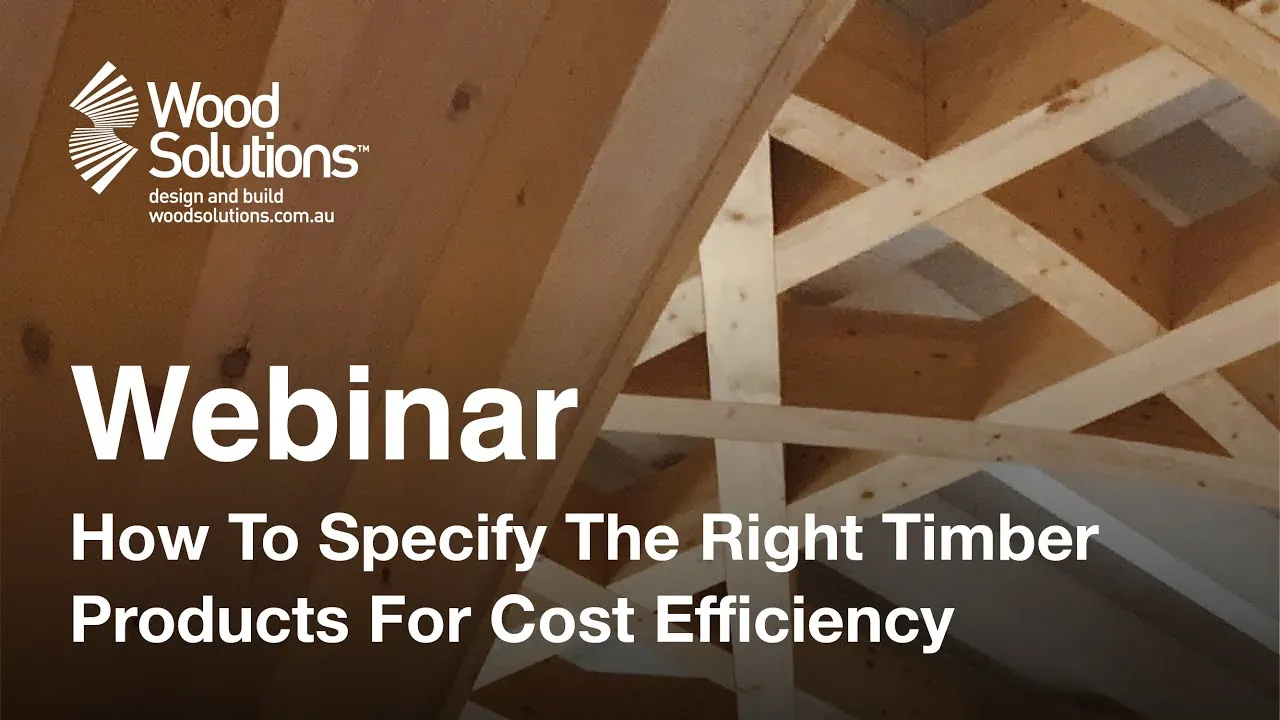
This presentation, given by Laurence Ritchie, a construction and costing expert with experience in mid-rise timber construction, outlines timber design strategies for specifying timber products to maximize cost efficiency in building projects.
Laurence draws on his experience with WoodSolutions Australia’s mid-rise advisory programme to provide insights on timber product selection, design considerations, and procurement approaches.
Key Points:
1) Context of Timber Construction in Australia
- Timber construction is well-established in the Australian market, with numerous successful projects completed or underway.
- The 2016 National Construction Code changes made timber construction in mid-rise buildings easier to achieve certification.
- Timber construction can range from exposed mass timber public spaces to more cost-effective lightweight framing systems for residential projects.
2.Timber Product Options
The presentation outlines five major timber products commonly used in construction:
a) Lightweight Framing Systems:
- Includes plates, joists, and trusses
- Typically used in residential construction
- Efficient for spans up to 6 meters
b) Glue Laminated Timber (Glulam):
- Made from rough sawn timber pieces glued together with grain in the same direction
- Suitable for columns and beams
- Can achieve longer spans and higher fire ratings
c) Cross Laminated Timber (CLT):
- Made from layers of timber arranged perpendicular to each other
- Provides two-way action, offering design flexibility
- Suitable for walls, floors, and roofs
d) Laminated Veneer Lumber (LVL):
- Produced in 1200mm wide billets
- Can be used as mass timber or cut into smaller elements for lightweight framing
- Offers high strength due to its veneer construction
e) Prefabricated Systems:
- Can incorporate various timber products
- Offers potential for increased construction speed and efficiency
3. Project Goals and Considerations
The speaker emphasizes the importance of understanding project goals when aiming for cost efficiency. Key considerations include:
a) Balancing time, cost, and quality drivers
b) Recognizing that cost efficiency may not always be the primary project goal
c) Understanding the intended use and aesthetic requirements of the building
4. Key Considerations for Cost-Efficient Timber Specification
The presentation highlights three crucial considerations:
a) Project Intent:
- Align timber product selection with the project’s goals and budget
- Consider a mix of exposed mass timber and lightweight framing for cost-effective aesthetics
b) Designing for Timber:
- Start with timber in mind rather than adapting concrete designs
- Consider optimal spans for timber systems (typically 5-6 meters)
- Allow for adequate floor depth to accommodate acoustic requirements
- Understand fire design requirements for different timber systems
- Design for Manufacturing and Assembly (DfMA) principles
c) Early Supplier Engagement:
- Involve timber suppliers in the early stages of design (schematic design or earlier)
- Leverage suppliers’ expertise to optimize product selection and design
- Utilize resources like the Wood Solutions supplier listing to find appropriate partners
5. Benefits of Timber Construction
The presentation touches on several advantages of timber construction:
a) Sustainability:
- Timber products from sustainably managed forests sequester carbon
- Using more timber can potentially increase a project’s sustainability
b) Construction Speed:
- Timber construction can reduce overall project timelines by up to 30% in some cases
- Prefabrication potential contributes to faster on-site assembly
c) Site Efficiency:
- Timber construction often results in cleaner, tidier, and safer sites
- Requires fewer on-site workers compared to traditional construction methods
6. Resources and Support
The speaker mentions several resources available for those interested in timber construction:
a) Wood Solutions partnership with the Australian Institute of Quantity Surveyors (AIQS)
b) Technical Guide #51: Cost Engineering Guide for Timber Buildings
c) Wood Solutions website and YouTube channel for additional webinars and case studies
Timber Building Design: Conclusion
Specifying timber products for cost efficiency requires a holistic approach that considers project goals, design intent, and early engagement with suppliers.
By understanding the strengths and applications of different timber products, designers and cost consultants can optimize their use in construction projects.
Timber construction offers potential benefits in sustainability, construction speed, and site efficiency, making it an attractive option for various building types when specified correctly.
Related
Is Mass Timber in Affordable Housing projects now a Viable Solution?