Table of Contents
Let’s Demystify Building Systems
When most people think about building a house, they picture individual materials: bricks, wood, glass, concrete, steel. But really experienced builders and designers think differently. They think in terms of building systems – and understanding this distinction is crucial to making better design and building decisions.
The Universal Building System Myth
Here’s a startling reality: there is no single building system that works optimally across all climates, budgets, and performance requirements. Yet many countries persist with dominant building methods and practices as if one system can solve everything. Different regions become locked into particular approaches – often for historical, regulatory, or cultural reasons rather than optimal performance and affordability. Supply chains get locked in, building codes mirror these established systems – and then there’s no room for change.
This one-size-fits-all thinking is costly. I estimate that over 90% of houses built today could benefit from different building systems that would be more affordable, sustainable, energy-efficient, and healthier for both builders and occupants. The barrier isn’t technology or availability – it’s our knowledge and willingness to change.
The resistance runs deep: designers and builders naturally gravitate toward familiar systems, even when alternatives would clearly tick more boxes for the specific project. Breaking free from these defaults requires understanding what building systems actually are and why the right choice matters so much.
What Exactly Is a Building System?
A building system (sometimes called construction system) isn’t just one material or component. It’s an integrated approach that coordinates multiple elements to work together as a unified whole.
Think of it like the difference between buying individual car parts that theoretically might work well together versus buying a complete automotive platform that’s been engineered to work seamlessly together.
A building system typically includes:
- Structural Framework – How building loads are carried and distributed
- Thermal Control – How heat, cold, and moisture are managed
- Assembly Method – How components connect and go together
- Installation Process – The sequence and skills needed for efficient construction
- Performance Standards – How the system responds to forces, weather, and time
The Hidden Complexity Most People Miss
When someone says “I want a brick house,” they think they’ve made a decision about their building system. In reality, they’ve only chosen one visible component. The actual system includes dozens of decisions they probably haven’t considered:
- How is the brick attached to the structure?
- What’s behind the brick providing structural support?
- How is moisture prevented from getting behind the brick?
- How is the cavity between brick and structure insulated?
- How do windows and doors connect to this assembly?
- How are utilities routed through the system?
Each of these decisions affects cost, performance, durability, and constructability.
Real-World Example: Why “Wood Frame” Isn’t Specific Enough
Consider two houses both described as “wood frame construction”:
House A: Platform framing with 2×4 studs, fiberglass batts, plastic vapour barrier, vinyl cladding over house wrap
House B: Post-and-beam timber frame with structural insulated panels, continuous exterior insulation, and fiber cement cladding
Both are “wood frame,” but they’re completely different building systems with different performance characteristics, costs, construction requirements, and long-term behavior.
The System Approach Changes Everything
Understanding building systems transforms how you evaluate construction options:
Instead of asking: “Should I use brick or wood?” Ask: “Which integrated system best meets my performance, budget, and timeline requirements?”
Instead of thinking: “This material is better than that material” Think: “How do all the components in this system work together, and where might there be conflicts or weak points?”
Instead of focusing on: Initial material costs Consider: Total system performance including transport, installation labour, installation complexity, long-term maintenance, health, sustainability, and energy efficiency
Why This Matters for Your Project
Whether you’re building, renovating, or just trying to understand construction, thinking in systems helps you:
- Make Better Decisions – You’ll evaluate complete solutions rather than individual components
- Avoid Common Mistakes – You’ll spot potential conflicts before they become expensive problems
- Communicate Clearly – You’ll be able to discuss meaningful performance requirements with contractors
- Plan Realistically – You’ll understand the true scope and complexity of your project
The Economics of Building Systems: Total Cost vs. Initial Cost
One of the biggest misconceptions about building systems (that I tell all my clients) is focusing solely on material costs while ignoring assembly efficiency. Some building systems that appear expensive upfront actually cost less overall because they dramatically reduce on-site labour, waste, construction time, and maintenence.
Consider prefabricated building systems: The factory-made components might cost 20% more than traditional materials, but if they can be assembled in half the time with half the labour and minimal waste, the total project cost often drops significantly. Factor in reduced weather delays, fewer skilled trade requirements, and predictable scheduling, and the “expensive” system becomes the economical choice.
Yet this thinking remains rare because most cost estimates focus on material purchase prices rather than total installed costs. The industry often optimises for the wrong metric.
The Knowledge Gap Problem: Why Innovation Stays Stuck
Here’s an uncomfortable truth about the construction industry: most architects, designers, and builders have deep experience with only 2-3 building systems – and I’m being generous. Yet, globally, we’re probably looking at tens of thousands of possible different building system combinations in use. If I’m generalising though, I would most probably say that most experienced building professionals would say there are around 15 to 20 generic house building systems available globally.
So back to the point, when faced with a new project, most designers, specifiers, builders etc. naturally specify what they know rather than what might be optimum for the specific requirements.
The Result: Even when better solutions exist, they don’t get considered because the decision-makers aren’t familiar with them. A designer experienced with timber frame construction will default to timber frame, even for projects where steel, masonry, or mass timber might perform better or cost less.
This creates a vicious cycle: unfamiliar systems remain unfamiliar because they’re rarely used, and they’re rarely used because they’re unfamiliar. Innovation gets stuck, and clients don’t benefit from advances in building technology.
The Manufacturer Knowledge Disconnect
Component manufacturers face their own constraints that limit system optimisation. A mass timber producer knows everything about CLT or glulam performance, but they may choose to know very little about:
- How their product integrates with different insulation strategies
- Which connection details work best in certain scenarios
- How their components interact with various 3rd party products
- their clients’ projects’ success or failure
It’s in their interests to be impartial, selling the benefits of their core offerings – with their business model rewards selling more of their specific component, not necessarily optimising total building performance. This means valuable knowledge about system integration often never gets developed or shared.
Cultural Commerce. Another really interesting unknown is cultural selling of products and knowledge. For example, many German speaking companies prefer to only work with other German speaking companies and clients. I’m not sure it’s protectionist, I was told it is simply easier and less complicated, and maybe there’s a small pinch of arrogance, and perhaps rightly so, as we know the Germans, Austrians, and Scandinavian’s are decades ahead of the rest of us in terms of building efficiency and quality.
The missed opportunity is enormous. A CLT manufacturer working closely with insulation, cladding, and mechanical system suppliers could develop optimised building systems that outperform anything currently available. But these collaborative relationships rarely develop because everyone stays focused on their own component.
I genuinely believe these are contributing factors as to why the building and construction industry has developed at a far slower pace than nearly every other industry. Yes, I know there’s some shining stars, but not enough of them to make a big difference.
Context Matters: When Good Building Systems Go Wrong
Even excellent building systems can fail dramatically when used in the wrong application. Building system selection requires understanding not just what the system can do, but what conditions it needs to perform optimally.
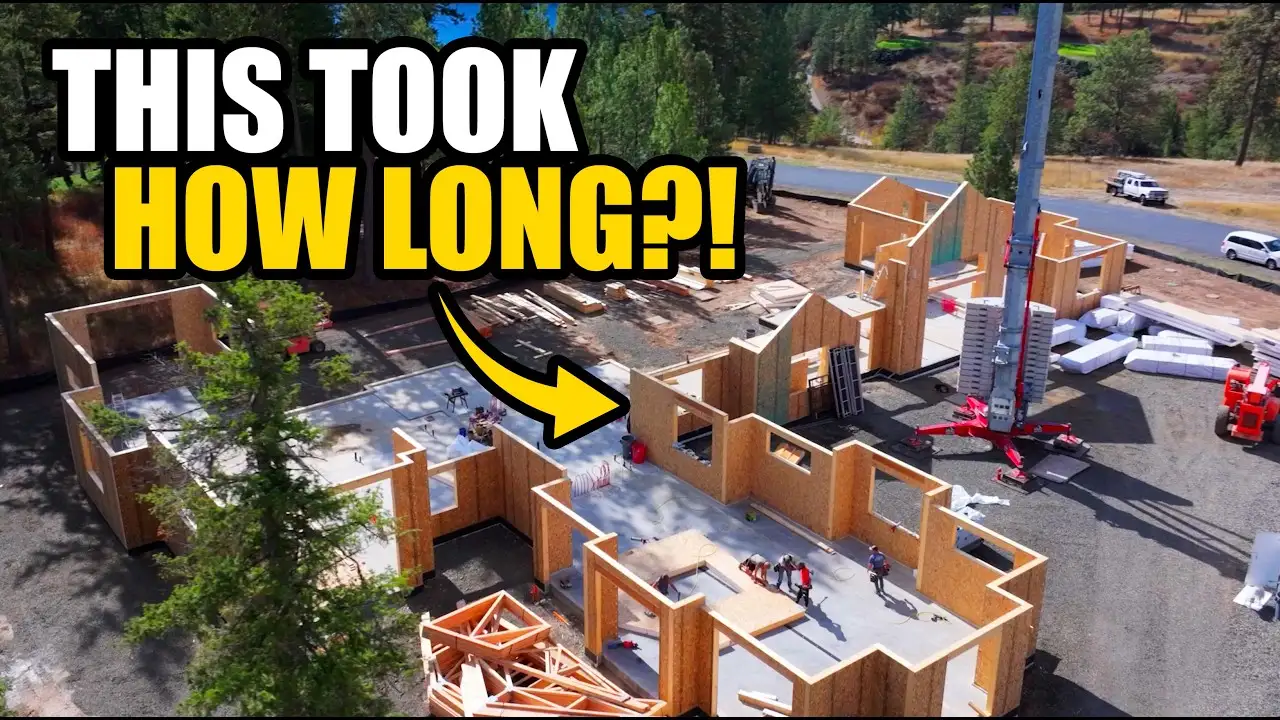
Take Structural Insulated Panels (SIPs): They’re engineered for precision, speed, and excellent thermal performance. But SIPs assume everything they attach to is perfectly square, level, and dimensionally accurate. Place SIPs on a concrete slab that’s out of level or not square (let’s say 90% of slabs), and you’ll spend more time fixing problems than you saved in assembly efficiency.
Meanwhile, stick frame construction easily accommodates foundation imperfections. Framers routinely adjust for out-of-level slabs, non-square corners, and dimensional variations. The system’s flexibility becomes a major advantage when foundations aren’t perfect.
This isn’t a failure of the SIP system – it’s a mismatch between system requirements and site realities. The “best” building system is meaningless without considering the specific project context, site conditions, and execution capabilities. Yes, there are easy solutions if you want to use SIPs, but you do need to ask the right questions.
The Path Forward: Choosing the Right Building Systems Isn’t Hard
Understanding these realities changes how you approach building system selection:
Evaluate total costs, not just material costs – Include labour efficiency, waste reduction, transport, and schedule compression in your economic analysis
Seek out diverse expertise – Don’t rely solely on professionals who default to familiar systems; actively seek input from those experienced with alternatives across multiple building approaches (like us).
Demand integrated solutions from manufacturers – Push suppliers to think beyond their components and help develop complete building system solutions before purchasing. You’ve got their attention, now make them work hard for your money.
Match building systems to reality – Consider your actual site conditions, available skills, and execution capabilities when selecting building systems
Invest in knowledge building – The construction industry’s knowledge gaps represent opportunities for those willing to develop real expertise across multiple building systems.
Consider specialised guidance – For large-scale or complex projects, working with building system advisers who understand the full spectrum of options and their integration can prevent costly mismatches and optimise performance. Some projects benefit from completely custom system design rather than adapting existing approaches.
The Bottom Line
Building systems exist because construction is fundamentally about creating integrated solutions, not just assembling materials. But the industry’s fragmented knowledge, misaligned incentives, and focus on familiar rather than optimal solutions often prevent affordable, sustainable, and optimised building systems being used.
The most successful projects come from thinking systematically about performance requirements, total costs, and execution realities – then selecting and adapting building systems accordingly. This requires moving beyond the industry’s comfortable defaults toward more sophisticated building system selection and integration.
When you see a building under construction, ask deeper questions: Was this the best building system for this specific project, or just the one the team knew how to build? What opportunities were missed because alternatives weren’t considered? How much better could this building perform with more thoughtful building system selection?
The answers might surprise you – and change how you think about construction entirely.
How many designers win awards based on affordability and sustainability of their projects versus cosmetic appeal? This is something I want to see change.
Need Help Optimising your Building System Selection?
We specialise in optimising building systems for large-scale housing developments, and some smaller scale projects too. We also help with custom building system design, testing, and implementations. Our expertise spans the full spectrum of construction approaches, helping you navigate the complexity and avoid the common pitfalls I’ve outlined above.
Get in touch if you’d like to discuss how the right building system could improve your project’s performance, reduce costs, or solve specific construction challenges. Sometimes the best solution isn’t adapting what exists – it’s designing something entirely new.
Book Services Discovery Meeting Here
Our Building System Related Services
Services Summary Page: Our Integrated Housing Transformation Process
Our Four-Phase Transformation Journey:
Discover & Diagnose: Building Systems Assessment
Design & Develop: Advanced Building System Solutions
De-risk & Finance: Investment Advisory
Deploy & Scale: Local Capacity Building
The Search for the Perfect Wall Building System
Discover & Diagnose: Building Systems Assessment