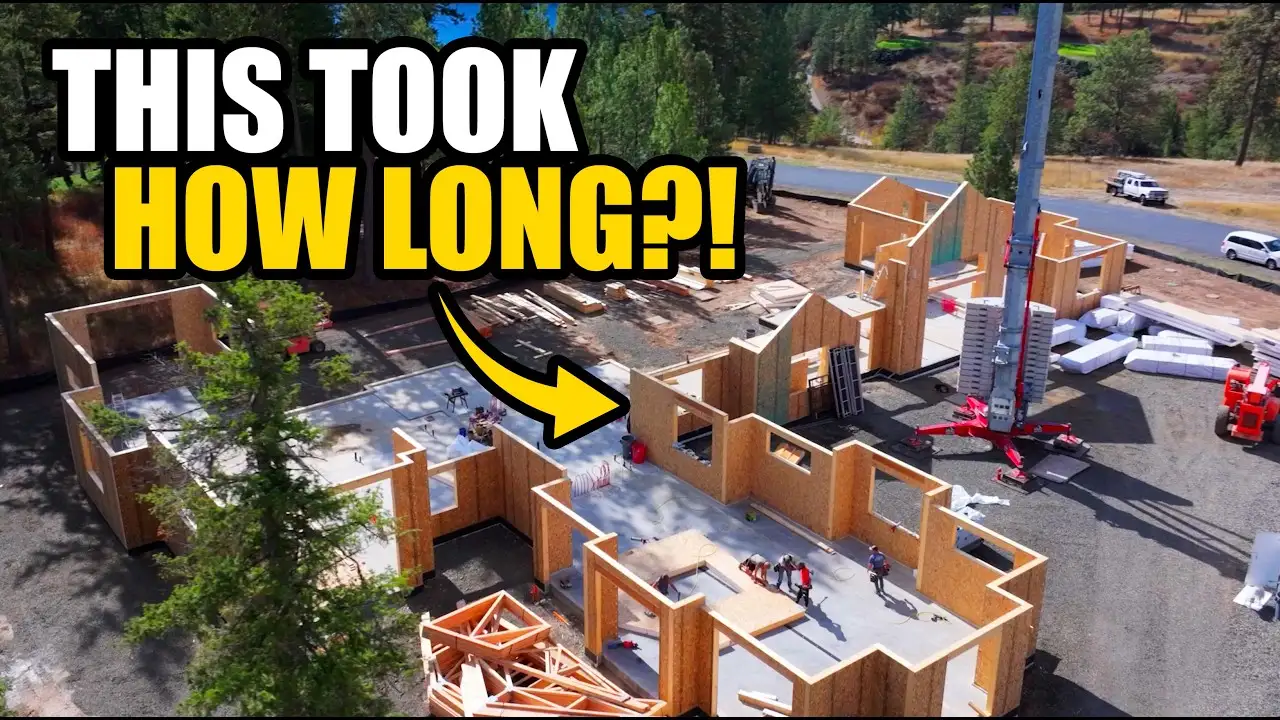
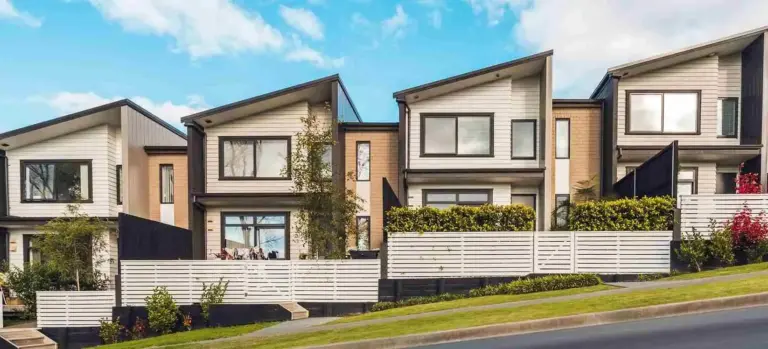
SIPS or Timber Frame? That’s today’s question.
We’re working on a large-scale housing solution that strives for the holy grail of construction: a building system that is extremely efficient, fast to build, uses sustainable and healthy materials, and remains affordable! These are, after all, the key pillars of what we offer as a service to our clients around the world.
Without revealing all our cards, we continually explore a wide range of building systems, regularly consulting with manufacturers and industry experts – and trying to ignore the marketing and hype.
Some systems stand out more than others for various reasons. For example, certain products may perform better than others but are still too expensive in some countries while being affordable in others – making this far from an exact science.
The reason for today’s post stems from a meeting I had last week with a large European multi building systems manufacturer. This company offers both engineered timber frame “stick-built” solutions and Structural Insulated Panels (SIPs), and they recommended SIPs for the current project we’re working on.
Now, I like SIPs as a concept, but here in New Zealand (where I currently live), they are very expensive. Additionally, they are often paired with concrete slab-on-grade foundations, which introduces a host of challenges. One of the main issues is that there are very few contractors who can lay a perfectly flat and true concrete slab these days. This mismatch creates problems – placing an almost geometrically precise product like SIPs onto an uneven foundation can cause all sorts of complications – often causing delays and extra labour and material cost.
There are design workarounds for this, which I won’t delve into today, but while researching this challenge, I stumbled upon a fascinating YouTube video (below). The video featured a gentleman from Build Better Things debunking the idea that SIPs are a viable solution for smaller building projects.
What caught my attention were the numbers he presented. While his analysis didn’t take into account the health or sustainability aspects of the materials/products he compared, the financial breakdown was intriguing enough for me to reflect on it here.
The creator of the video even went as far as to say that, in his opinion, SIPs are not cost-effective at all for housing projects. While this may hold true in his region – and his experience, it’s important to remember that every situation is different. The cost of materials and labour can vary significantly depending on location. Building code requirements also differ, and buying power can fluctuate significantly from one company to another. Additionally, skills shortages often play a major role in making one building system more attractive than another. Also, our industry isn’t very good at adopting new methods and practices, which makes it more expensive when upskilling and experimenting with a new building system to their company.
Although we don’t allow comments on our website (for obvious reasons), I’d love to hear about your experiences with SIPs – or alternative building systems that meet the criteria of being efficient, fast, sustainable, healthy, and affordable. If you’re able to share your insights, please feel free to reach out (contacts page)
Below is the video I referenced earlier. I hope you find it as thought-provoking as I did.
What’s best SIPS v Timber Frame?
Credit: Build Better Things
Timber Frame vs. SIPs Panels: A Comprehensive Comparison for Small Building Projects
In this video, the presenter takes a deep dive into the comparison between timber frame construction and Structural Insulated Panels (SIPs) for small-scale building projects such as house extensions, garden rooms, and artist studios. The analysis is thorough, covering aspects such as cost, speed of construction, energy efficiency, and eco-credentials.
Understanding the Basics: Timber Frame vs. SIPs
The video begins by explaining the fundamental differences between timber frame and SIPs construction:
- Timber Frame: This involves ordering timber studs and OSB (oriented strand board) sheets from local suppliers, assembling them on-site into a frame, and adding insulation between and over the studs. It’s a tried-and-tested, flexible method of construction.
- SIPs: These are prefabricated panels consisting of rigid insulation sandwiched between two OSB layers. Unlike timber frame panels, SIPs lack intermediate studs within the panels and act as a structural unit capable of handling horizontal and vertical loads. They are delivered to the site pre-fabricated, reducing on-site assembly time.
Claims Made by SIPs Manufacturers
SIPs manufacturers often highlight three main advantages on their websites:
- Lower Build Costs: Faster construction results in overall cost savings.
- Simplified Logistics: Off-site fabrication streamlines the process.
- Energy Efficiency: SIPs claim superior insulation and airtightness, which reduce long-term energy costs.
The presenter evaluates these claims through a real-world example: the construction of an artist studio.
Real-World Cost Comparison
Using the artist studio project as a case study, the presenter meticulously breaks down the costs for both construction methods:
With labor costs factored in for a team completing the walls and roof in about two to three days, the timber frame proves to be far more economical.
Conclusion on Cost: Timber frame construction is substantially cheaper than SIPs for this particular project, making it a more practical choice for small-scale builds.
SIPs Costs:
A typical SIPs panel with a 122mm polyurethane core and OSB layers costs a significant amount. After factoring in transport, assembly, and installation by specialists, the total cost for the SIPs construction comes to approximately £13,500.
While the panels themselves are efficient, additional materials like 120mm CLS studs (for joining) and solvent-based adhesive are necessary, slightly complicating the eco-friendly claims.
Timber Frame Costs:
Using 89mm x 38mm CLS studs spaced at 400mm or 600mm intervals, OSB sheathing, and PIR (polyisocyanurate) insulation, the presenter constructs a comparable model. The total cost, including labor, comes out significantly lower than SIPs.
Speed of Construction
One of SIPs’ main selling points is their claim of faster construction due to off-site manufacturing. However, real-world observations paint a different picture:
However, for small projects like a small artist studio (28 square meters), the time saved with SIPs—likely 1–2 days—doesn’t make a significant difference. For larger projects, such as a 150-square-meter house, the time savings could be more substantial, potentially shaving off one to two weeks. However, for most small-scale builds, the time efficiency of SIPs does not justify their higher cost.
Conclusion on Speed: While SIPs can save time on larger projects, for smaller builds, the time savings are negligible, and the delays in off-site manufacturing can negate this advantage entirely. Timber frame remains the more convenient and faster option in the real-world setting.
Energy Efficiency and Insulation
Another major claim of SIPs manufacturers is their superior insulation and airtightness, leading to lower energy costs. Here’s how this claim holds up against timber frame:
- U-Value Comparisons:
- U-value measures how well a building material prevents heat transfer. Lower values indicate better insulation. The UK’s current building regulations require U-values of 0.18 in England and 0.17 in Scotland.
- The SIPs panels in the video, with a 122mm polyurethane core, achieve a U-value of 0.25, which falls short of building regulations. To meet stricter standards (e.g., a passive house U-value of 0.1), SIPs walls would need to be 219mm thick, which significantly increases wall thickness and reduces usable internal space.
- Timber frame construction, using layers of PIR insulation, can achieve the same U-value as SIPs with thinner walls, offering better space efficiency.
- Airtightness:
- Both SIPs and timber frame can achieve high levels of airtightness when built properly. However, airtightness differences are minimal once the insulation and sealing are done to modern standards.
- Eco-Friendliness:
- SIPs are marketed as eco-friendly, but the reliance on solvent-based adhesives and the embodied carbon in materials like polyurethane insulation challenge this claim.
- Timber frame, on the other hand, uses more natural materials, and its insulation can be sourced in more sustainable forms, making it the greener option overall.
Conclusion on Energy Efficiency: Timber frame construction can match or even exceed SIPs in terms of insulation and energy efficiency while offering better space utilization and a lower environmental impact.
Eco-Credentials and Sustainability
The video also explores the eco-credentials of SIPs and timber frame construction, cutting through the buzzwords like “carbon neutral” and “passive house.” Key points include:
- SIPs Limitations: While SIPs claim to be environmentally friendly, their reliance on synthetic materials (e.g., polyurethane insulation) and adhesives undermines their green credentials. Additionally, the thicker walls required to meet higher insulation standards reduce usable space, especially in smaller builds.
- Timber Frame Advantages: Timber frame construction not only uses more sustainable materials but also provides flexibility in insulation choices, allowing builders to select eco-friendly options like sheep’s wool or recycled materials. It is also less wasteful, as materials can be sourced locally and cut to size as needed.
Conclusion on Sustainability: Timber frame construction is the more eco-friendly and sustainable choice, particularly for small-scale projects where minimizing environmental impact and maximizing space are critical.
Final Verdict: SIPs or Timber Frame?
After evaluating the real-world costs, construction speed, energy efficiency, and eco-credentials, the presenter concludes that timber frame construction is the superior choice for most small-scale building projects. Here’s why:
- Cost-Effectiveness: Timber frame is significantly cheaper than SIPs without compromising on quality or insulation.
- Convenience and Speed: Timber frame materials are readily available and can be delivered quickly, while SIPs are plagued by delays in off-site manufacturing and communication issues with suppliers. For small projects, the minor on-site time savings offered by SIPs do not outweigh these logistical challenges.
- Sustainability: Timber frame construction aligns better with eco-friendly practices due to its use of natural, locally sourced materials and less reliance on adhesives and high-embodied-carbon insulation.
- Energy Performance: Both construction methods can achieve the required U-values under building regulations, but timber frame offers better flexibility and space efficiency, particularly for small builds.
When Might SIPs Be a Good Choice?
The presenter does acknowledge that SIPs may have their place in certain scenarios, such as:
- Large-Scale Projects: For bigger builds like a 150-square-meter house, the time savings from SIPs become more pronounced, potentially cutting down construction timelines by one to two weeks.
- Rural or Greenfield Sites: In remote areas where access to local timber suppliers is limited, or where off-site prefabrication can simplify logistics, SIPs might be worth considering.
- Deep-Pocketed Clients: For clients with a higher budget and a desire for cutting-edge construction methods, SIPs may align with their priorities.
However, these are niche cases. For the vast majority of real-world projects – especially house extensions, garden rooms, or studios – timber frame construction remains the more practical and cost-effective option.
Related Posts
SIPS & Timber Framing – A Perfect Match
3 Benefits of SIPs Framing vs Traditional Wood Framing.
3 Building Systems Compared: SIPS, ICF, and Traditional Timber Framing
Perfect Wall Review – Building a 500 Years Lifespan Timber Frame Wall with ‘Outsulation’.