To Win the Race to Build Better, More Efficiently, Sustainably, and Affordably – Perhaps We Can Learn from the Automotive Industry?
Last week, I read the unfortunate news that Clever Core, a panelised housing manufacturer in New Zealand, is closing its doors. While the exact reasons aren’t clear, it’s hard not to wonder: is New Zealand simply not ready for modular or panelised construction? Did Clever Core assume that building a cutting-edge facility would automatically create demand? Or was it simply a badly managed business by owner Fletcher Building?
Whatever the reasons, one thing is certain: it’s a loss for the industry and a missed opportunity for New Zealand to rethink how homes are built.
This news reminded me of the bigger challenge facing the construction industry – not just in New Zealand, but globally. Many countries still favour bespoke housebuilding, clinging to traditional methods that are slow, weather-dependent, and riddled with inefficiencies and waste. Modular and panelised construction promise a smarter way forward, as proved by the Europeans and Scandinavians for 100 years, yet adoption remains slow. Why is that?
To highlight the differences, I want to share a story. It’s the story of a car manufacturer and a bespoke house builder – two industries that design and make their products, rely on supply chains and skilled workers, and sell their creations at scale. And yet, their approaches couldn’t be more different.
Let’s explore what the construction industry can learn from the automotive world – and ask ourselves whether the way we build homes needs to change.
The Car Builder: Fast, Smart, Collaborative
The car builder works in a high-tech factory, where every detail is meticulously planned and executed. The environment is controlled – no rain, no wind, no delays. Workers and robots collaborate seamlessly, assembling standardised components with precision. Every part is rigorously tested, and every bolt fits perfectly into a system designed for efficiency and quality.
The designers of the car thought of everything. They considered how each component would be manufactured, how it would be assembled, and how it would perform in the real world. Their process is collaborative, with engineers, designers, and production teams working together to create a technically superior product, with an end goal of outsmarting their competition.
The result? A car, built in record time, technically exceptional in every way, and costing a fraction of a house build.
The House Builder: Slow, Disjointed, Outdated – Inefficient!
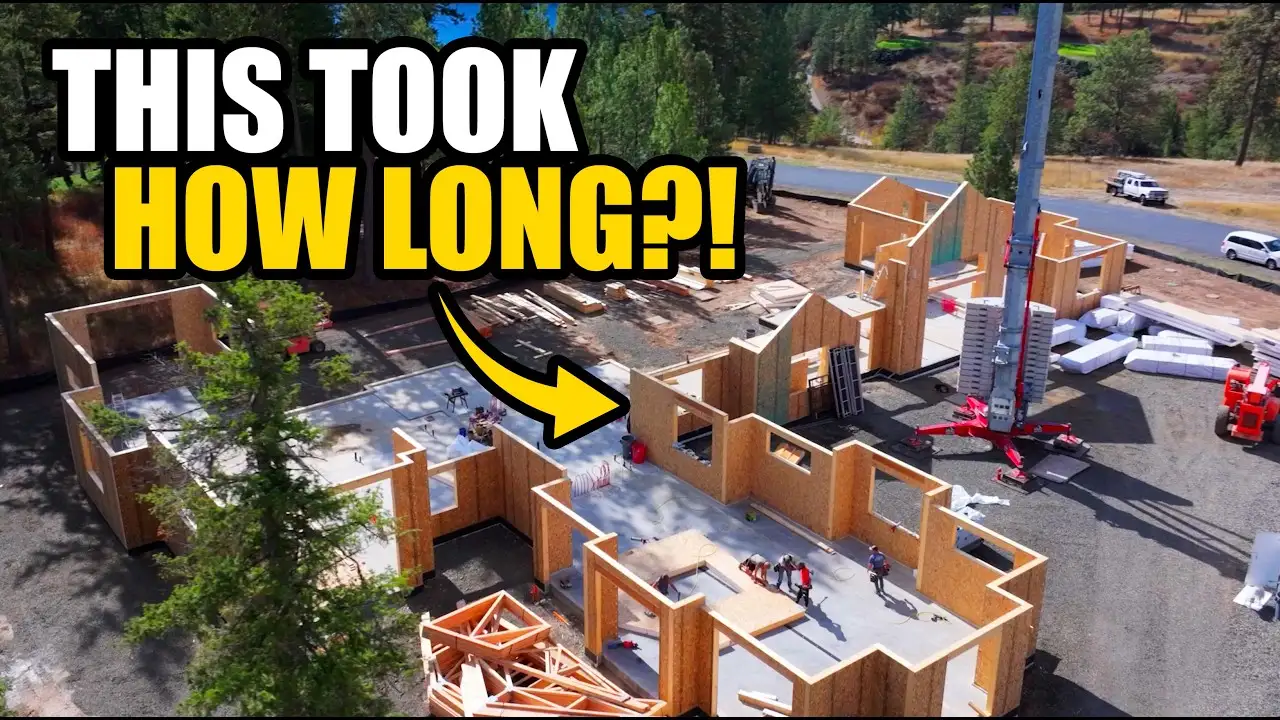
Now meet the house builder, working outdoors in the field. Wind and rain disrupt construction, making it difficult to install materials properly. The environment is far from controlled, and every step of the process feels like an uphill battle. Productivity suffers, leading to an industry average of 3 productive hours per day per worker – over the course of an entire year.
The house design is bespoke – a convoluted shape with custom features that look striking on paper but usually complicate construction. The designer focused on aesthetics and form, but didn’t consider how the design would impact the build process, or how practical the final product would be to live in – or maintain.
Unlike the car builder’s collaborative approach, the house-building process is disjointed. Designers hand over plans to engineers, who pass them to contractors, who then rely on tradespeople working independently to build them. There’s little communication, no holistic thinking, and the result is inefficiency at every stage. And who pays for inefficiency?
The procurement process doesn’t help either. Materials are sourced piecemeal, leading to delays, higher costs, and wasted resources. When the house is finally complete, the majority just meet bare minimum building code requirements, but it’s far from efficient, durable, or innovative. It’s certainly not a BMW.
What Can We Learn from Car Manufacturing?
The automotive industry has set the standard for efficiency and innovation. Cars are built in controlled environments, with rigorous quality control and streamlined processes. If houses were built the same way, the results would transform the construction industry. But the key is using an optimised design right from the outset.
Here’s how the car manufacturing approach outpaces traditional home construction:
- Controlled Environments: Cars are built indoors, eliminating weather-related risks. Factory-built homes derisk the entire process whilst producing more consistent results.
- Holistic Design: Car designers think about every aspect of manufacturing. In contrast, house-building is compartmentalised, leading to inefficiencies and disconnects.
- Standardisation: Cars rely on standardised parts for efficiency and quality. Standardisation in homebuilding reduces errors, costs, and delays. It also creates competition between manufacturers to produce more for less.
- Modern Procurement: The automotive industry uses advanced procurement methods and systems, while construction relies on outdated, fragmented methods that often leads to yet more delays.
- Better Living Spaces: Panelised and modular homes can be designed and produced to replicate 95% of the bespoke homes being built today. The key is panel repeatability and standardisation of components, leveraging all the benefits of a good manufacturing process, quality control, and certification. There is no need for many on-site building inspections, it’s changing the site process from building to assembling.
The Race to Build Will Be Won by Those who Adopt Panelised and Modular Home Construction.
One common misconception about modular or panelised homes is that they’re dull or uninspired. This couldn’t be further from the truth.
Factory-built homes can be strikingly beautiful, with innovative layouts and modern features tailored to how people actually live. In fact, they often outperform bespoke homes in terms of usability, energy efficiency, and durability.
The way I explain it is you just need to think about the prefabricated house as a shell, then clad it with the materials that lend themselves to the environment and aesthetic requirements.
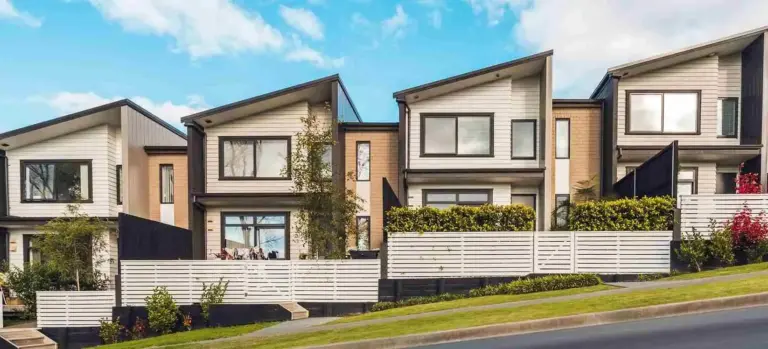
If you saw a well-designed prefabricated home next to a traditionally built one, you probably wouldn’t notice the difference. But beneath the surface, the quality of the prefabricated home would likely be far better – thanks to precision engineering, controlled environments, and tighter quality control.
Would You Build a Car in a Field?
It’s an absurd thought, isn’t it? Building a car in a muddy field, exposed to rain, wind, and inefficiencies. So why do we accept this approach for building houses when we don’t have to?
Let’s face it, no trades want to build in bad weather.
By shifting to factory-built homes, we can deliver higher-quality houses faster, cheaper, with fewer errors, less waste, and better performance. For many countries it’s surely time to rethink how they build – and do it in a way that makes business sense.
Race to Build Conclusion: Smarter, Faster, Efficient – is best!
For the global building industry, the race to build more houses is simply failing. Demand grows daily, yet we simply can’t keep up. We are not learning the lessons from those who have been doing it better for decades and decades.
The automotive industry has shown us what’s possible when we prioritise speed, efficiency, affordability, automation, and collaboration. The global construction industry can – and should – embrace these principles to build smarter homes everywhere.
So next time you think about building a house, ask yourself: Are you racing towards the future, or crawling through the past? Would you build a car in a field? If the answer is no, then perhaps it’s time to learn, adopt, and embrace the better available options.
Related
Showcasing a Panelised Mass Timber Student Dorm Build that Uses Robots
Unlocking the Potential: Prefabricated Architecture Efficiency and Quality Insights